



What is the Difference Between Offset Printed Pins and Enamel Pins

Ethan Carter
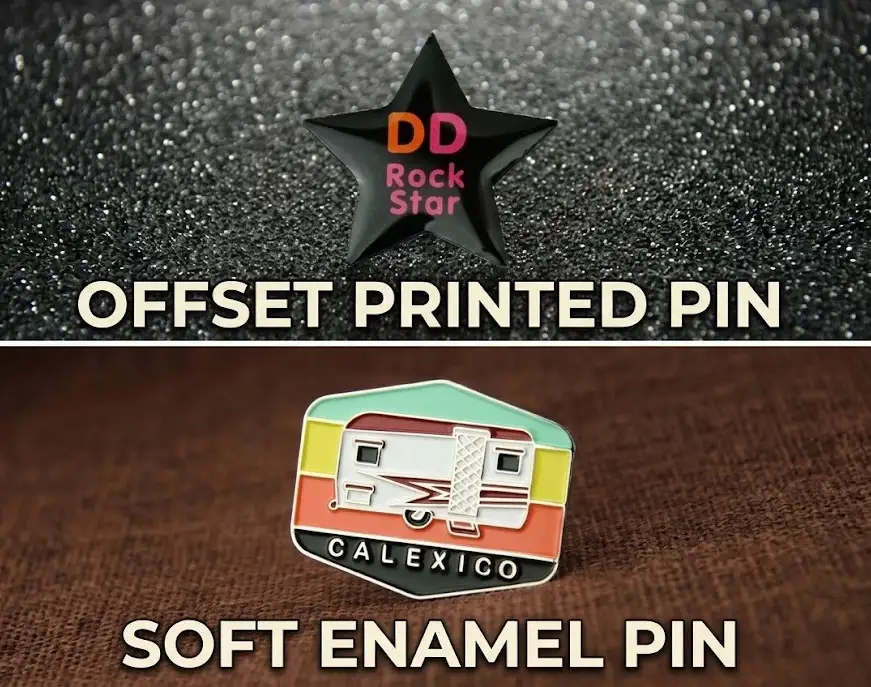
We are often asked to explain what the difference is between offset printed pins and enamel pins. The answer is that most offset printed pins are created from a digital file or photographic negative. The advantage of offset printed pins is that they are thin, lightweight, inexpensive, and fastest to make. The disadvantage is that the quality of the offset printed pins is not high. Enamel pins are by far the most versatile pins, with smooth, shiny enamel on the inside and with two different enamel processes available.
What Are Offset Printed Pins?
Offset Printed pins do not alter or distort your design, which incorporates gradients, drop shadows, or other subtle color changes. You can also choose from an unlimited number of fonts, colors, and other types of design elements.
Our offset printed pins are made of stainless steel or brass metal blanks that can be cut to your custom shape. Then use our high-quality full-color printing process to offset print the design onto the blank surface. Then, in order to protect the image surface from being scratched, a clear epoxy resin dome is applied over the imprint. An additional benefit of epoxy domes is that they give your image a glossy effect while also having a protective coat. Finally, we provide fade resistance to the face of your custom lapel pins.
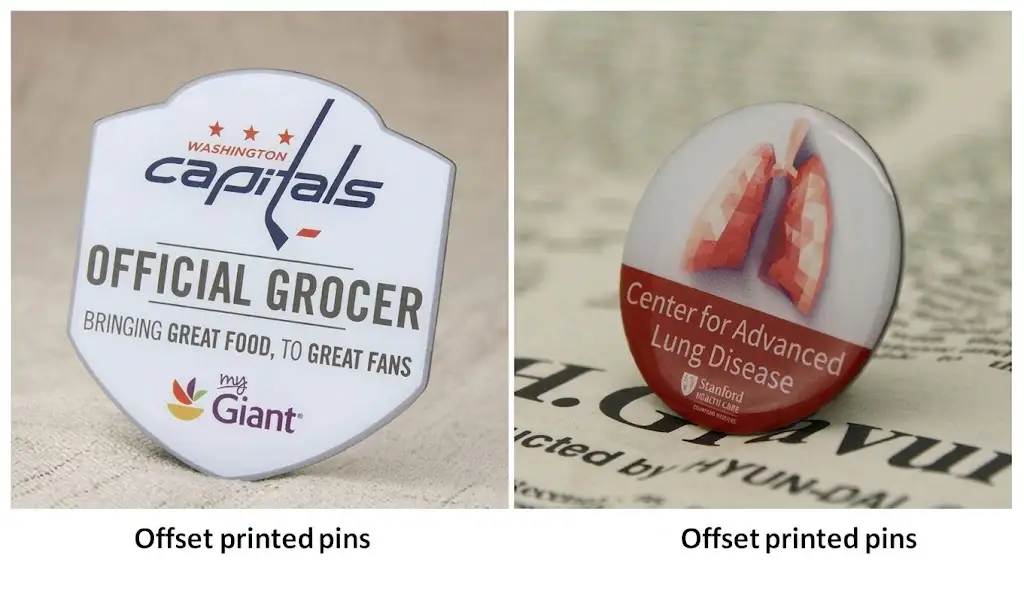
Offset printed pins
We recommend providing high-resolution artwork for this process to ensure that your pins are printed with sharp imagery. The better the source image, the better the final product. Offset printed pins are the most popular type and the best choice for trading. They are inexpensive, look great, and are widely used by teams.
What Are Enamel Pins?
Enamel pins are more expensive than offset-printed pins, but they are attractive. Because of their exquisite appearance and cumbersome manufacturing processes, they are called top-quality handicrafts. Enamel pins come in two different styles: Soft enamel pins and hard enamel pins. Whether it’s soft enamel pins or hard enamel pins, all colors are manually filled into enamel pins, and each color can only be monochrome. Complex colors and gradients can’t be used for enamel pins.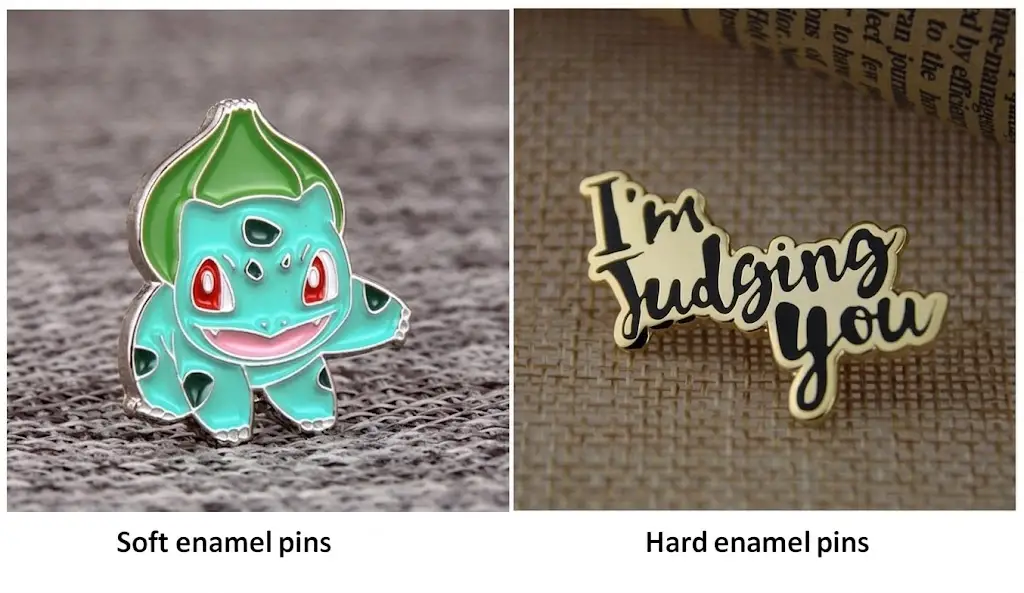
Soft enamel pins vs Hard enamel pins
Soft enamel pins are a very popular process, and the price is lower than hard enamel pins. The color of the soft enamel pins is a liquid pigment that evaporates after baking. The color area will be one layer lower than the metal area, so the soft enamel pins look layered because the light changes caused by the different heights make the badge look very conspicuous and beautiful.
The hard enamel pins are high-quality pins. The pigment of the enamel is a fine-grain solid pigment. Because the color area is flat with the surface of the metal area, the surface is smooth to the touch, and the colors are brilliant and shiny. If you want to make high-quality lapel pins with a collectible value, hard enamel is a good choice.
Enamel pins are ideal for everyday use. Because of the high perceived value, Enamel Pins are also perfect for: Consumer promotions, Team building, Conventions, fundraising, Member gifts, Trade shows, Brand awareness, and rewards.
How to Buy!
If you are looking for custom enamel pins, you should visit the website www.gs-jj.com or email Info@GS-JJ.com. You can also call 1-888-864-4755 toll-free. You can also fill out our request for quote form: just answer a few simple questions. It’s easy to design your enamel pins.

How to display my enamel pins?
Custom lapel pins not just look gorgeous but also say a lot, have memories, and mean a lot. Whether it is a memorial pin for a function, a souvenir, a button pin, an embroidered patch, or a gift from a special one, how you showcase your collection is important. Showing your pins in the right manner keeps them clean, displays their beauty, converts them into unique home decor, and makes them last for years to come.
At GS-JJ, as a professional custom pin and medal manufacturer, we’ve helped thousands of collectors design and display their collections. In this guide, we’ll share our insider display idea. Whether you're organizing your growing collection on a corkboard or showcasing limited editions in a premium shadow box, every great display starts with high-quality pins. If you're looking to create your own custom enamel pins, GS-JJ is the industry-leading manufacturer offering guaranteed factory-direct pricing, free artwork design, and fast customization to bring your ideas to life.
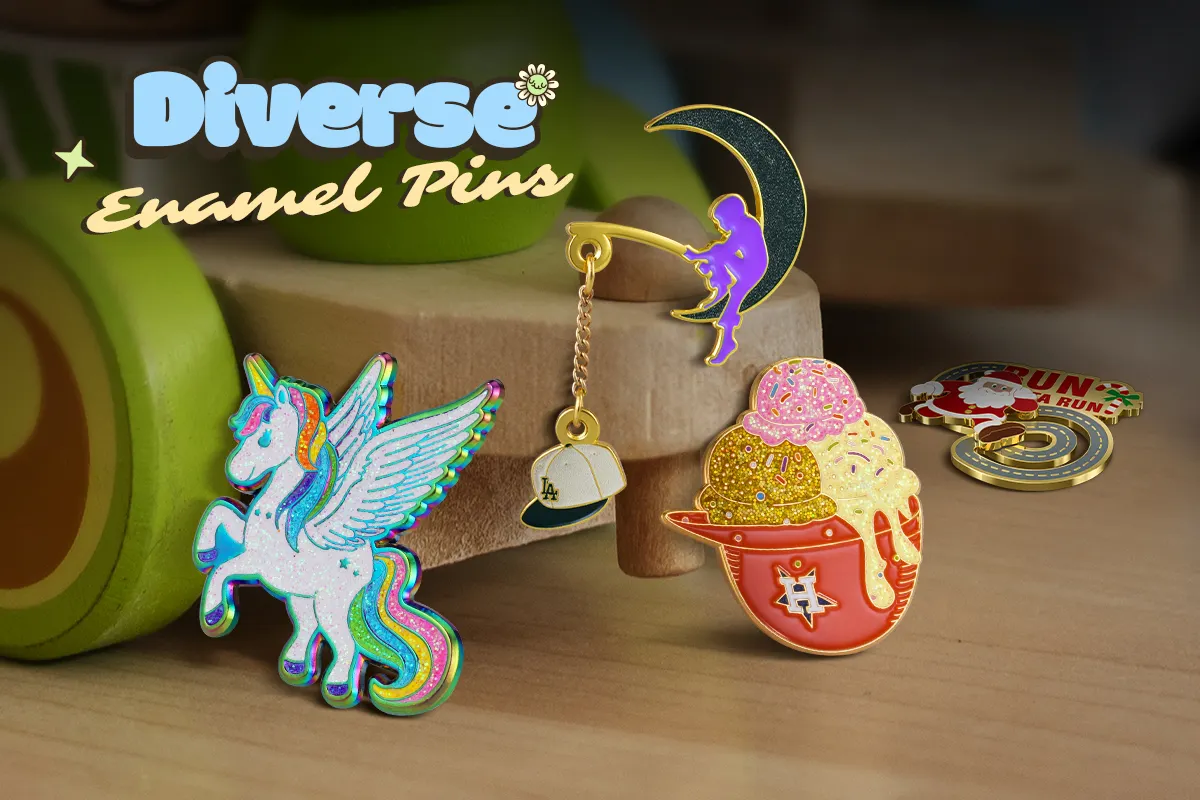
Custom Pins Guide: How to Make Enamel Pins Online
What are Enamel Pins? An enamel pin is a type of pin made by carving grooves into the metal surface and then filling it with different colored enamel pigments. Finally, it is baked at high temperatures to create a brightly colored, wear-resistant, and fade-resistant surface.
Enamel pins are divided into two types: soft enamel and hard enamel. The most fundamental difference between the two types of pins is the surface of the pin. The surface of soft enamel is uneven and has a sense of lines, while the surface of hard enamel is the opposite and has a flat surface.

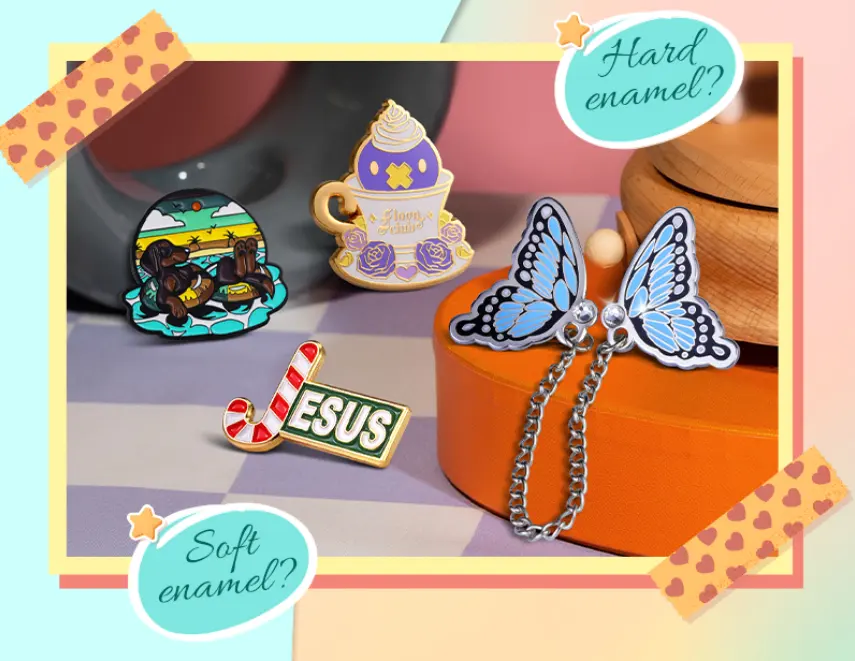
The Differences: Soft vs Hard Enamel Pins
Pin manufacturers are constantly updating and iterating on different technical processes. As of now, there are no least ten types of pins, each with its own personalized characteristics.
The most classic styles are soft and hard enamel pins. The soft and hard here do not refer to the hardness of touch, but to the final effect of the pin. The following will bring you detailed knowledge about enamel pins.