



Five factors affecting the delivery cycle of customized gifts in 2026

Lea Alber
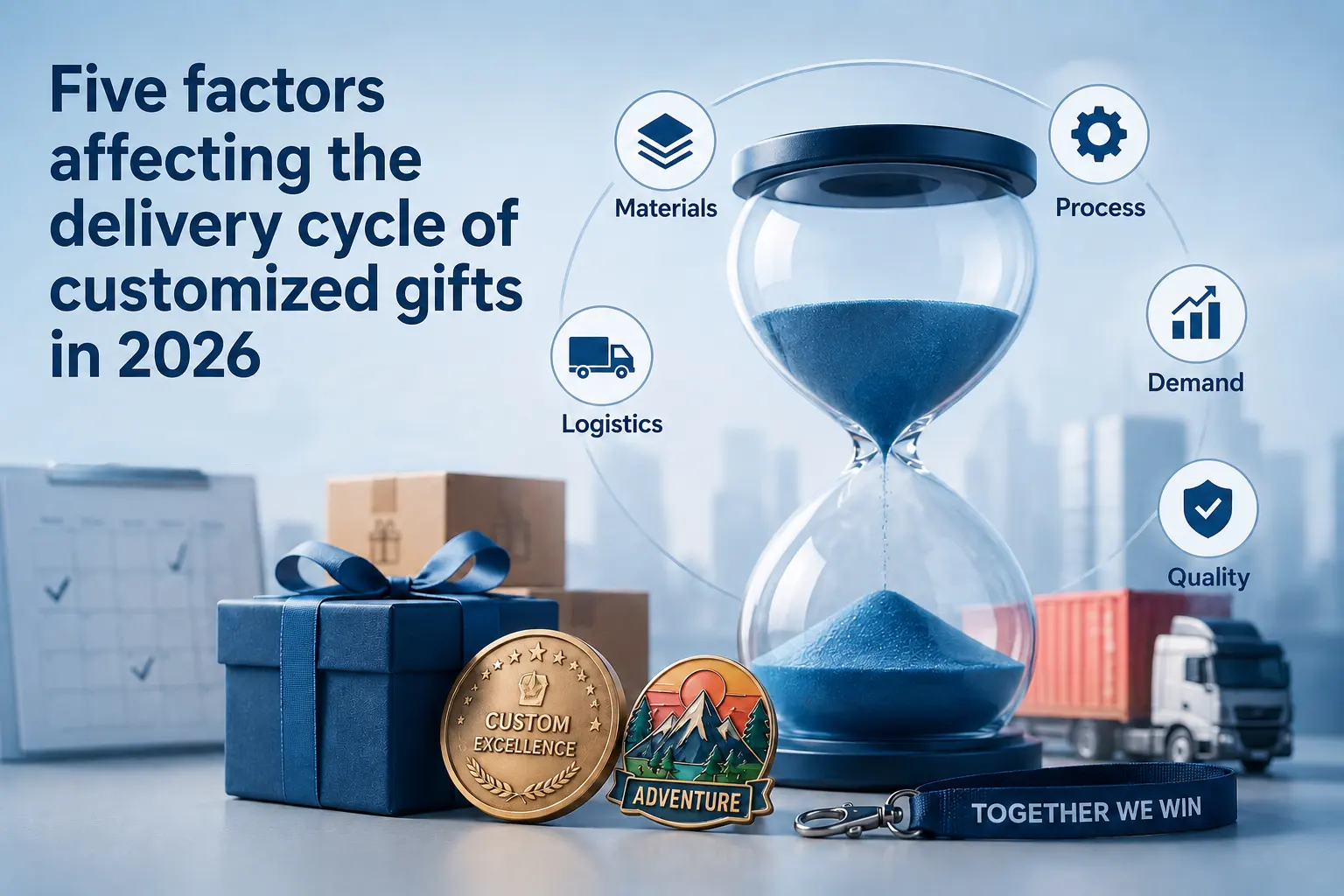
As demand for personalized products continues to grow in 2026, custom gift lead times are becoming less predictable. Material selection, manufacturing complexity, seasonal demand, and quality-control requirements can all influence delivery schedules.
- Material selection: Various materials have an impact on sourcing, tooling and production speed. Specialty or eco-friendly materials often require additional production time.
- Manufacturing processes: Each production method has its workflow and cycle. Generally, the more complex the customization, the longer the lead times will be.
- Seasonal demand: Peak periods, such as holidays and promotional events, can lead to increased factory workload and shipping pressure.
- Quality control standards: Stringent inspection and approval processes can potentially lead to production delays.
These are the variables that influence custom gift production timelines in 2026.
I. Why process complexity acts as a hidden variable in production cycles?
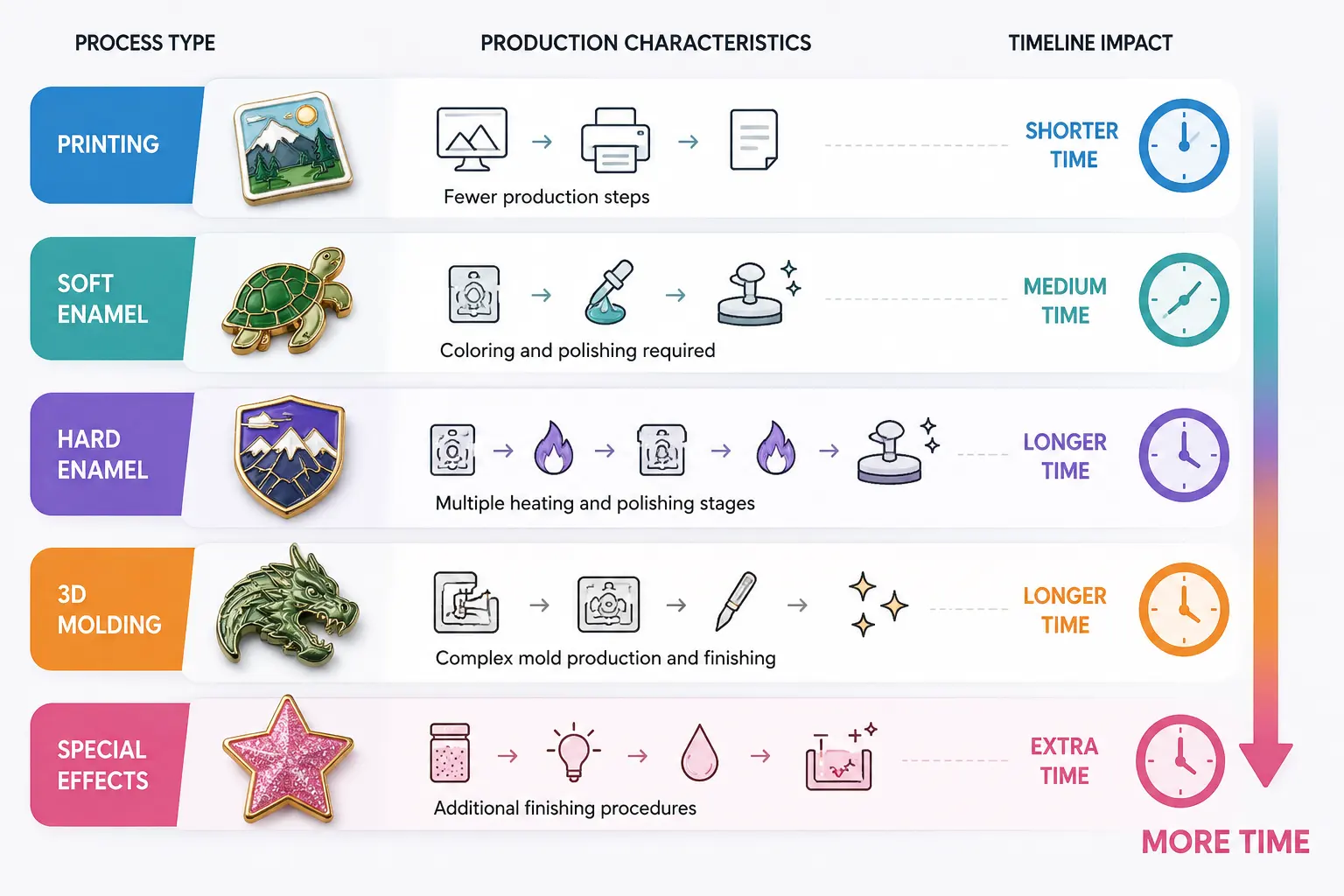
Various manufacturing methods have workflows, tooling requirements and finishing processes, all of which impact the overall lead times.
| Process type | Production characteristics | Timeline impact |
| Printing | Fewer production steps | Standard printing processes generally require fewer production steps and may support shorter turnaround times than multi-stage manufacturing methods. |
| Soft Enamel | Coloring and polishing required | Medium production time |
| Hard Enamel | Multiple heating and polishing stages | Longer production cycle |
| 3D Molding | Complex mold production and finishing | Longer processing time |
| Special Effects (glitter, glow, transparent colors, plating) | Additional finishing procedures | Extra production time |
The more detailed and specialized the process, the more time is required to ensure both quality and consistency.
For instance, soft enamel products usually have a shorter production time than hard enamel products, as the latter generally involve extra steps such as heating, polishing, and finishing. Likewise, custom products that feature effects like glitter or glow-in-the-dark details or those with multiple plating finishes may need additional processing, which can lengthen the overall production schedule.
II. How material variability impacts production speeds?
Materials impact not only the look and durability of custom gifts but also manufacturing efficiency. Standard materials typically move through production quickly, whereas speciality materials often need extra sourcing, mold preparation or finishing steps.
| Material | Manufacturing characteristics | Timeline impact |
| Iron | Mature and stable production process; commonly used for pins, medals and coins | Faster production |
| Zinc Alloy | Suitable for detailed, cutout and 3D designs; requires mold preparation | Medium production time |
| Brass | Smooth surface and high-quality finish; often used for premium products | Additional polishing and finishing time |
| Copper | Strong ductility and fine detail reproduction | Longer processing and finishing requirements |
| PVC | Requires mold creation and injection molding | Medium production time |
| Acrylic | Requires printing, laser cutting and assembly | Depends on design complexity |
| Polyester | Common material for lanyards and fabric products; stable supply | Faster production |
| Nylon | Strong and durable fabric with additional weaving requirements | Medium production time |
Choosing the right material helps balance product quality, appearance, and production efficiency. Acrylic products, for instance, can be produced quickly due to their reliance on processes such as printing, laser cutting and assembly. In comparison, custom zinc alloy products typically involve an intricate process, including mold creation, casting, polishing and finishing, which can increase production time. Generally, materials requiring custom tooling or complex finishing procedures tend to have longer lead times than standard materials.
III. How order volume and seasonal demand surges affect delivery cycles?
Production timelines are heavily influenced by changes in demand. During peak periods, factories usually face increased workloads, longer production backlogs and delayed shipments.
Common high-demand periods:
- Holiday gifting seasons
- Graduation seasons
- Sports tournaments
- Corporate events
- Trade shows and promotional campaigns
Large-volume orders during peak seasons may require planning, including preparing materials and inspecting quality, which can lengthen lead times. Ordering early and approving artwork promptly can help reduce delays during high-demand periods.
IV. How quality inspection and packaging efficiency act as a hidden variable?
Quality inspection and packaging are the final stages before shipment and directly affect delivery efficiency. Delayed inspections or inefficient packaging coordination can create unnecessary shipping delays even after production is completed.
Efficient quality-control workflow:
- Coordinated inspection and packaging processes
- Reinforced protective packaging
- Streamlined shipment preparation after production completion
Many manufacturers use multi-step quality inspections to ensure color consistency, logo accuracy and packaging quality before shipping. Efficient handling after production helps reduce delays, improve shipping efficiency and minimize the risk of transit damage.
V. How logistics and shipping efficiency act as a hidden variable?
Logistics and delivery networks are the final stage of the custom gift supply chain and directly impact overall delivery timelines. Although production may be completed on schedule, issues such as shipping delays, customs clearance and transportation capacity can still prolong lead times.
A well-managed logistics system helps:
- Reduce transit time through optimized shipping routes
- Improve delivery stability with reliable carriers
- Minimize delays during peak shipping seasons
- Reduce customs and handling bottlenecks
Effective logistics management improves delivery reliability and reduces transit risks, especially during peak demand periods.
VI. How faster early workflows reduce hidden delays?
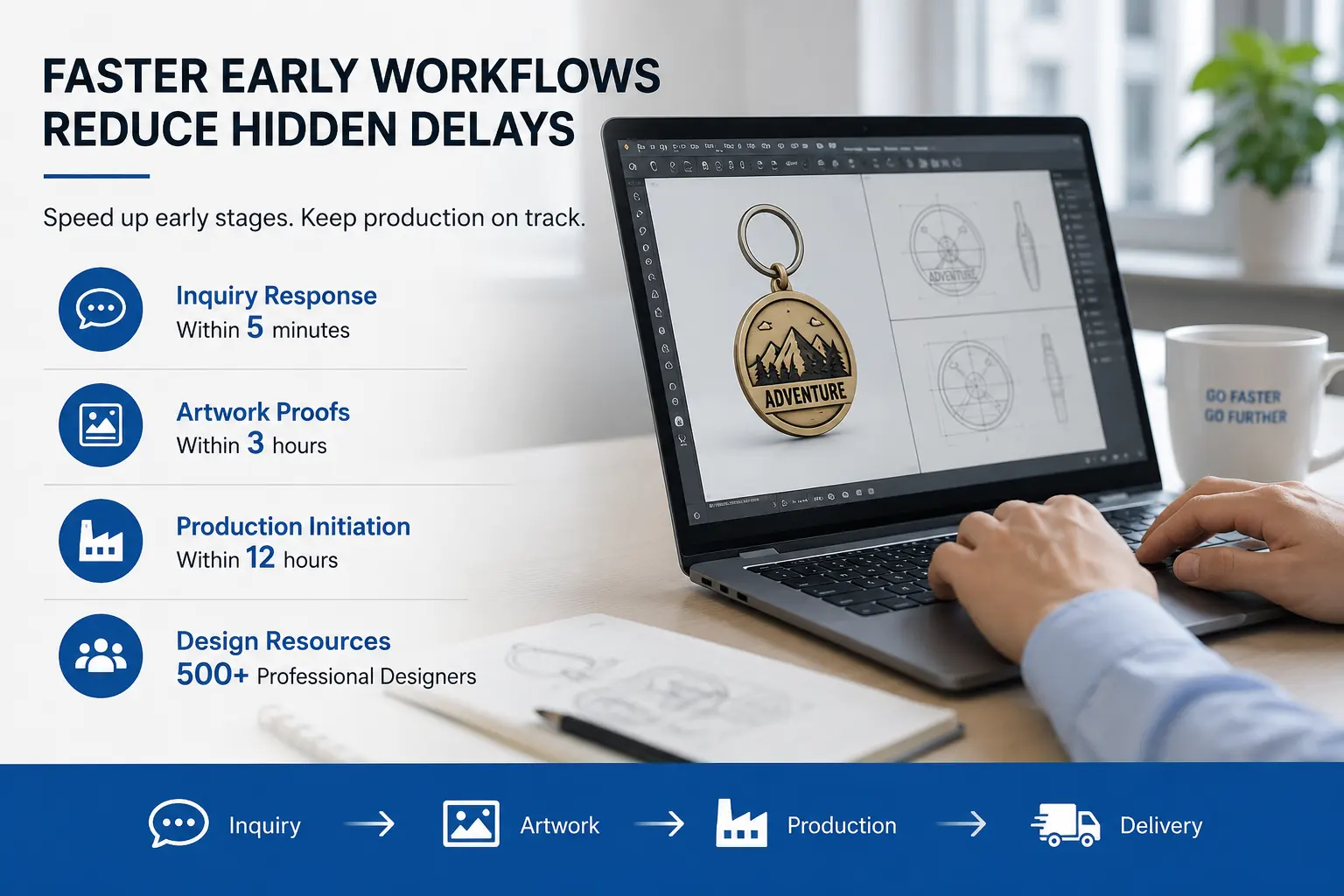
Many production delays actually begin before manufacturing starts. Slow communication, delayed artwork approvals, and unclear specifications often create bottlenecks before production even begins.
At GS-JJ, reducing early-stage delays starts with a structured workflow designed to improve response speed and approval efficiency:
| Workflow stage | Standard support |
| Customer inquiry response | During business hours, responses typically begin within 5 minutes |
| Initial artwork proofs | 2D/3D artwork proofs are commonly delivered within 3 hours |
| Production initiation | Approved orders can enter production within 12 hours |
| Design resources | Supported by 500+ professional designers |
By accelerating communication, artwork approval, and production preparation, procurement teams can reduce delays that happen before manufacturing officially starts.
VII. 2026 rapid procurement action guide
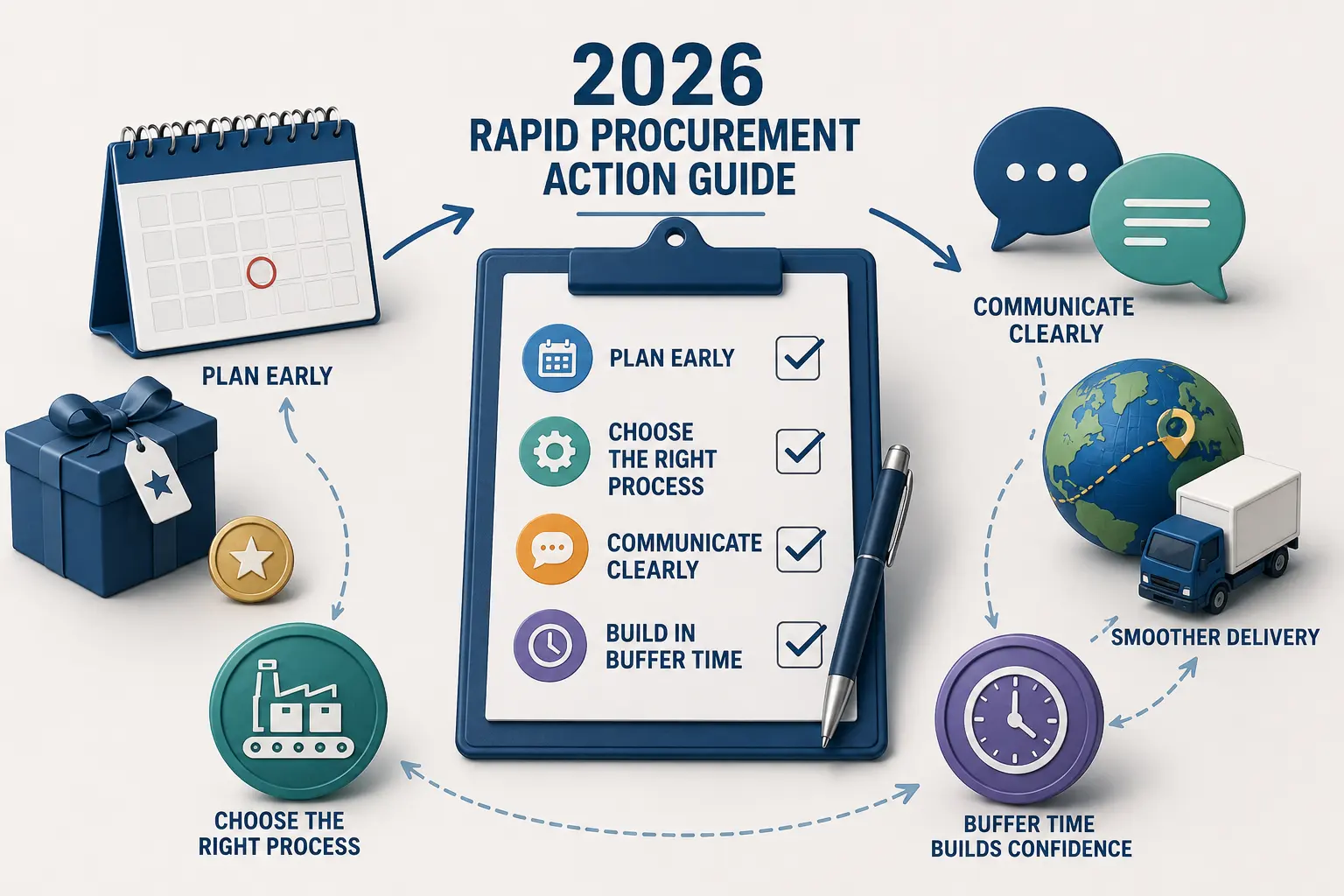
Many delivery delays can be prevented before production starts. A planned purchasing strategy helps buyers minimize revisions, prevent scheduling issues and reduce missed deadlines.
In 2026, effective custom gift procurement involves more than product selection. It requires managing time, process and communication from the outset.
1. Plan orders early based on event deadlines
Planning should start with the required delivery date and work backward to allow sufficient time for production and shipping.
- Define the event deadline first and reverse-calculate all timelines
- Match order complexity with appropriate lead time
- Consider peak seasons when planning production schedules
- Separate design approval, sampling, and mass production stages
- Allow internal buffer time for approvals and revisions
2. Choose Manufacturing Processes Based on Delivery Time Requirements
Various manufacturing techniques exhibit production cycles and complexity levels; thus, the selection of a process should always be aligned with the necessary delivery schedule to ensure timely completion.
| Delivery need | Recommended option | Avoid if timeline is tight |
| Urgent orders | Standard printing, simple enamel designs | Complex 3D structures |
| Medium timelines | Soft enamel, standard plating | Multiple special finishes |
| Flexible timelines | Hard enamel, layered designs, premium effects | N/A |
3. Build a More Transparent Communication Process with Suppliers
Fast, structured communication helps reduce hidden delays between production stages and ensures issues are identified and resolved early.
| Stage | Recommended action |
| Before production | Confirm specifications, quantities, packaging requirements, and delivery deadlines to avoid misunderstandings that may cause rework later. |
| Artwork stage | Review and approve artwork proofs promptly to prevent delays in downstream production stages. |
| Production stage | Maintain regular updates with suppliers to track production progress and address potential issues early. |
| Quality inspection | Verify the product quality, packaging details and shipping requirements to prevent last-minute changes. |
| Before shipment | Verify the logistics arrangements, including the tracking information, carrier selection and estimated delivery schedule, to ensure that the dispatch goes smoothly. |
4. Keep Buffer Time for Unexpected Variables
With meticulous planning, unforeseen factors can impact production and delivery timelines. Incorporating buffer time into the schedule is crucial to mitigate such risks.
Key considerations:
- Production delays due to capacity limits, equipment issues, or material shortages
- Design revisions during artwork or prototyping stages
- Shipping uncertainty such as customs delays and peak-season congestion
- Quality issues that may require rework or re-production
Recommendation:
Avoid setting delivery deadlines that are too tight. Planning for arrival 5-10 days in advance is preferable. It is crucial to incorporate buffer time at each stage of the process, including the intermediate stages, not just the final one.
VIII. FAQs
1. What is the most common reason for delays in custom gift production?
The most common delays arise from a combination of late design confirmation, material or process complexity and peak-season production congestion. Delays are often the result of stages experiencing small setbacks that accumulate over time rather than a single factor.
2. How quickly can custom artwork proofs be delivered?
Artwork proof timelines vary depending on product type and design complexity. During business hours, GS-JJ typically provides 2D or 3D artwork proofs within 3 hours for many custom projects. Faster artwork approval helps reduce production delays downstream.
3. Can rush orders be accommodated?
Rush orders may be supported depending on product complexity, material availability, and current production capacity. Early communication with the supplier helps identify the fastest production and shipping options.
4. Will design revisions affect delivery time?
Yes. Alterations to approved artwork or specifications may have an impact on production schedules, resulting in extended lead times.
5. Is there a minimum order quantity for custom gifts?
GS-JJ does not have a minimum order quantity for custom gift products. The flexibility of ordering depends on the type of product, the manufacturing process and the requirements for customization. Early consultation can help identify the most suitable production solution for your project.
IX. Conclusion
The most common causes of custom gift delays are complex manufacturing processes, material selection, seasonal demand fluctuations, quality-control requirements, and logistics constraints. Understanding these factors early allows buyers to plan more effectively, reduce production risks, and improve on-time delivery performance.
GSJJ - Deliver Your Artwork in Just 3 Hours
In today’s fast-moving market, fast design turnaround is essential. By combining efficient workflows, experienced designers, and rapid communication, GSJJ can deliver high-quality custom artwork proofs in as little as 3 hours for most projects.

2026 Graduation Pins: Customize Yours in 10 Days
Graduation season 2026 is seeing a demand for custom commemorative pins. Schools, classes and alumni are looking for pins to mark this special occasion. The orders are not only large in volume but also have tight deadlines, as the ceremonies cannot be rescheduled. Therefore, fast, accurate and comprehensive Customization has become a necessity.
● Surge in Customization Demand: From classes to entire graduating cohorts, every graduate desires a unique commemorative pin, which has led to the incorporation of bulk Customization, with personalised Customization catering to the diverse needs of individuals.
● Group Purchasing Becomes the Norm: Schools, classes and alumni associations usually buy pins together; this method ensures that everyone has the style and also creates a sense of shared pride and collective honour among the group members.
● Speed Becomes a Core Competency: The timing of graduation season is fixed, so production speed, logistics and delivery efficiency and customer service response times are now metrics for evaluating suppliers.
The graduation season of 2026 is no longer a simple celebration: it has entered the era of rapid Customization. Within these short days, every single pin carries the school's heartfelt dedication and the students' cherished memories.
GSJJ 5 / 3 / 24: A New Standard for Fast Customization in 2026
In 2026, speed has become one of the most important factors in the custom merchandise industry. Quality and pricing are no longer the sole priorities for modern consumers; speed has become equally critical. However, many traditional customization suppliers still struggle with outdated workflows and inefficient systems.
Common problems encountered by traditional customization suppliers:
- Slow website loading--Customer churn
- The quotation process is complex.--High communication costs and a long time
- Long design cycle--Project delays
- Factory production is slow--Unable to meet the event schedule
This poses a significant challenge for brands striving to meet tight deadlines. For example, a marathon organiser might urgently need to customise medals before the race day. Under production models, these projects often face delays before manufacturing even begins.
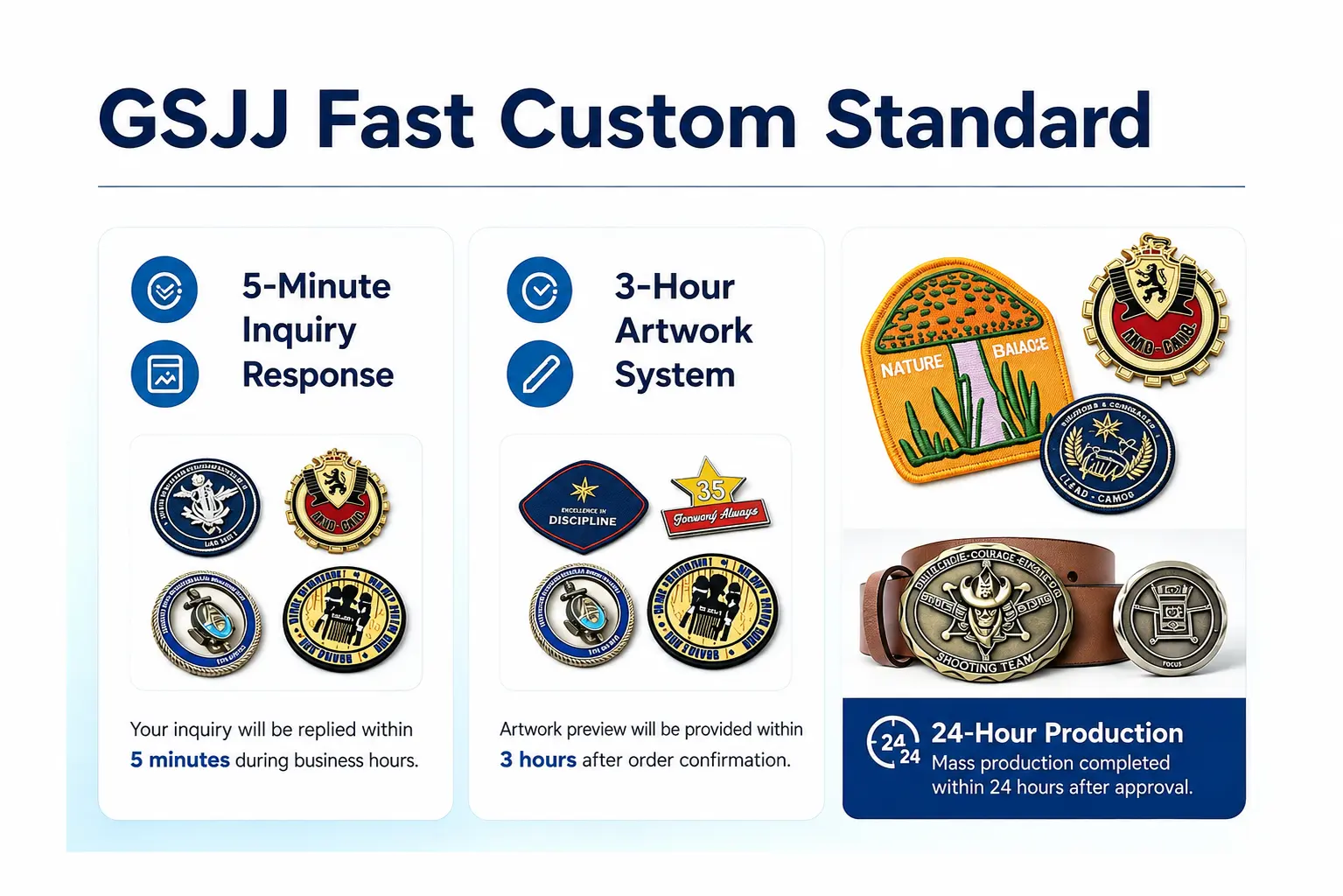
To meet these changing expectations GSJJ introduce a measurable workflow standard, for the custom merchandise industry: GSJJ Rapid Customization Standard—5-minute response time, 3-hour artwork production, 24-hour production.