



The Ultimate Guide to Custom Pin Materials and Craftsmanship for Any Budget

Adeel Qayum
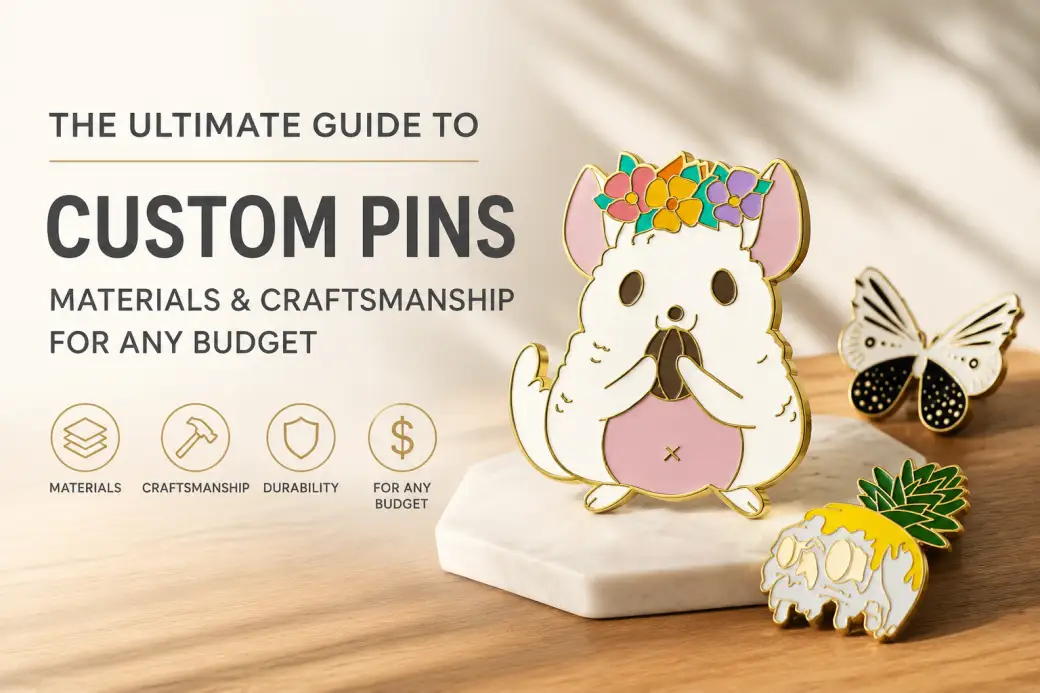
Custom pins are the brand's "mobile business cards," but surface scratches can compromise an otherwise premium design.
In fact, pursuing durability and toughness doesn't have to break the budget; the key lies in choosing the right combination. This guide will quickly break down core processes like hard enamel pins, soft enamel pins, epoxy, electroplating, and PVD coating (Physical Vapor Deposition) on stainless steel pin bases, teaching you how to find the golden balance between scratch resistance, texture, and budget!
I. How do different manufacturing methods affect your pin's final visual style?
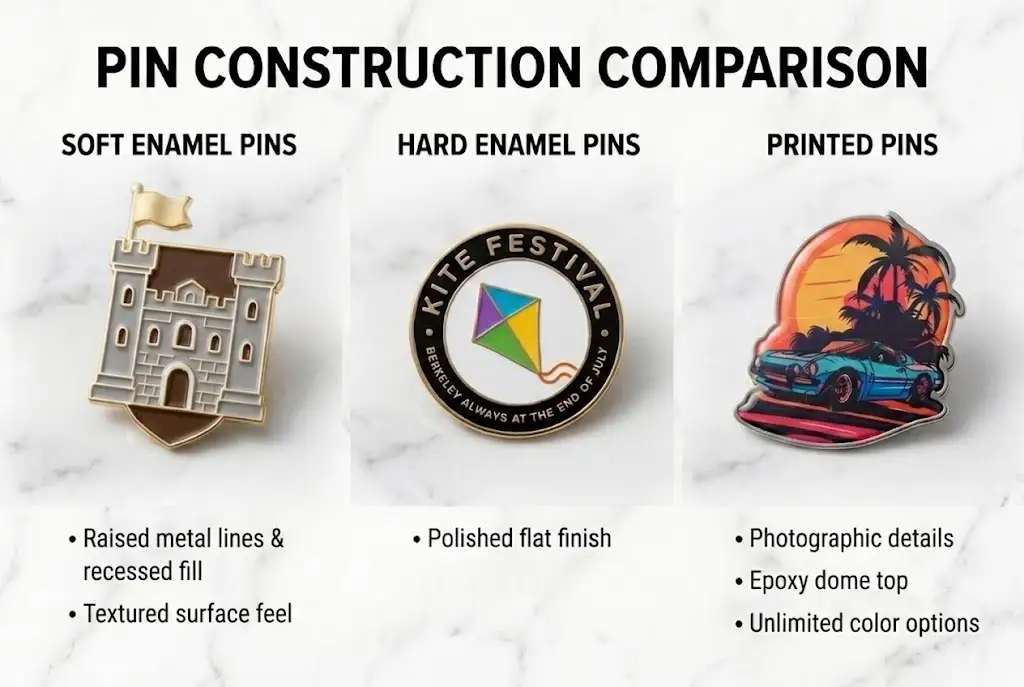
Different manufacturing processes directly determine texture and gloss; among them, the most classic types compared are hard enamel pins and soft enamel pins.
1. What is the visual difference between hard enamel and soft enamel?
Hard enamel offers a smooth, polished mirror finish, whereas soft enamel provides a textured, dimensional feel with raised metal borders.
● Hard Enamel: The filled color layer and metal lines blend seamlessly, with clear and crisp edges that reflect smooth light and shadow. It is suitable for high-end designs with prominent fonts and a simple style.
● Soft Enamel: Light creates rich shadows between recessed filled color blocks and raised metal lines on custom lapel pins, giving complex artistic design details a premium feel.
2. When should you choose printed pins instead of enamel pins?
If your design contains intricate gradients that neither hard nor soft enamel can achieve, printed pins offer a smart alternative. They are the ideal choice when incorporating complex artwork, photo details, or small text on a budget.
● Precise detail fidelity: Unconstrained by metal line boundaries, this process perfectly presents the original appearance and delicate light and shadow of illustrations and logos.
● Efficient and protective: No manual coloring process is required, resulting in a very short production cycle; the surface is coated with a transparent epoxy dome, providing both scratch resistance and cost advantages.
II. How does pin construction affect durability and scratch resistance?
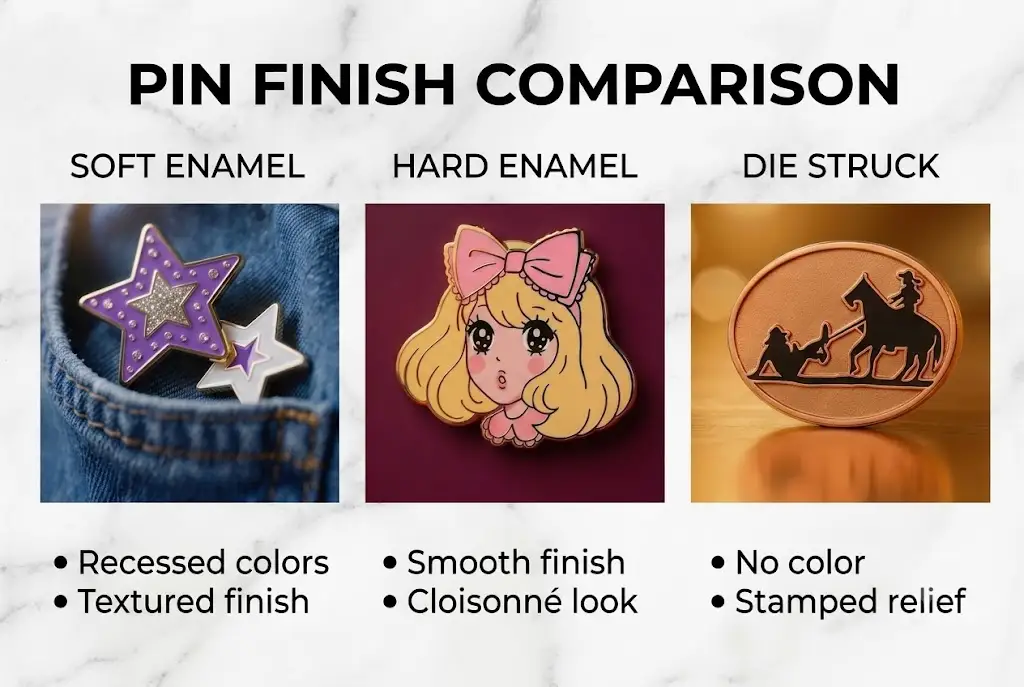 The durability of the pin is closely related to its cost. Before making a budget decision, let's first take a look at which surface treatment processes are the most scratch-resistant and what the price trade-offs are:
1. Is hard enamel more scratch resistant than soft enamel?
Hard enamel is indeed more scratch-resistant than soft enamel, thanks to its smooth physical surface and high-temperature firing process.
● Flush, seamless surface: The hard enamel paint and metal frame are completely polished to the same level, so there are no protruding edges that could be damaged by daily friction.
● Risk of damage to soft enamel: Soft enamel pins feature a recessed color layer, leaving raised metal lines vulnerable to lateral friction during daily wear.
2. Which custom lapel pin finishes resist scratching best and what trade-offs exist with price?
Hard enamel offers the best scratch resistance at a higher price point, while soft enamel with epoxy is a cost-effective alternative. General cost scale: Printed Pins (No Mold Fee) < Die-Struck Metal ≈ Soft Enamel Pins < Soft Enamel + Epoxy Dome < Hard Enamel Pins.
- Hard Enamel (Highest Durability, Highest Cost): Provides supreme scratch resistance as its surface is polished completely flush with no exposed metal edges.
- Soft Enamel + Epoxy Dome (Cost-Effective Alternative): Capping lower-cost soft enamel with a clear resin dome offers near-hard-enamel physical protection on brass or stainless steel pieces at a significantly reduced budget.
- Die-Struck Metal (Best Value for Wear): Omits color-filling entirely, using 3D stamped metal to eliminate paint peeling risks and disguise daily friction, delivering maximum structural durability on a base metal budget for custom lapel pins.
3. How does die-struck metal compare to enamel for scratches?
Pure metal reliefs have no risk of paint peeling, outstanding scratch resistance, and can cleverly hide everyday scratches.
- Zero Risk of Paint Peeling: Using pure metal die-struck pressing, without applying any enamel color, completely eliminates the risk of color peeling, cracking, or discoloration.
- 3D Relief Distributes Impact: The stamped 3D metal surface diffuses light reflections and redirects physical contact across elevated lines, preventing hairline abrasions from ruining the design.
III. What are the characteristics and visual scratch resistance of metal platings?
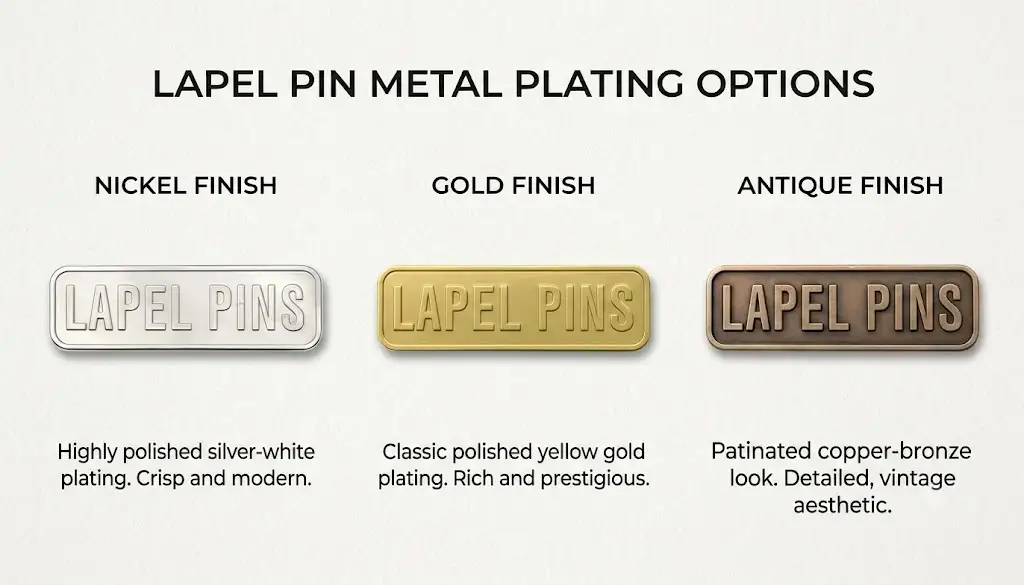
While enamel styles determine a pin's physical structure, the chosen metal plating dictates its optical reflection and how visible daily wear will be. A base metal like brass or stainless steel, combined with pin plating option choices such as PVD coating (Physical Vapor Deposition), directly determines wear visibility on finished pins. Antique finishes hide scuffs best, while high-gloss gold plating and black nickel show scratches easily.
1. Which plating hides scratches best: nickel, gold, or antique?
Antique plating, with its retro matte pattern, best conceals scratches, followed by bright nickel, while bright gold is the most prone to showing scratches.
● Antique Finish: Such as antique silver and antique copper, the surface undergoes an aging oxidation and matte brushing process, naturally forming vintage dark patterns. Even if scratches from friction occur, they are almost invisible to the naked eye.
● Shiny Nickel: Its bright silver neutral tone reduces the visual contrast of light surface scratches, making daily wear less noticeable.
● Shiny Gold: Shiny gold electroplating acts like a canvas for fingerprints and hairline scratches under direct light.
2. Do black nickel finishes show scratches more than lighter platings?
Black nickel plating does indeed show scratches more easily than lighter-colored plating because the dark mirror surface amplifies lighter scratches.
● High contrast on dark surfaces: Black Nickel is essentially a highly glossy black-silver mirror plating. When the surface is rubbed, scratches appear as distinct light-colored lines against the dark background, creating a very strong visual impact.
● For a Dark Finish That Holds Up Over Time: Consider PVD-coated stainless steel or a matte black nickel alternative; this durable coating layer conceals wear on custom enamel pins.
IV. How can you combine materials to design a tough pin on a tight budget?
There's no need to blindly choose the most expensive craftsmanship in pursuit of durability. By cleverly combining materials, you can completely control your budget while creating a scratch-resistant and highly textured pin.
1. Does an epoxy dome improve soft enamel scratch resistance?
A clear epoxy dome acts as a protective shield over soft enamel, smoothing out raised edges and absorbing everyday friction.
● Physical Shielding: Epoxy creates a smooth polymer layer that encapsulates raised metal lines, preventing physical friction from contacting metal edges directly.
● Oxidation Prevention: It forms an airtight seal over custom enamel pins and stainless steel bases, protecting underlying metals and paint from air-induced oxidation.
● UV Resistance & Quality Choice: While standard epoxy may gradually yellow under direct sunlight, choosing an anti-UV grade epoxy dome prevents material discoloration and ensures lasting crystal clarity for your design details.
2. What is the best value finish for daily-wear lapel pins?
Soft enamel paired with transparent resin or antique plating is the most cost-effective choice for daily wear.
● For High-Impact / High-Friction Wear: Choose soft enamel pins with epoxy dome. This combination delivers a hard, scratch-resistant feel comparable to hard enamel pins while keeping your budget intact for custom pin orders.
● For Apparel & Jewelry Wear: Select soft enamel pins with antique pin plating or a durable PVD coating (Physical Vapor Deposition) over brass or stainless steel. This PVD layer creates a classic antique look that withstands daily wear.
3.Which material combination should you choose for giveaways vs. high-end retail merchandising?
For trade show giveaways, printed pins with epoxy or soft enamel are ideal, while high-end retail merchandise calls for hard enamel with polished electroplating.
● Giveaways: Opt for printed lapel pins or soft enamel pins. These custom enamel pins offer short production cycles, low unit costs, and protective epoxy coating for budget pieces.
● Retail Merchandising: Choose hard enamel pins paired with PVD-coated gold plating or shiny pin plating. This smooth, premium look commands a higher retail markup for your brand design.
V. FAQs
1. Is polished nickel better than polished gold for visible scratches?
Yes. Polished nickel diffuses reflected light to soften the appearance of micro-scratches, whereas polished gold’s high contrast and reflectivity highlight surface abrasions.
2. Does plating hardness matter less than pin construction for scratches?
Yes. Pin construction dictates physical stress points—a flush structure (hard enamel) or a protective barrier (epoxy) shields against friction far more effectively than plating hardness alone.
3. How much more does hard enamel cost than soft enamel?
Hard enamel typically costs 20% to 30% more than soft enamel. This premium accounts for additional labor hours required for multi-stage kiln firings and hand-polishing each pin flush.
VI. Conclusion
When crafting custom enamel pins or lapel pins, choose the material types that match your wear scenario and budget. For premium quality, hard enamel pins with gold plating or PVD coating are the top option; for cost-efficiency, choose soft enamel pins with epoxy coating or antique pin plating, which can also provide excellent scratch resistance at a low cost. After understanding the characteristics of various processes, you can create high-quality pins that are both scratch-resistant and attractive within a limited budget.
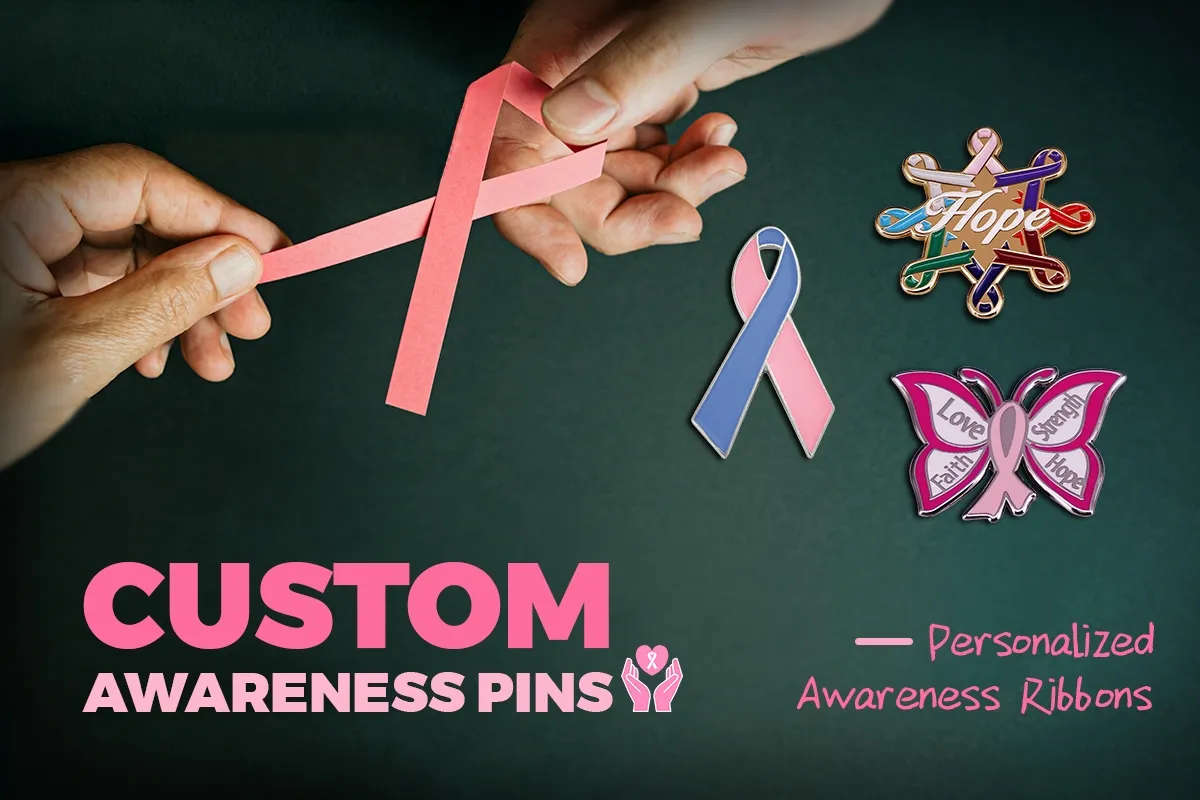
Pink Ribbon Pins & Awareness Pins: Supporting Breast Cancer Awareness
Breast cancer awareness is a global movement, and among its most widespread symbols is the awareness pin.
These tiny pins have a number of symbolic meanings: not just are they tokens of support for survivors and patients, but also for fundraising awareness, research, and community support. For wearing to parties or in daily life, these pins are tangible reminders that promote conversation and provide hope.

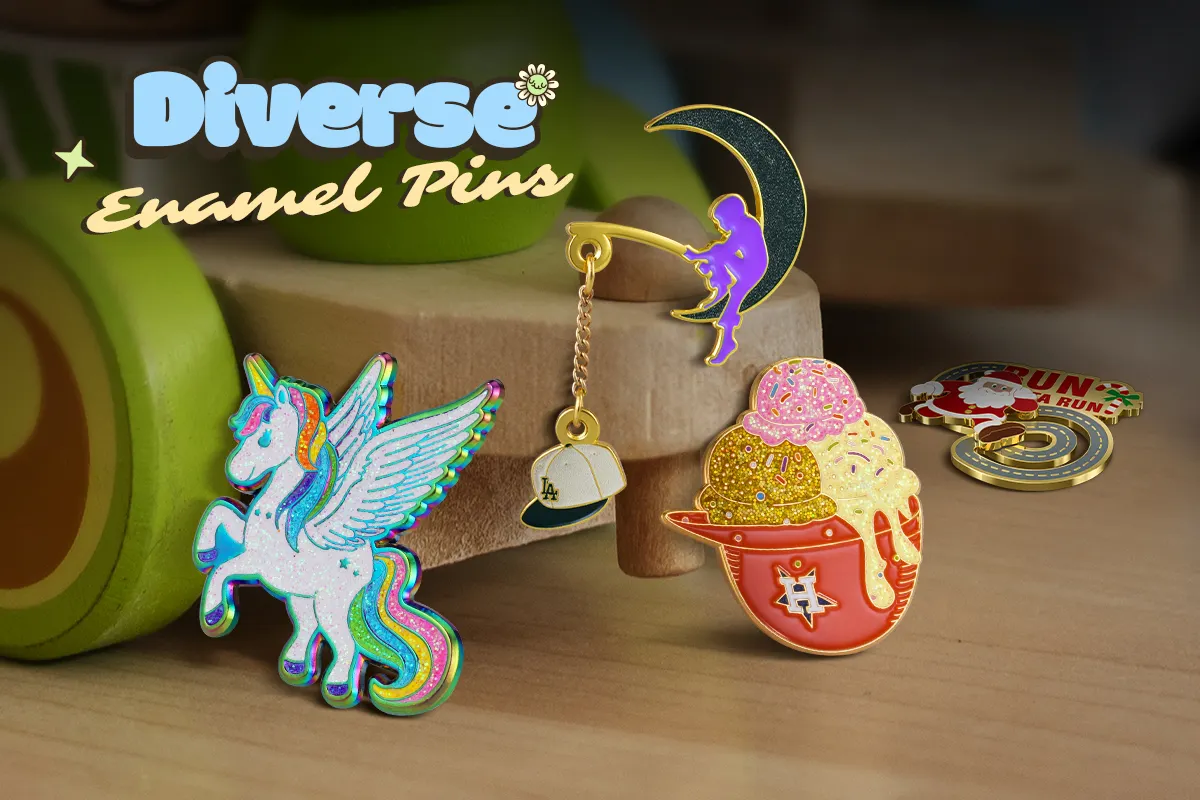
Custom Pins Guide: How to Make Enamel Pins Online?
What are Enamel Pins? An enamel pin is a type of pin made by carving grooves into the metal surface and then filling it with different colored enamel pigments. Finally, it is baked at high temperatures to create a brightly colored, wear-resistant, and fade-resistant surface.
Enamel pins are divided into two types: soft enamel and hard enamel. The most fundamental difference between the two types of pins is the surface of the pin. The surface of soft enamel is uneven and has a sense of lines, while the surface of hard enamel is the opposite and has a flat surface.

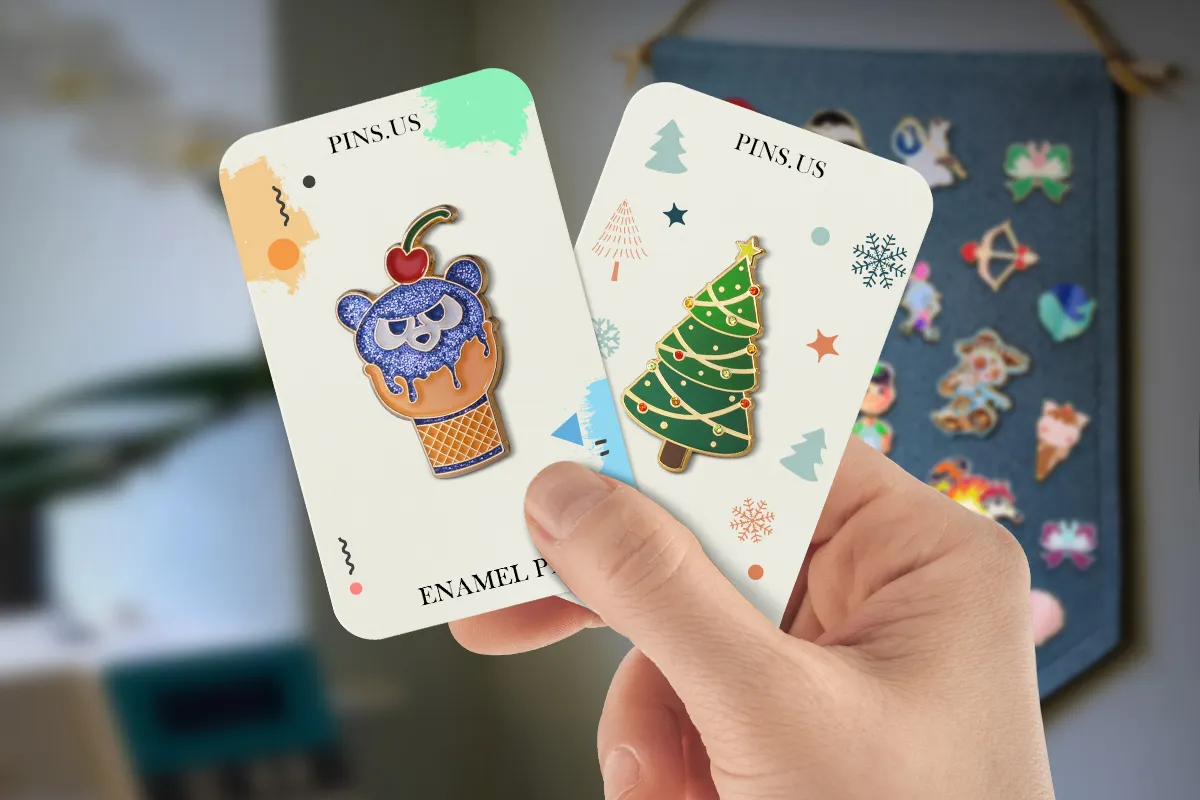
15 Creative Ways to Use Enamel Pins
What began as whimsical decorative pins has transformed into objects for self-expression, branding, and creative illustration. With their small size, variety of styles, and durability, they are utilized in fashion, marketing, and daily life in abundance.
Enamel pins are used for more than collecting - they can enhance your personal style, communicate identity, and be used as promotional pins! So here it is: 15 creative and practical uses for enamel pins to inspire you to get the most out of these small and utilitarian little things