



GS-JJ Factory vs. Middlemen: Why Direct Sourcing Saves 20–40% on Coins

Ethan Carter
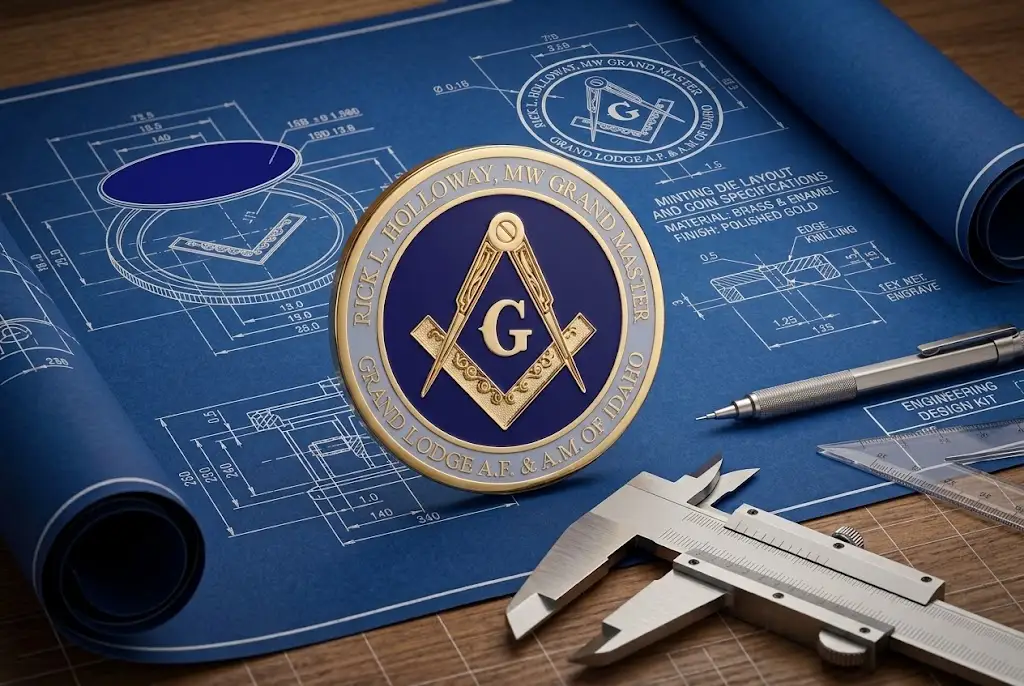
Sourcing custom challenge coins for military units, law enforcement agencies, or corporate milestones usually comes down to three factors: cost, quality, and lead times. The build quality and total project cost hinge on the specific supplier you choose. Working straight with GS-JJ eliminates middleman surcharges to keep piece prices down while making artwork proof sign-offs and physical quality checks much faster. Here is how direct manufacturing compares to using a broker across six critical B2B procurement dimensions.
I. Pricing & Cost Transparency: Protecting Your Procurement Budget
Buying custom metal products online can quickly become expensive due to unexpected distributor fees and extra mold costs. Many sales agents do not own any manufacturing machinery themselves, so they just send your order to an outside factory and mark up the price to make a profit.
Direct Factory Pricing Efficiency vs. Broker Inflation
When buying directly from a factory like GS-JJ, customers pay only the actual cost of mold making. As a result, the unit price decreases as you order more pieces. Detailed itemized quotes are supplied before any work starts, even when a custom order is limited to a single item. Scaling up to larger production quantities then reduces manufacturing costs and protects the project budget. Brokers often charge more for molds when order numbers are small. Small production runs tend to get marked up by brokers through higher mold fees. They also tend to bury extra charges into the unit rate, so total spending increases significantly.
Tiered Pricing & Total Cost of Ownership
What are the typical price ranges for custom challenge coins by quantity and which companies match each range? Base costs for custom coins depend heavily on artwork detail, physical size, and total volume. When working with direct manufacturers such as GS-JJ, skipping middleman commissions allows the cost per unit to fall steadily as the batch size expands:
| Order Quantity Tier |
Estimated Factory Price Range (GS-JJ) |
Direct Factory Advantage |
Broker / Middleman Overhead |
| 100 Coins |
$4.20 – $6.50 / unit |
Net factory mold fee; fair base rate |
20%–40% markup on tooling and unit costs |
| 250 Coins |
$3.20 – $4.80 / unit |
Direct volume pricing without middleman cut |
Distributor margins eat into bulk savings |
| 500 Coins |
$2.50 – $3.80 / unit |
Maximum unit savings passed straight to buyer |
Handling commissions reduce tier discounts |
| 1000+ Coins | $1.50 – $2.80 / unit |
Lowest wholesale cost at full capacity |
Compounding commissions inflate large orders |
II. Proofing & Communication Speed: Eliminating Revision Delays
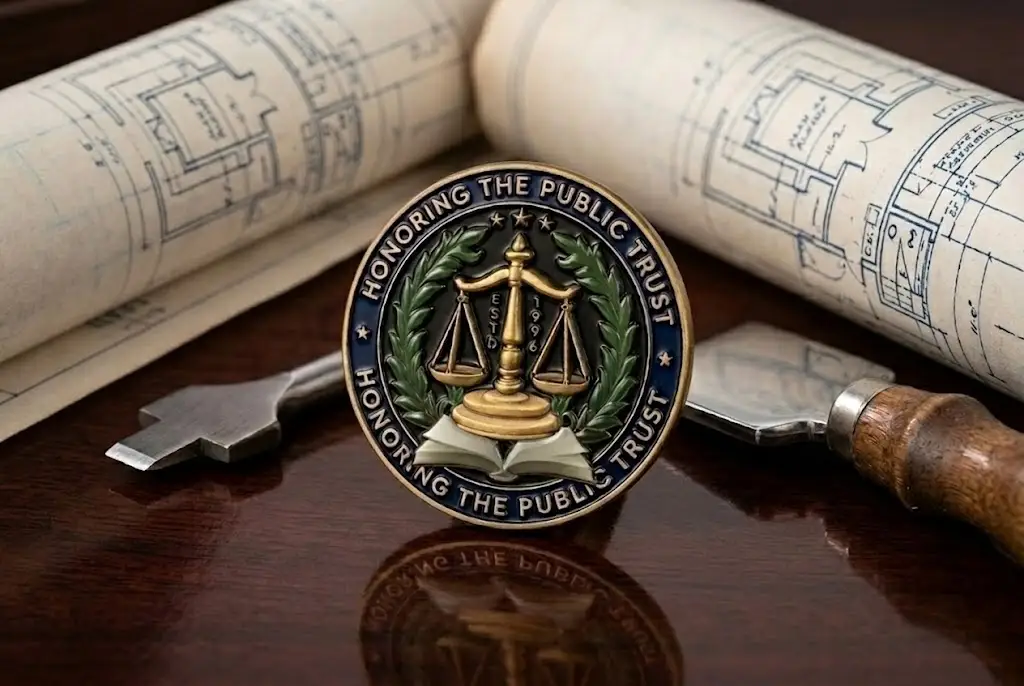 When dealing with a broker, design requests travel through a lengthy chain: Design feedback moves slowly when it goes from the client to a broker sales rep and then to an outside prepress specialist. Working out vector line adjustments or matching Pantone enamel colors across these extra layers typically adds 24 to 48 hours to every change request.
Direct prepress communication gives direct-factory clients a decisive speed advantage. In-house prepress specialists at GS-JJ address vector formatting and 3D rendering updates directly with the customer. Working straight with the technicians prevents miscommunications regarding precise PMS color codes. Designers can send over free 2D vector layouts and 3D digital previews within a few hours, so you can quickly check and approve the artwork. However, when technical details are routed through sales reps who do not handle pre-press, communication errors are more likely, leading to extra redraw rounds or printing errors.
Craftsmanship & In-House QC: Material Choices & Precision Manufacturing
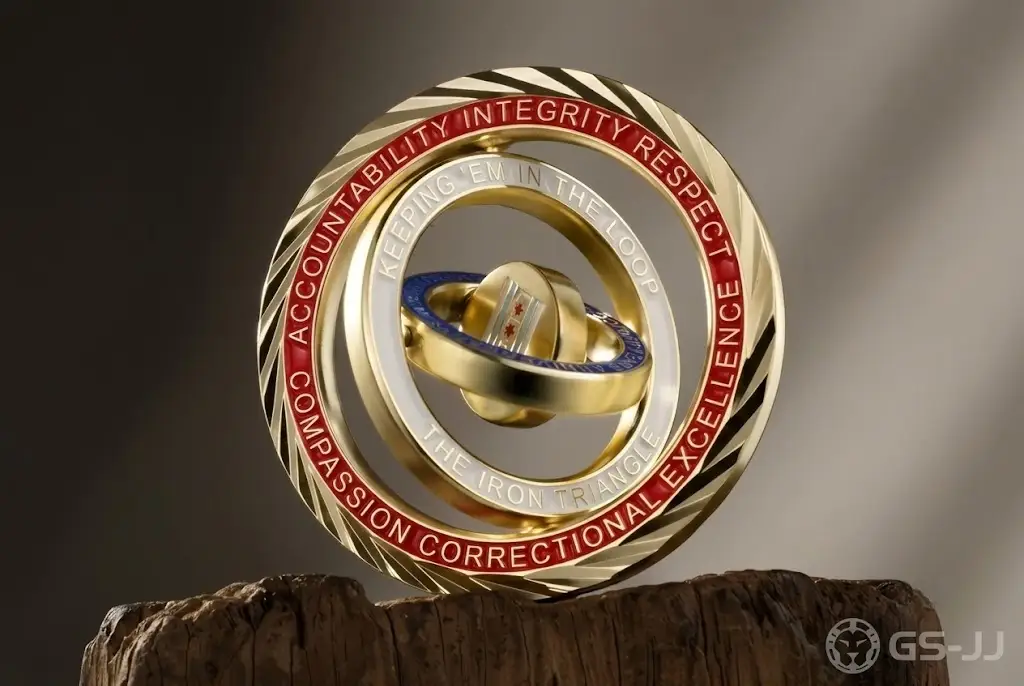 It is common for brokers to send jobs to different supplier factories from one batch to another. As a result, the finished products frequently suffer from uneven electroplating, inconsistent enamel work, or rough edges. As a dedicated metal merchandise manufacturer, GS-JJ operates a fully integrated facility under one roof. Our production process is kept entirely in-house, from initial die-striking and zinc casting to plating and coloring. Every finished batch also undergoes a final quality inspection before it ships.
Base Metal Selection: Brass vs. Zinc Alloy vs. Copper
What are the highest-quality custom challenge coin materials and which makers use them?
Solid brass, high-density zinc, and pure copper are the standard metal choices for making coins that require sharp detail, proper weight, and good durability. Selecting the most suitable material comes down to what your design calls for and what your budget allows:
| Base Metal Material |
Primary Manufacturing Process |
Key Visual & Physical Benefit |
Ideal Application |
| Brass Coins |
High-pressure die striking |
Traditional weight, crisp 2D line detail, executive feel |
Military awards, classic keepsakes |
| Zinc Alloy Coins |
Precision die casting |
Complex 3D relief, custom cutouts, lightweight versatility |
Detailed 3D coins, custom cutouts, functional tools |
| Solid Copper |
Stamping & die striking |
Substantial hand feel, rich natural warm metallic tone |
Collector-grade pieces, anniversary gifts |
Enamel Craftsmanship: Hard Enamel vs. Soft Enamel
Working with base metals is only the first step, as enamel also needs exact heat curing and smooth finishing. Having everything processed in-house guarantees that different styles maintain the same level of durability:
● Hard Enamel (Maximum Durability & Flat Finish): Baking happens at high temperatures, and then the piece is polished down to feel smooth and level with the metal borders. This smooth, durable surface resists scratches during daily use, making it a practical choice for military and executive pieces.
● Soft Enamel (Textured Surface & Dimensional Feel): Baked at lower temperatures beneath raised metal borders, leaving a distinctive 3D tactile feel. Even though this option saves money, the softer paint layer makes it less scratch-resistant than high-baked hard enamel.
Precision In-House Serialization
Which suppliers offer the best options for numbering or serializing limited-edition custom challenge coins? On the main production line at GS-JJ, fiber laser numbering gets done right after the electroplating process wraps up. Placing serial numbers along the outer edge or in a dedicated banner area keeps the design looking neat while making it easy to confirm that a limited release is authentic.
Lead Time & Production Control: Rush Order Fulfillment & Deadlines
When busy seasons hit and factories run out of space, brokers have no way to reorganize the schedule. If the order is for a military handover or a police graduation, missing the event date breaks the whole project.
In-house production line control allows GS-JJ shop-floor managers to adjust queue priorities directly to accommodate urgent rush orders. Consolidating casting, plating, color fill, and laser engraving in a single facility eliminates transit buffers between third-party vendors. On the other hand, when outsourced factories get too busy, brokers have no way to move your order up in the line. Shipping unfinished coins to an outside workshop for engraving adds another 3 to 5 days on the road, which easily puts tight event schedules in jeopardy.
V. After-Sales Assurance & MOQ: Risk Management & Dispute Resolution
When delivered coins have uneven plating or bad color matching, brokers and their factories usually point fingers at each other. Getting the issue fixed often takes weeks of back-and-forth emails, and you might even end up paying extra restocking fees for their replacement.
Direct Manufacturer Accountability & Batch Authenticity
GS-JJ handles every step of production internally, so if any defective pieces pop up, the team inspects them directly and starts a priority remake.
When you are doing limited-collector releases, buying straight from the factory makes it much easier to verify that an entire batch is genuine. GS-JJ provides official, matched Certificates of Authenticity for serialized releases. Each certificate includes specific details about the metal used, maximum production numbers, and when the item was made. This paperwork leaves no room for distributor guesswork and supports the real worth of a limited run.
VI. Decision Matrix: Choosing the Right Procurement Partner
Use this decision framework to match your project requirements with the appropriate supplier structure:
| Procurement Requirement |
Direct Factory Partner (GS-JJ) |
Broker / Independent Agent |
| Primary Goal |
Factory pricing, direct QC, specialized metal craftsmanship |
Full multi-category promo bundles (e.g., coins, shirts, banners) |
| Design Complexity |
Deep 3D relief, edge serialization, custom metal finishes |
Simple 2D artwork applied to standard stock blanks |
| Budget Strategy |
Optimize spend by eliminating third-party distributor margins |
Flexible event budgets accepting standard retail markups |
| Timeline Needs |
Fixed event deadlines requiring rapid proofing and floor scheduling |
Flexible delivery schedules with extended time buffers |
VII. FAQs
Q1: Where can I order high-quality challenge coins?
You can order custom challenge coins directly from GS-JJ to stick with real factory rates instead of marked-up prices. Their team oversees product quality through the whole run, offering free artwork proofs, custom edges, and internal laser serialization.
Q2: When is zinc alloy preferred over brass for custom coins?
For challenge coins larger than 2 inches or those with deep 3D details and internal cutouts, zinc alloy makes a lot of sense because of its versatility in handling complex shapes. In die casting, liquid zinc easily fills detailed molds. This makes it possible to create complex designs while keeping the part's overall weight down.
Q3: How does sequential serial numbering safeguard limited-edition releases?
Putting unique sequential codes on each coin sets a firm limit on total production. This simple system also makes tracking stock much easier during distribution. Buyers can trust that custom work is genuine, which prevents counterfeit versions from entering the market. Genuine items like these tend to hold better value for serious collectors later on.
VIII. Conclusion
Ordering custom challenge coins directly from the factory helps you save money and speed up the design approval process while maintaining high quality. When you don't have to deal with middlemen and their extra fees, it becomes much easier to get solid metalwork, flexible order sizes, bright enamel colors, and on-time shipments. GSJJ offers Professional-Grade Quality at Factory Direct Value.