



The Ultimate Custom Pins and Coins Care and Maintenance Guide

Adeel Qayum
Whether for corporate uniforms, military challenge coins, or premium collectibles, keeping enamel pins and custom coins shiny requires protecting them from sweat, UV rays, and everyday wear. True merchandise longevity begins at the manufacturing stage—not as a reactive afterthought. Choosing weather-resistant materials and electroplating at the outset eliminates 90% of future maintenance work. This guide covers everything from making wise material choices to proper cleaning and scientific storage, helping you maintain the pristine condition of your custom pins and challenge coins for the long term.
If you want to make sure that your custom lapel pins and custom coins remain in good condition for decades without rusting or fading, GS-JJ achieves this by using high-quality metals (such as Brass and Stainless Steel), applying advanced plating methods, and providing free professional design services so that your pins and coins are built to last from the very first day.
How to Make Preventive Choices During Manufacturing?
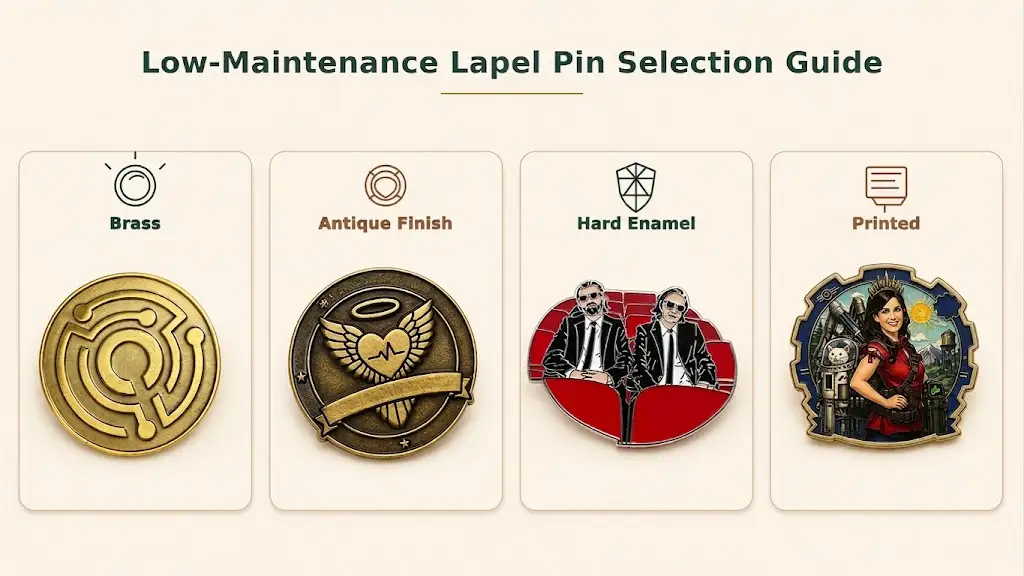
Selecting the right materials, enamel craft, and plating methods during manufacturing prevents the majority of degradation in custom pins and challenge coins before routine maintenance ever begins.
1.Anti-Corrosion Properties of Metal Bases
Selecting brass, zinc alloy, or stainless steel as your base metal gives you better structural integrity and a natural resistance to corrosion, so that serious oxidation does not occur until maintenance is actually required.
- Brass & Zinc Alloy: Non-ferrous alloys that have outstanding molecular stability in resisting atmospheric oxidation; brass is ductile enough to allow for very sharp stamped details, and the molten zinc alloy has better fluidity for casting complex three-dimensional reliefs and multiple-level cutouts.
- Stainless Steel: It has a self-forming layer of chromium that forms an invisible chemical protective coating, making the metal fully resistant to moisture and rust without the need for protective electroplating.
- Low-Cost Iron: A highly reactive ferrous substrate. Environmental humidity penetrates microscopic pores in low-cost electroplating, forming subsurface rust that expands and eventually forces the outer metal layer to delaminate.
- Preventative Material Selection: Selecting non-ferrous base metals eliminates oxidation at the molecular level, saving extensive rust prevention effort over the lifecycle of your custom pins and challenge coins.
| Metal Base | Corrosion Resistance | Maintenance Required | Relative Cost | Expected Lifespan | Best For / Ideal Use |
| Brass | Exceptional | Near Zero | Premium (High / ~50% above average) | 20+ Years |
Premium collectibles, fine-line designs, hard enamel pins, custom commemorative coins |
| Zinc Alloy | Very High | Low | Standard (Industry Baseline) | 10 to 15 Years |
3D sculpted reliefs, heavy challenge coins, complex cutouts, medium to large pins |
| Stainless Steel | Exceptional | Zero | Moderate (Slightly below average) | 20+ Years |
Printed epoxy pins, custom commemorative coins, high-durability budget choices |
| Iron | Low | High | Budget (Ultra-low cost) | 1 to 2 Years |
Short-term event giveaways, ultra-low-budget mass production |
2.Durability Comparison of Hard vs Soft Enamel
Hard enamel has a smooth, polished appearance and resists everyday scratches, while soft enamel has recessed color cavities that tend to hold dust and therefore require frequent cleaning.
- Hard Enamel: After high-temperature baking and polishing, the enamel pigment is completely level with the metal border. The surface is as smooth as a mirror and does not easily attract dust. It has excellent scratch and abrasion resistance, making it the top choice for frequent wear and low maintenance needs.
- Soft Enamel: The pigment is filled in without being buffed flat, leaving the enamel recessed below the raised metal lines. The recessed enamel cavities can easily accumulate dust and fingerprint oils during daily wear, requiring more frequent cleaning of the gaps.
3.Impact of Plating Layers on Lifespan
High-grade electroplating acts as a sealed barrier over the base metal, protecting your custom lapel pins and custom commemorative coins from atmospheric humidity, air exposure, and premature surface tarnishing.
- Non-Porous Physical Barrier: High-quality multilayer electroplating (such as shiny gold/silver, antique finishes, black nickel) forms a dense metal film on the substrate surface, completely blocking moisture and sulfides from corroding the inner metal.
- Corrosion Resistance: High-quality electroplating protection serves as the primary shield against surface tarnish and rust, preventing the vast majority of metal discoloration issues.
- Additional Clear Coat: When placing your custom order with GS-JJ, request the addition of a clear coat or epoxy dome. This provides an extra wear-resistant barrier for the electroplated layer, significantly extending its oxidation resistance lifespan.
How to Avoid Wear and Tear During Daily Use?
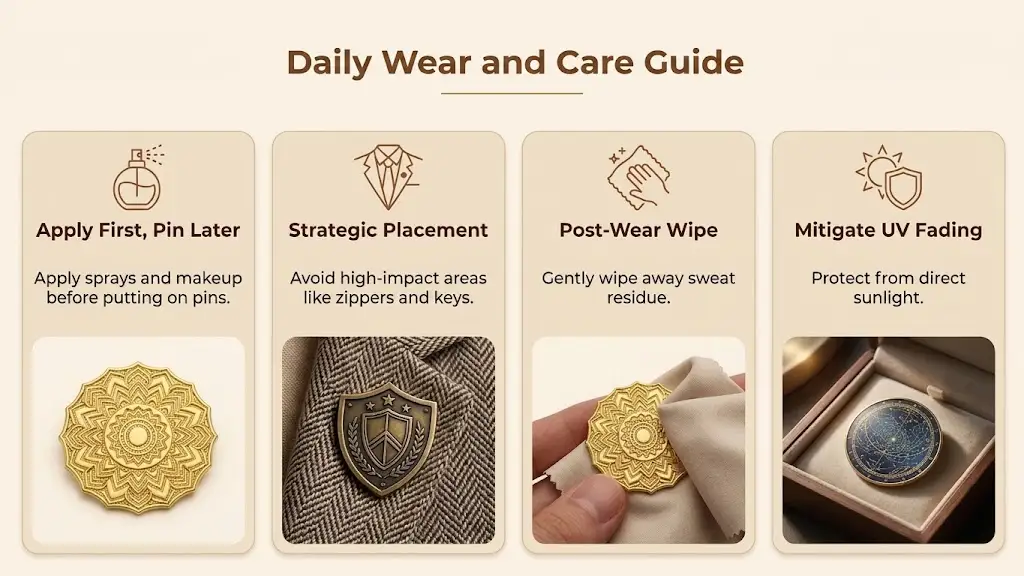
Adopting smart daily handling and wearing habits shields your custom lapel pins and challenge coins from environmental hazards, chemical reactions, and physical friction that ruin their finish over time.
1.Preventing Exposure to Sweat and Chemicals
Applying personal care products before handling custom coins or wearing your pins—and wiping away sweat and body oils after use—prevents harsh chemical reactions from eroding delicate metal plating.
- Chemical Triggers: Natural sweat, body oils, perfumes, hair gel, sunscreen, and styling sprays can quickly corrode the electroplated layer, causing the metal to lose its luster and even discolor and peel.
- Correct Order of Application: Remember the "spray first, pin later" rule. Wait until perfume, hairspray, or hand lotions are completely dry and set on your skin and clothing before attaching your lapel pin or handling custom coins.
- Post-Handling Wipe & Rim-Only Care: Immediately wipe away skin oils after handling coins or removing pins. Always hold challenge coins by their outer rims—or wear soft cotton gloves—to prevent acidic fingerprints from etching into smooth metal faces.
2.Avoiding Physical Scratches and Impacts
Positioning custom lapel pins away from zippers, keys, and heavy bag straps effectively shields their polished enamel surfaces and electroplated rims from irreversible physical abrasion.
- High-Risk Environments: When placed on backpacks, coat pockets, or carried loose in pockets, pins and challenge coins are highly prone to frequent collisions and friction with zippers, keys, metal buckles, or seatbelts.
- Surface Damage: Intense friction with hard objects can leave irreversible scratches on polished hard enamel surfaces and potentially chip the delicate enamel fill or raised metal lines of soft enamel styles.
- Strategic Placement: Fasten the lapel pins to low-impact spots such as the lapel of a suit or the brim of a hat and carry the custom coins in protective pouches rather than keeping them loose in your pockets along with the keys. For larger pins, make sure the fabric hangs evenly and steadily to avoid sagging.
3.Mitigating UV-Induced Color Fading
By limiting your custom pins' and challenge coins' exposure to direct sunlight, you can keep the vibrant enamel pigments and prevent the clear epoxy coatings from turning yellow or becoming brittle over time.
- Photochemical Degradation: Prolonged exposure to strong sunlight or intense ultraviolet light can damage the molecular structure of enamel pigments, causing the highly saturated vibrant colors to gradually fade and become dull.
- Epoxy Yellowing Risk: Printed pins, challenge coins, or soft enamel styles containing a transparent epoxy dome are particularly sensitive to UV rays. Prolonged direct exposure can cause the protective epoxy layer to yellow, become brittle, and even crack.
- Sun Protection Advice: Avoid leaving pinned apparel, bags, or displayed custom coins in direct sunlight—such as near windows or on vehicle dashboards—as heat and UV radiation rapidly degrade color intensity and yellow clear epoxy coatings.
How to Clean Pins and Custom Challenge Coins Safely Without Damage?
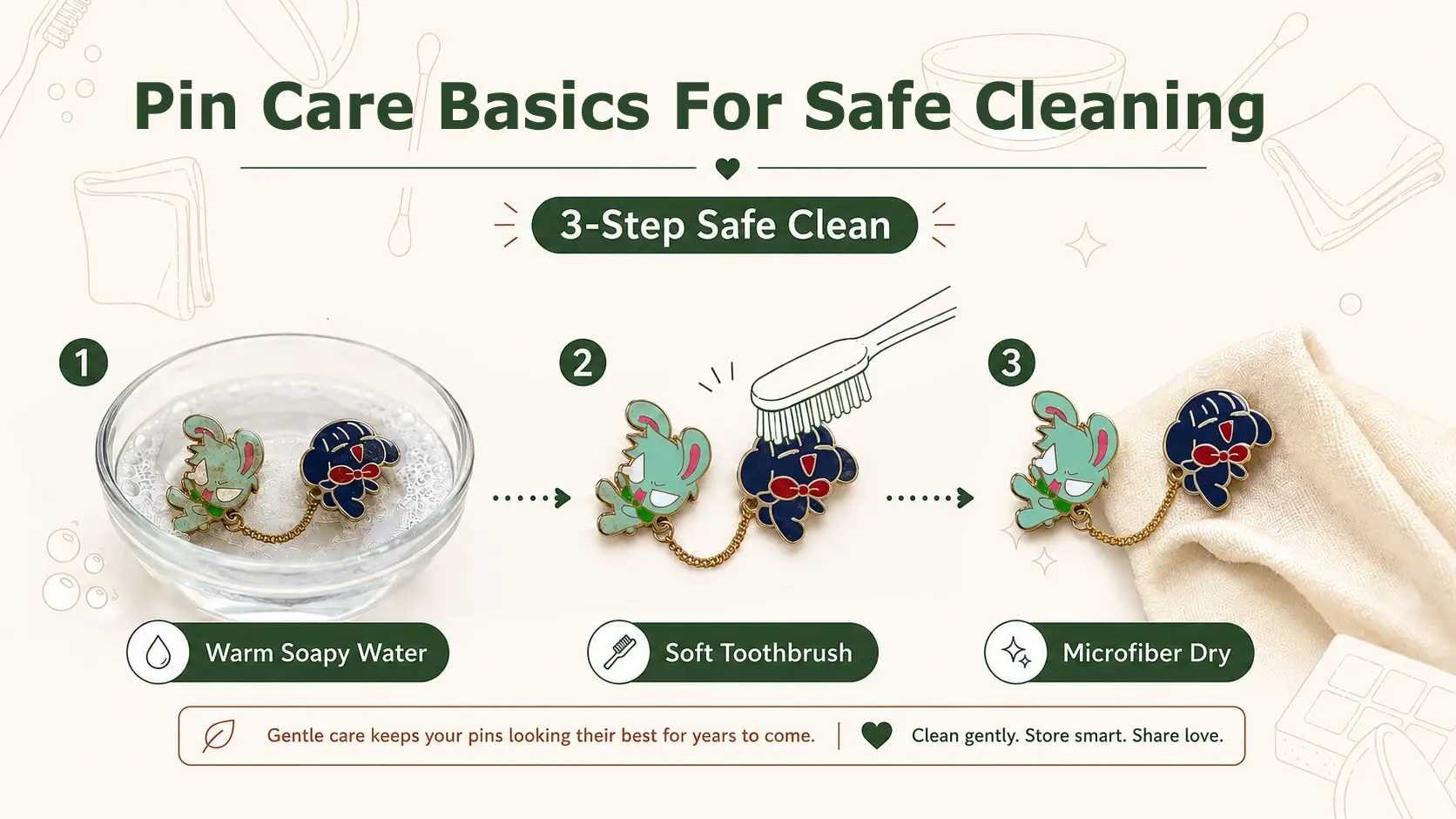
Knowing how to clean pins correctly removes daily grime, while adopting gentle maintenance habits protects delicate metal plating and enamel finishes from accidental scratches.
1.Daily Dusting with Microfiber Cloths
Using a dry microfiber cloth is the best way to clean metal pins on a daily basis, safely removing skin oils, fingerprints, and surface dust without scratching polished surfaces.
- Routine Care: The safest and most efficient daily maintenance method, suitable for removing fingerprints, grease, and surface dust.
- Proper Cloth: It is strongly recommended to use a microfiber cloth (such as a glasses cloth or camera lens cloth). Never use rough-textured tissues or regular rags to prevent paper lint or hard fibers from scratching the polished surface.
- Wiping Motion: Keep the cloth dry, gently wipe in circular motions along the metal lines, and avoid pressing hard or rubbing.
2.Deep Cleaning Crevices with Soft Brushes
When learning how to clean enamel pins and custom coins with recessed textured areas or 3D reliefs, using a soft toothbrush and mild soapy water safely lifts stubborn dirt without scratching the delicate plating.
- Target Area: Specifically designed for the accumulation of dust and stubborn grease in the recessed grooves of soft enamel.
- Tools Required: Very soft-bristled toddler toothbrush, a small amount of diluted neutral detergent, slightly damp soft cloth, and dry absorbent towel.
- Three-Step Process:
1. Use a soft-bristled toothbrush with a tiny amount of mild soapy water, and gently brush in circular motions along the recessed enamel cavities.
2. Use a slightly damp cloth to quickly and thoroughly wipe away any remaining foam.
3. Immediately use a dry towel to absorb the moisture; do not air dry naturally to prevent residual water stains from causing metal rust.
3.Chemical Cleaners to Absolutely Avoid
Avoiding harsh chemicals, abrasive scouring powders, and stiff brushes prevents irreversible damage such as stripped metal plating, cloudy enamel surfaces, and severe structural discoloration.
- Abrasive Cleaners: Scouring powders, scrubbing agents, and other particulate matter can directly wear down the electroplated protective layer and scratch the enamel surface.
- Harsh Chemicals: Bleach, commercial silver polish, acidic metal dips, or industrial solvents can chemically strip electroplated finishes on pins and coins, causing instant blackening or peeling.
- Stiff Brushes: Wire brushes and hard scouring pads will leave irreversible, permanent deep scratches on the polished surface of soft/hard enamel.
How to Safely Store Custom Pins and Coins for Long-Term Preservation?
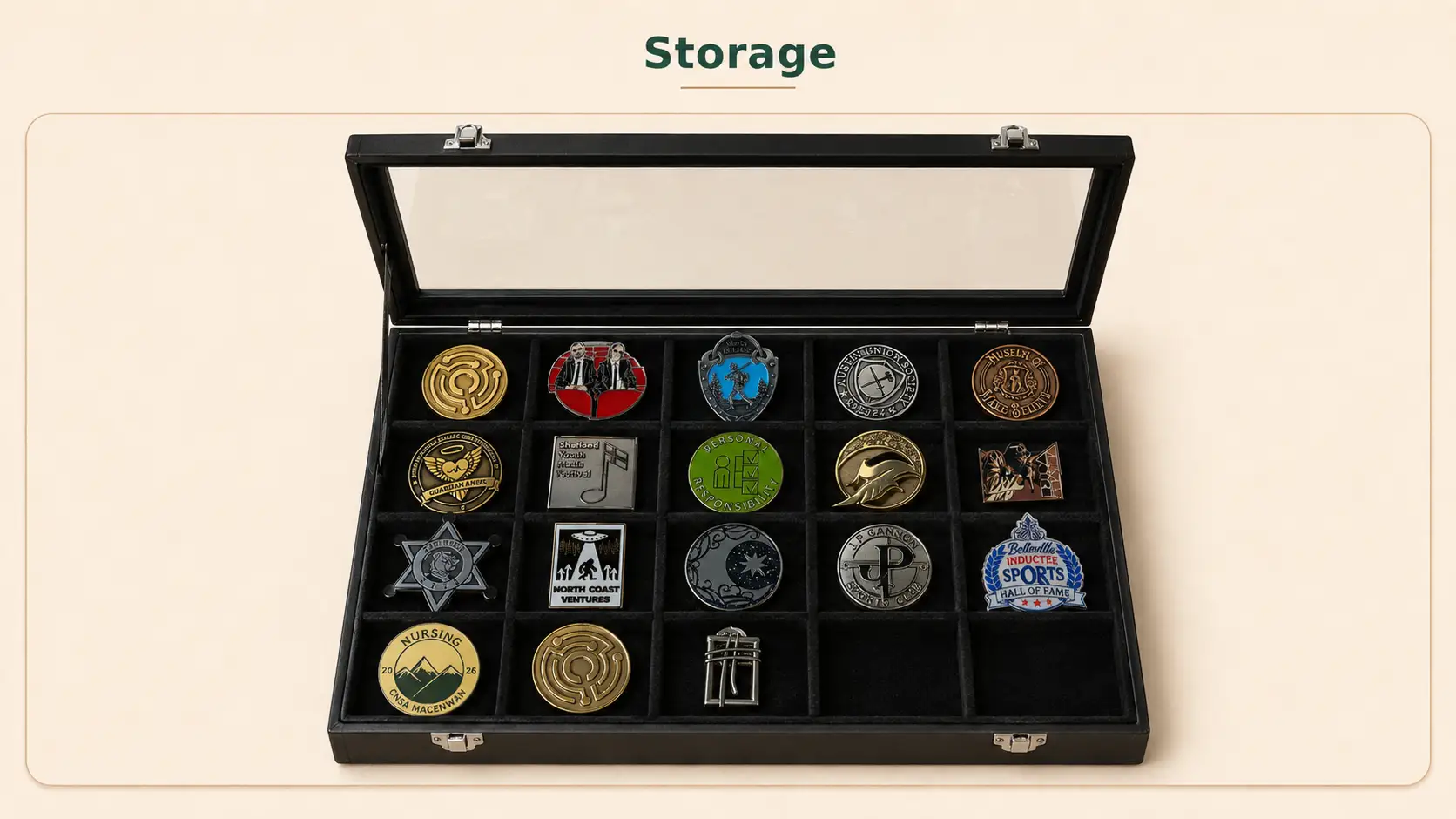
Combining protective storage tools with active humidity control helps keep your pin and challenge coin collection free from rust, surface scratches, and environmental tarnishing over time.
1.Physical Isolation & Post Protection
Storing custom pins in soft-lined pin books and housing challenge coins in individual acrylic capsules prevents sharp metal posts or direct metal-to-metal contact from scratching delicate enamel surfaces.
- Friction Prevention: Direct stacking of pins or unencapsulated coins causes sharp backing posts or metal-on-metal friction to scratch polished enamels and delicate electroplating.
- Safe Storage Media: Use plush-lined pin books for pins, and airtight acrylic coin capsules or PVC-free flips for challenge coins to isolate smooth surfaces from ambient air and moisture.
- Post Protection: When storing lapel pins for a long time, replace the metal butterfly clasp with a protective rubber clutch in order to cover the sharp posts and avoid the metal parts from scratching against other coins or pins.
2.Display Tools & Humidity Control
Enclosing your pin and challenge coin collection in dust-proof shadow boxes or display cases while inserting silica gel packets creates an airtight, low-humidity environment that completely stops metal oxidation.
- Display Cases & Coin Racks: Use enclosed acrylic shadow boxes for pins or multi-tier wooden display racks for challenge coins to present collections elegantly while sealing out dust and grease.
- Moisture Danger: Environmental moisture is the main culprit behind base metal rust and electroplated layer dulling. Prolonged exposure to high-humidity air can significantly shorten the lifespan of the pin.
- Active Moisture Control with Silica Gel: Place 1-2 silica gel packets in display boxes or drawer storage boxes to continuously absorb moisture in a small area, fundamentally cutting off the physical conditions for rust and oxidation.
Why Collectors and Organizations Trust GS-JJ for Lifetime-Quality Pins and Coins?
- Premium Corrosion-Resistant Metals: We don't compromise on the foundation. GS-JJ expertly utilizes premium brass, rust-proof zinc alloys, and stainless steel to guarantee exceptional durability and moisture resistance.
- Advanced Low-Maintenance Finishes: From scratch-resistant antique plating to UV-immune hard enamel and reinforced epoxy domes, our factory-direct techniques drastically minimize long-term maintenance needs.
- 100% Free Artwork & Factory-Direct Pricing: Skip the broker markups. Enjoy direct-from-manufacturer pricing, free 3-hour digital proofs with expert material recommendations, and fast, free shipping worldwide.
- 20+ Years of Manufacturing Expertise: Trusted by over 57,000 customers, our strict pre-shipment quality control ensures every pin and custom coin arrives in pristine, display-ready condition.
FAQs
1. What are some tips for caring for and preserving art pins?
Hold art pins strictly by their metal edges to protect delicate screen prints or glitter layers from skin oils. Store them out of direct sunlight, and clean them exclusively with a dry microfiber cloth—never liquid cleaners.
2. Which custom lapel pin materials are most corrosion-resistant and what are the price differences?
Stainless steel and brass provide the highest natural corrosion resistance. Stainless steel offers near-zero oxidation at a mid-range cost (around 5% cheaper than zinc alloy), while brass commands a ~50% premium for high-end crafting; budget iron costs ~40% less than zinc alloy but rusts rapidly if exposed to moisture.
3. How do professional collectors keep their pins safe and organized?
Professional collectors use felt-lined archival pin books or wall-mounted shadow boxes paired with secure locking pin backs from suppliers like GS-JJ to eliminate physical collisions. They also tuck silica gel packets into storage units to maintain a sealed, low-humidity microclimate that stops tarnishing long-term.
Conclusion
To preserve custom lapel pins, you need to make a full-lifecycle commitment. This can be achieved by making sensible manufacturing choices—for example, by choosing high-grade base metals and applying protective plating through an experienced manufacturer such as GS-JJ—and by combining these with careful daily use, safe cleaning, and storing them in a dry place, so that your pins are able to keep up their brilliant shine and value for many decades to come.
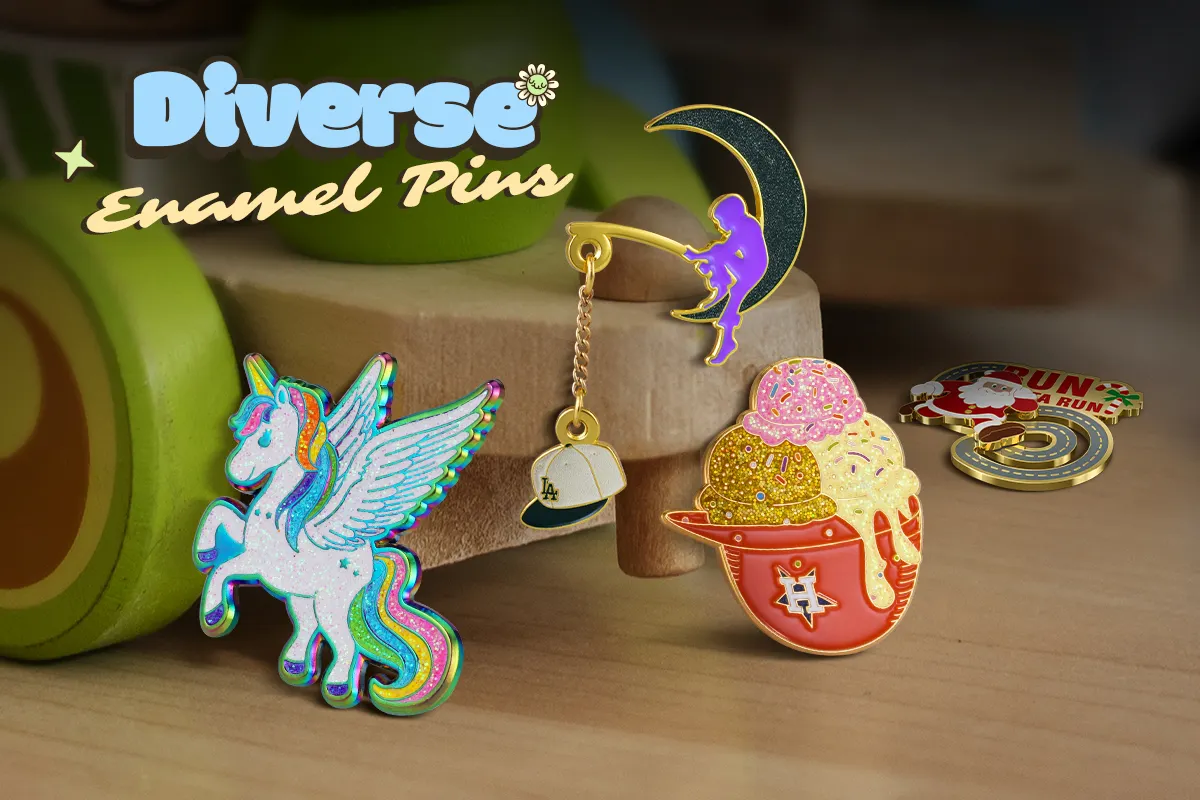
Custom Pins Guide: How to Make Enamel Pins Online?
What are Enamel Pins? An enamel pin is a type of pin made by carving grooves into the metal surface and then filling it with different colored enamel pigments. Finally, it is baked at high temperatures to create a brightly colored, wear-resistant, and fade-resistant surface.
Enamel pins are divided into two types: soft enamel and hard enamel. The most fundamental difference between the two types of pins is the surface of the pin. The surface of soft enamel is uneven and has a sense of lines, while the surface of hard enamel is the opposite and has a flat surface.

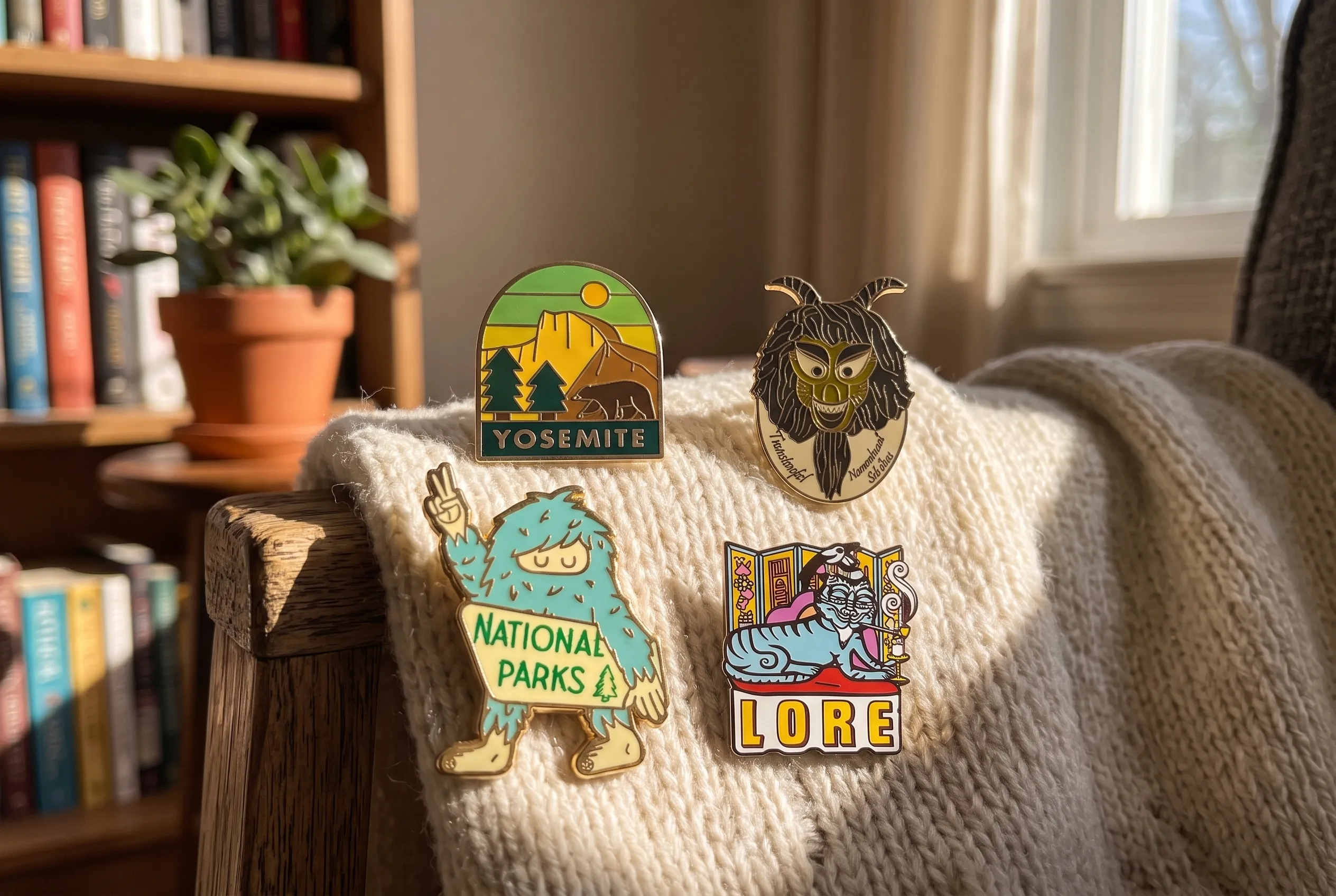
How to display my enamel pins?
Custom lapel pins not just look gorgeous but also say a lot, have memories, and mean a lot. Whether it is a memorial pin for a function, a souvenir, a button pin, an embroidered patch, or a gift from a special one, how you showcase your collection is important. Showing your pins in the right manner keeps them clean, displays their beauty, converts them into unique home decor, and makes them last for years to come.
At GS-JJ, as a professional custom pin and medal manufacturer, we’ve helped thousands of collectors design and display their collections. In this guide, we’ll share our insider display idea. Whether you're organizing your growing collection on a corkboard or showcasing limited editions in a premium shadow box, every great display starts with high-quality pins. If you're looking to create your own custom enamel pins, GS-JJ is the industry-leading manufacturer offering guaranteed factory-direct pricing, free artwork design, and fast customization to bring your ideas to life.


Military Pins: 6 Things You Need to Know
Pins are small and lightweight, and in the eyes of the public, they are seen as small decorative items attached to clothing, backpacks, hats, or other places. Pins are classified into numerous categories based on their purpose: campus pins, sports pins, or religious pins. Each pin has a different meaning.
Military pins are noteworthy, and if you delve deeper into the category of military pins, you'll find hundreds of different types depending on rank and branch of service. Also, Military pins have a long history as a tradition among American soldiers.