


The Ultimate Custom Pin Materials & Crafts Comparison Guide

Adeel Qayum
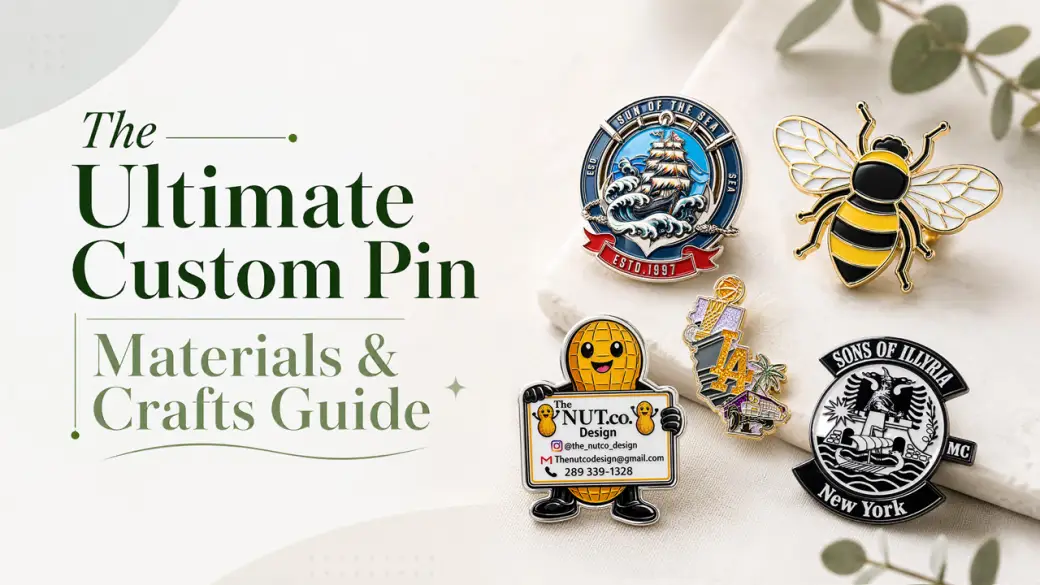
The production of custom pins involves a careful balance between visual art, the tactile aspect, and the production budget; whether it is corporate hard enamel (or a durable hard pin), which keeps its shine for many decades, or highly realistic 3D die cast lapel pins, as well as printed and acrylic pins capable of achieving complex gradients, various methods have a direct impact on whether the design can be perfectly reproduced.
This guide explores all major custom lapel pin types, providing a one-stop, tailored selection reference based on material characteristics, core process comparisons, and advanced special effects.
Material Classification and Quick Selection
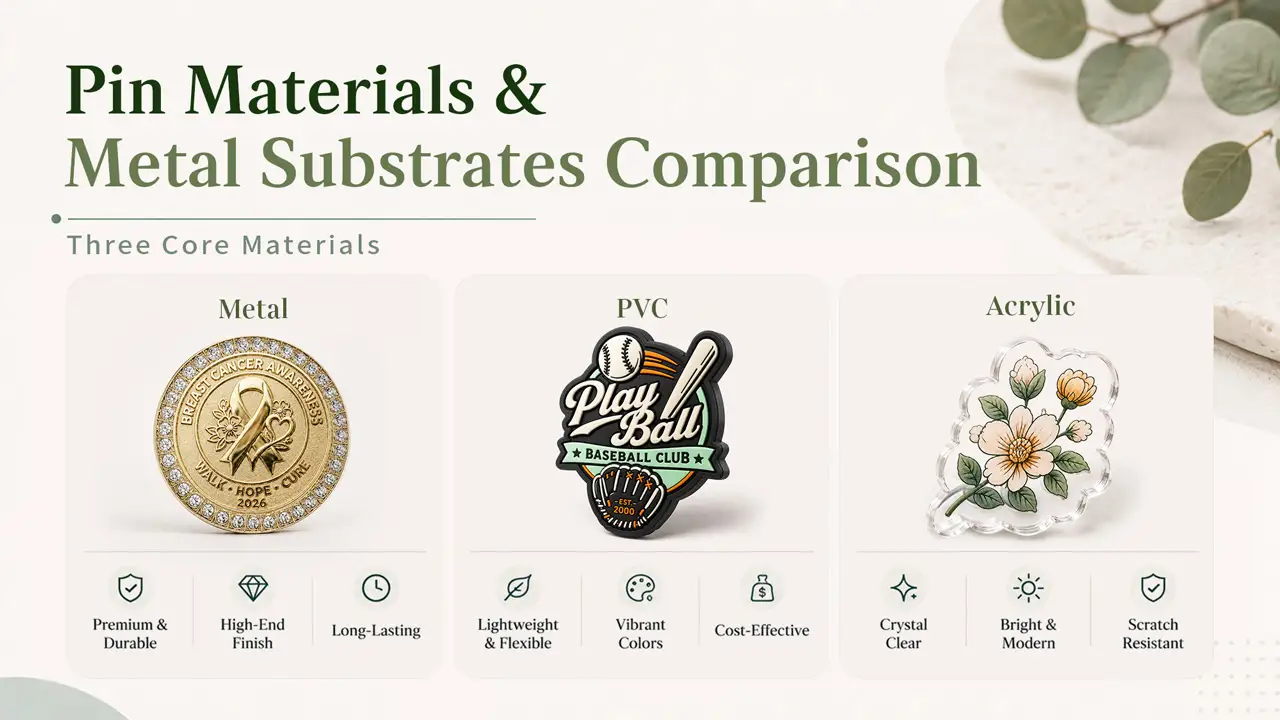
The first step in customizing pins is to make precise matches within different material categories based on the usage scenario, expected lifespan, and budget.
1.1 Core Material Overview
Metal offers high durability, whereas non-metal materials such as PVC and acrylic combine good water resistance with flexibility and allow for the quick production of low-cost artwork.
● Metal material: The classic benchmark when comparing soft enamel pins vs hard options, offering substantial weight, exquisite luster, and jewelry-grade electroplating.
Best for: Logos for corporate brands, pins for executives, anniversary celebrations, and luxury collectibles.
● PVC: Flexible soft-touch polymer with exceptional shock, water, and abrasion resistance.
Best for: Products for outdoor use, children's accessories, and backpack charms are those that are frequently subjected to friction or have exaggerated 3D effects.
● Acrylic: Transparent plastic paired with direct digital printing and zero mold fees.
Best for: Items for conventions, free gifts from anime events, and projects requiring a short turnaround time and involving complex gradients or photo prints.
1.2 Metal Substrate Comparison
Zinc alloy and brass have a natural resistance to rust and last for decades, whereas iron provides a cost-effective degree of strength and stainless steel acts as a very thin printed base.
● Zinc Alloy: A die-casting substrate that is free from iron, naturally resists rust and corrosion; it also has excellent molten fluidity, which enables accurate injection for complex 3D reliefs, multi-layered contours, and intricate hollow cutouts.
● Brass: Heavyweight, high-density metal substrate with natural corrosion resistance. The standard choice for producing jewelry-grade hard enamel and classic die-struck pins that retain luster for decades.
● Iron: Highly affordable hard metal blank with magnetic properties. Rust prevention relies entirely on surface plating (gold/nickel), making it ideal for high-volume promotional giveaways kept in dry environments.
● Stainless Steel: Ultra-thin, lightweight metal sheet that is completely rustproof. Provides a rigid, ultra-thin base plate for printed pins without adding extra bulk.
Custom Lapel Pin Core Process Face-Offs
To carry out custom pin making, you have to assess the basic trade-offs involving tactile texture, 3D shaping capabilities, color reproduction, and surface finishes when using metals, polymers, and printing techniques.
1.Hard Enamel VS Soft Enamel (Texture and Feel)
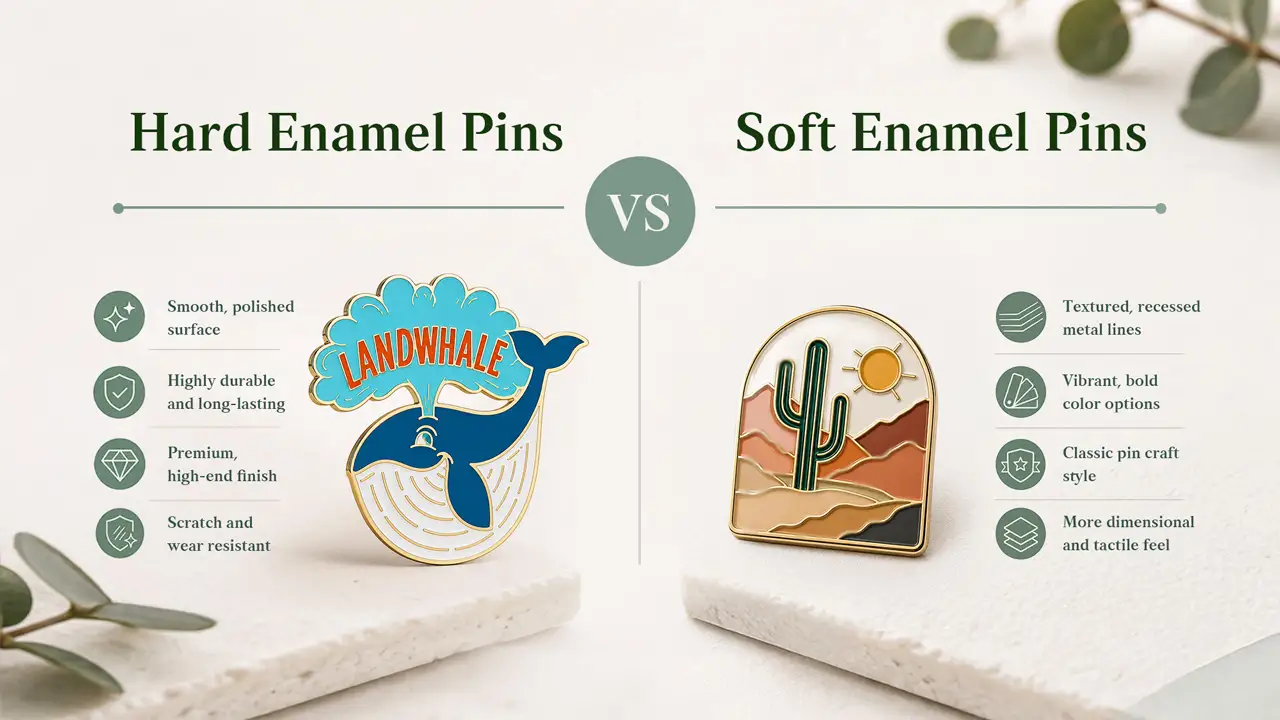
When comparing soft enamel pins vs hard enamel pins, understanding what is soft enamel helps clarify its recessed paint structure. For maximum long-term color retention in a hard enamel vs soft enamel pins decision, hard enamel offers lifetime color preservation with a polished, flat surface, costing roughly 20–30% more than textured, budget-friendly soft enamel.
| Feature / Dimension | Hard Enamel | Soft Enamel |
| Surface Feel | Perfectly smooth & flush (polished flat) | Distinct raised metal lines with recessed paint wells |
| Color Capability | Solid Pantone color fills | Solid Pantone color fills |
| Durability | Jewelry-Grade (Lifetime) | High (Daily Wear Resistant) |
| Production Turnaround |
Standard: 10–12 Business Days (Rush: 7–9 Business Days) |
Standard: 7–10 Business Days (Express Rush: 2 Business Days) |
| Best Applications | Executive branding, corporate identity, choosing a hard enamel pin vs soft enamel pin for awards | Retail merch, fandom releases, selecting a soft enamel pin vs hard enamel pin for events |
2.Die Struck VS Die Cast (3D Shaping)
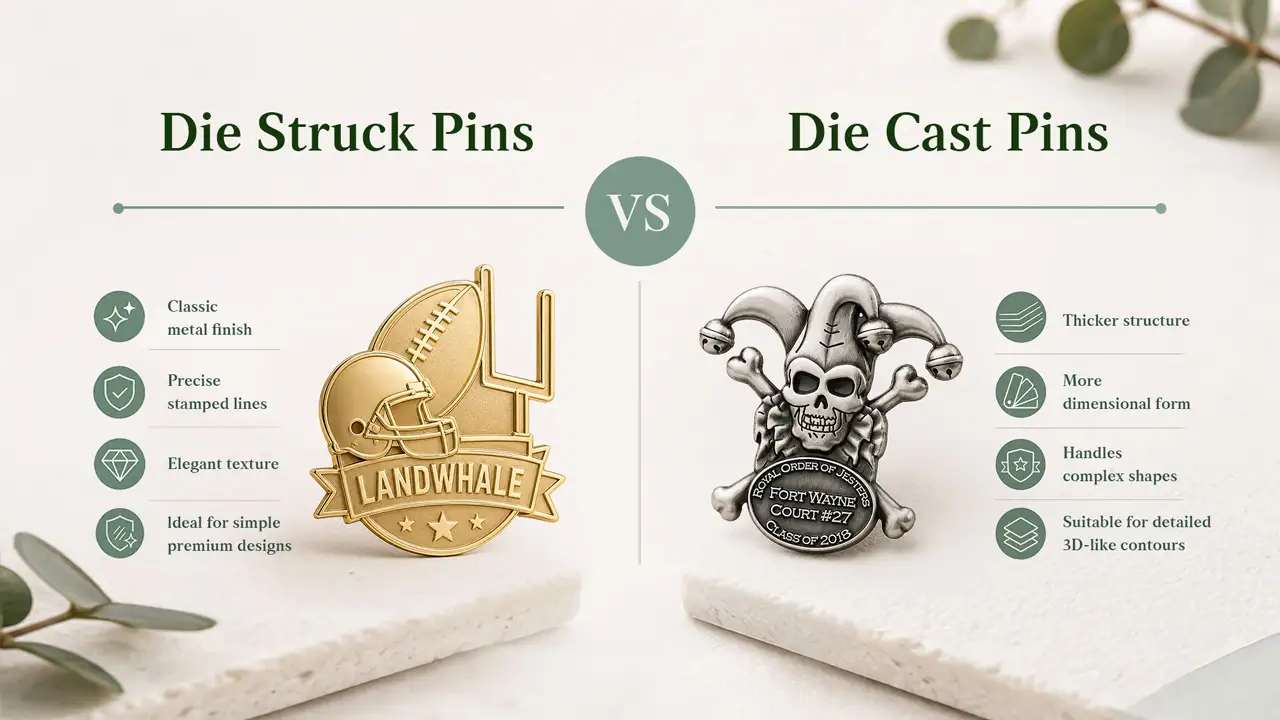
Stamping relies on high-pressure pressing to form clear flat metal lines, while crafting die cast pins achieves complex 3D shapes and hollow designs through the injection of liquid zinc alloy into molds.
| Feature / Dimension | Die Struck | Die Cast |
| Surface Feel | Classic 2D recessed & raised metal linework | Multi-layered 3D sculpted contours & hollow cutouts |
| Color Capability | Solid metal plating or optional Pantone fills | Antique/plated finishes highlighting 3D shadows |
| Durability | Maximum Impact Resistance | High Structural Strength |
| Production Turnaround | Standard: 10–12 Business Days |
Standard: 12–15 Business Days (Requires complex 3D mold making) |
| Best Applications | Corporate logos, challenge coins, classic metal pins | 3D sculpted pins, cutout medals, complex custom contours |
3.Screen Printed VS Offset Printed Pins (Spot Colors vs CMYK Gradients)
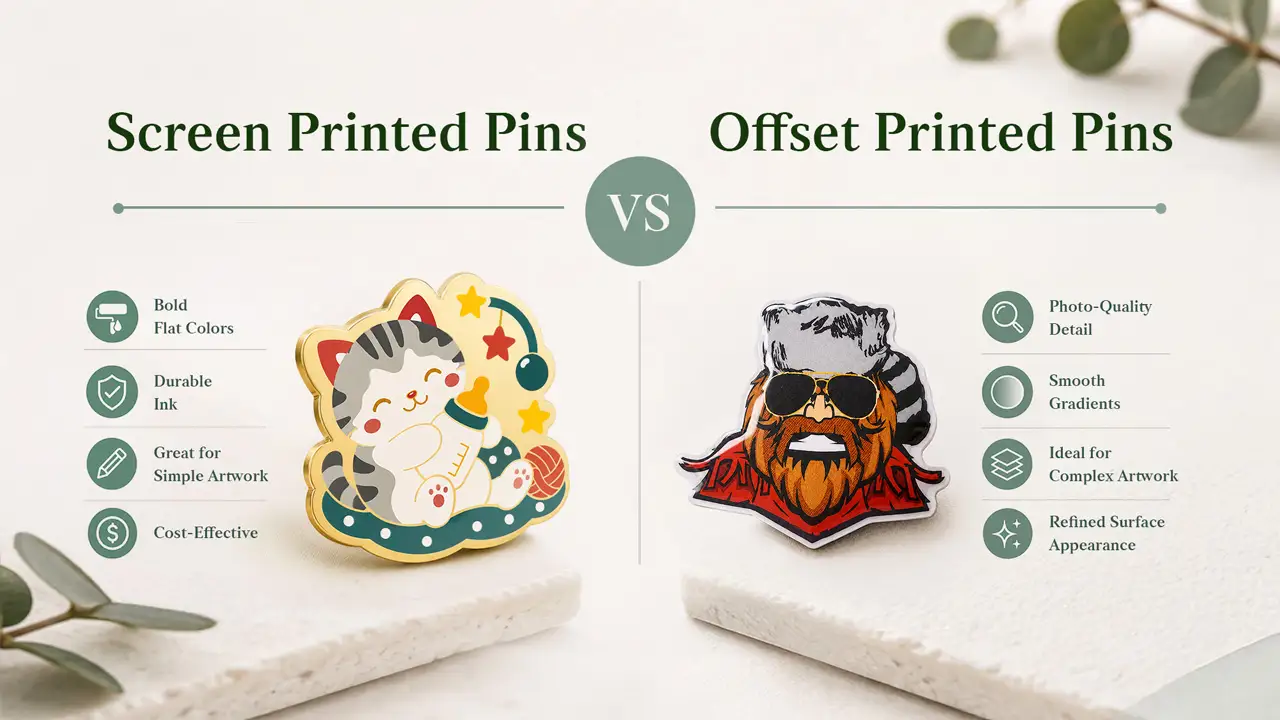
When artwork features tiny text or micro-details, direct printing methods outperform molded metal. Screen printing delivers exact Pantone spot colors for sharp vector lines, while offset printed pins (or custom offset pins) bypass metal borders to render full CMYK gradients.
| Feature / Dimension | Screen Printed Pins | Offset Printed Pins (CMYK) |
| Color Method | Solid Pantone spot colors applied mesh layer by layer | Full-color CMYK process print (like high-res photo printing) |
| Graphic Capability | Ultra-sharp vector text & solid fills (No gradients) | Smooth color gradients, watercolor textures & photo portraits |
| Color Accuracy | 100% exact Pantone matching | CMYK approximation (Slight color variance possible) |
| Best Applications | Precise corporate logos, micro-text & solid vector art | Custom offset printed lapel pins with complex shading, photos, or smooth gradients |
4.2D PVC VS 3D PVC Pins (Stepped Layers vs Rounded Sculptures)
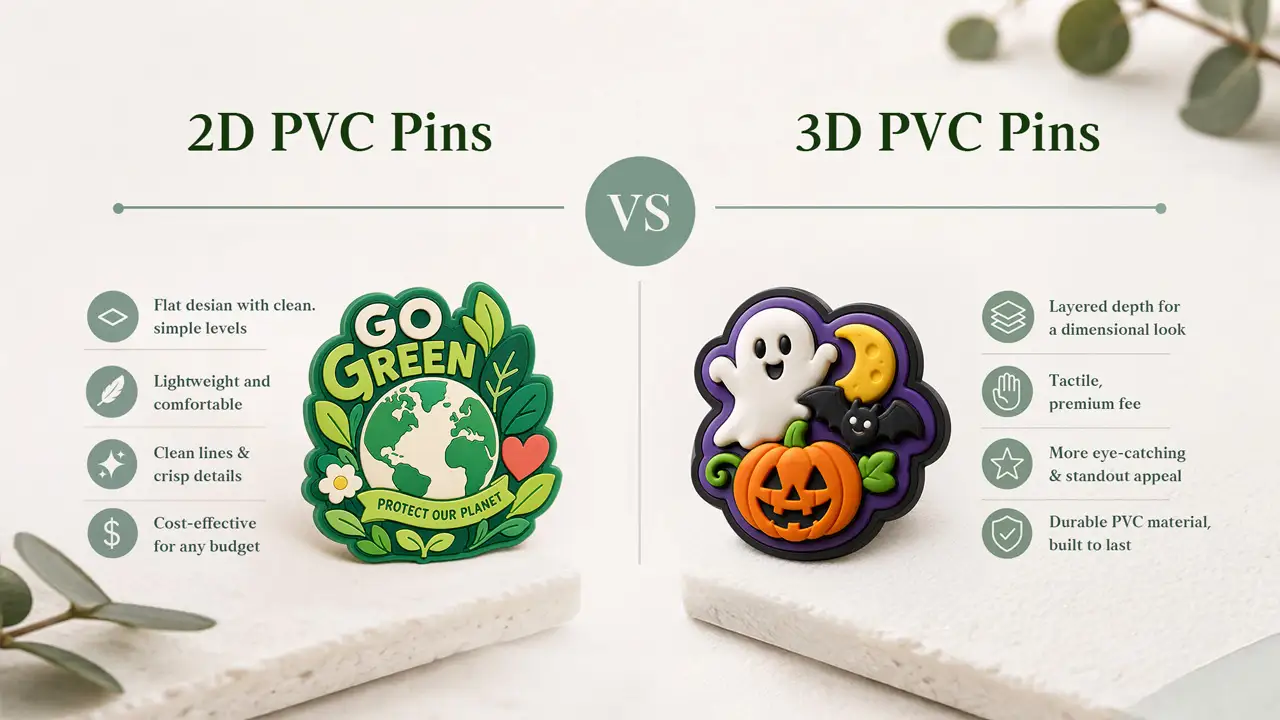
Choosing between 2D and 3D PVC depends on whether your design relies on clean, flat, layered color blocks or fully rounded, sculpted physical contours.
| Feature / Dimension | 2D PVC Pins | 3D PVC Pins |
| Surface Contour | Flat, tiered layers with sharp 90° vertical edges | Fully rounded, smooth curved contours & sculpted depth |
| Visual Style | Sharp, pop-art layered look (like stacked paper) | Lifelike, toy-like 3D relief with organic curves |
| Mold Complexity | Simple 2D CNC mold engraving (Lower mold fee) | Complex 3D hand or digitally sculpted mold (Higher mold fee) |
| Best Applications | Vector logos, clean mascots & bold text designs | Animal faces, character figures & organic 3D shapes |
5.Transparent Enamel VS Standard Enamel (Optical Depth vs Solid Color)
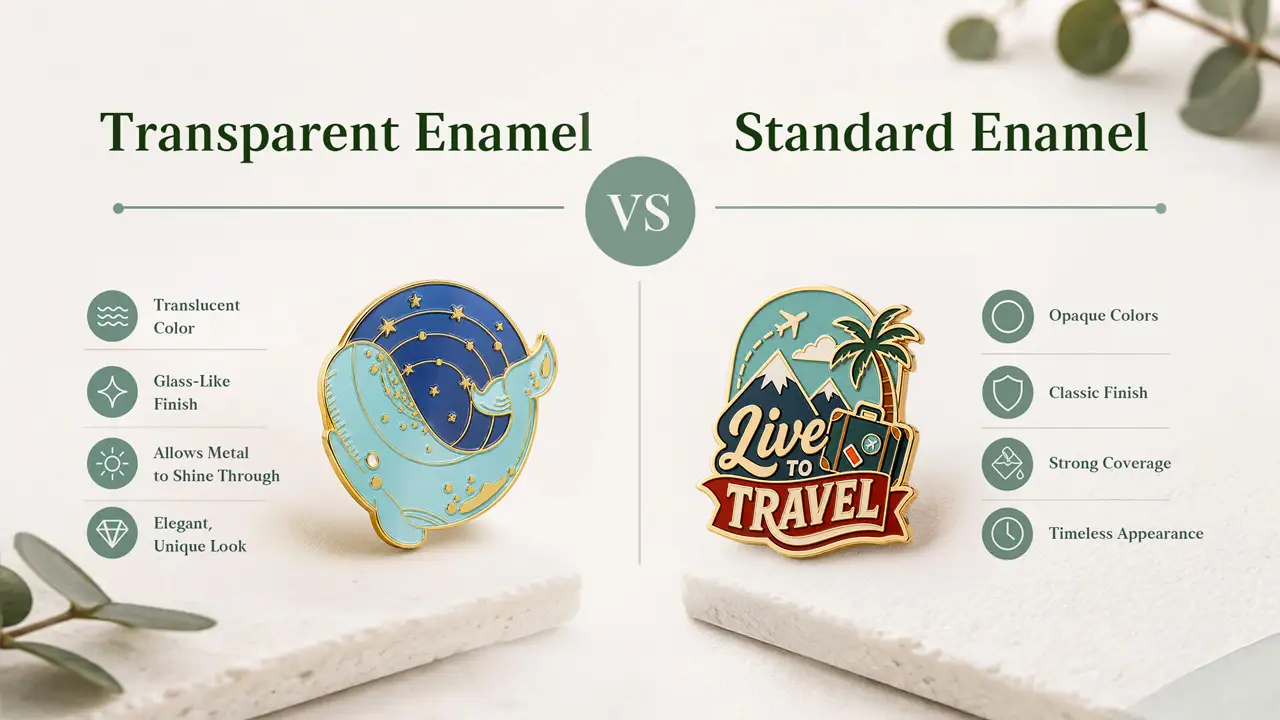
A transparent enamel pin uses semi-translucent paint poured over textured metal bases to refract light, whereas standard opaque enamel fills paint wells with bold, uniform Pantone colors.
| Feature / Dimension | Transparent Enamel | Standard (Opaque) Enamel |
| Paint Property | Semi-translucent pigment revealing underlying metal texture | Fully opaque solid pigment blocking base metal visibility |
| Visual Effect | Stained-glass optical depth with metallic light reflection | Vibrant, solid color blocks with uniform flat appearance |
| Metal Base Need | Requires recessed textured/recessed die patterns underneath | Works with standard flat recessed metal paint wells |
| Best Applications | Water waves, stained-glass motifs & textured backgrounds | Classic logos, bold cartoon characters & solid color fills |
6.UV Printing VS Epoxy Dome Finish (Matte Flat Surface vs Glossy Shield)
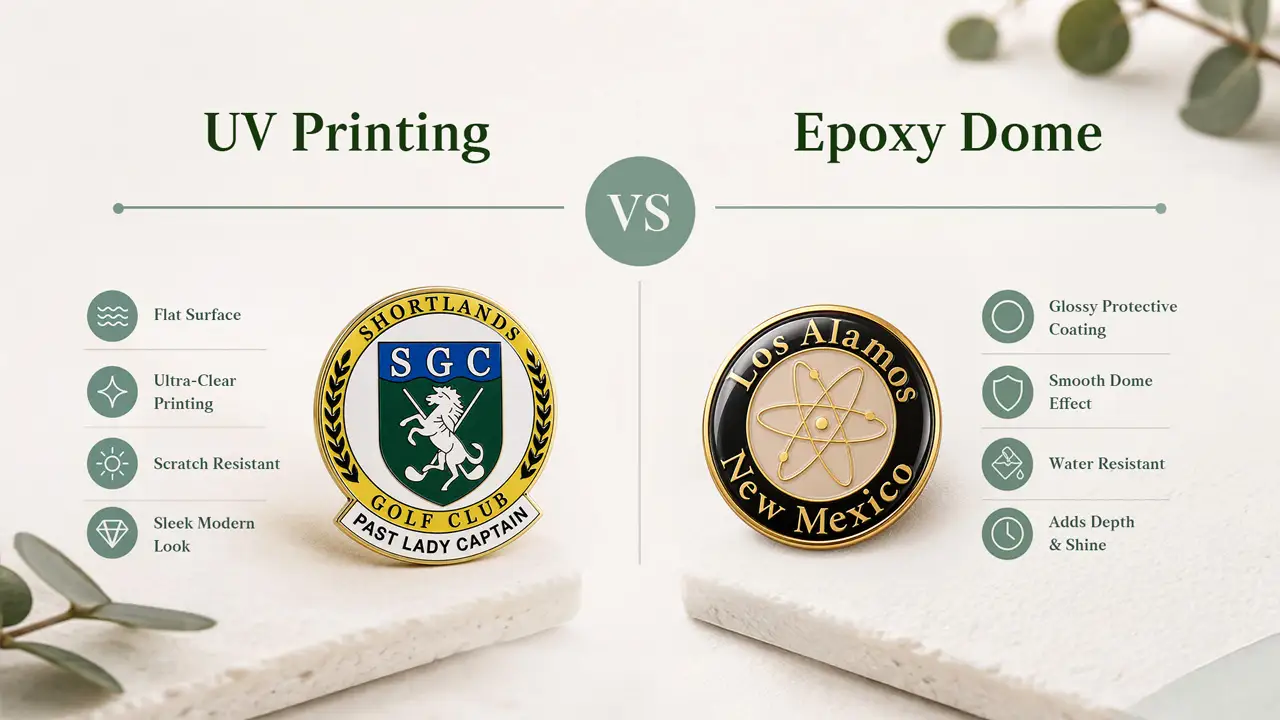
Evaluating surface scratch resistance against cost trade-offs comes down to protective layers: direct UV printing leaves cured ink exposed to normal wear, while a clear epoxy dome adds an affordable glossy shield.
| Feature / Dimension | UV Printing | Epoxy Dome Finish |
| Process Form | UV light-cured ink printed directly on metal/acrylic base | Clear liquid epoxy resin poured over finished pin & cured |
| Surface Texture | Flat to slightly textured surface with sharp line definition | Smooth, slightly raised 3D domed glossy finish |
| Protection Level | Standard scratch resistance (Exposed cured ink) | Superior wear, scratch, and yellowing protection |
| Best Applications | Crisp micro-text, flat metal badges & acrylic merch | Soft enamel leveling, custom offset printed lapel pin orders & heavy-wear pins |
Recommended Lapel Pin Manufacturers & Selection Criteria
Choosing the right supplier comes down to balancing low order thresholds (No MOQ), factory-direct pricing, and full-craft availability— including expert consultation to help you decide on a hard enamel vs soft enamel pin project, 2D/3D PVC, UV printing, translucent enamel, and custom fills.
● GS-JJ: Best for full-craft customization, small or high-volume orders, no MOQ (1 pc minimum), and 2–3 business days express rush turnaround.
● PinMart: Best for corporate recognition orders needing ready-to-ship US domestic stock inventory (5–7 business days delivery).
● Wizard Pins: Best for independent artists seeking hands-on design support, low MOQs, and crisp detail reproduction.
FAQs
1. Can colors be freely selected and custom-matched for all these pin crafts?
Yes, you can freely select and custom-match colors for every pin craft using Pantone codes for solid enamel/PVC fills and CMYK for printed gradients.
You can also customize metal plating options—such as gold, silver, or black nickel—to perfectly match your design.
Leading suppliers like GS-JJ provide free color matching and digital proofs to ensure your finished pins accurately reflect your original artwork.
Conclusion
Choosing the right custom pin process essentially involves finding the best balance between pattern complexity, wear durability, budget cost, and delivery time. From classic hard enamel to modern 3D PVC and high-definition printed finishes, clarifying the core demands of your project—whether you are pursuing a jewelry-grade permanent collectible or seeking fast delivery of fashion accessories—can help you quickly identify the best solution, transforming design drawings into tangible wearables with a premium finish.