



The Differences: Soft vs Hard Enamel Pins

Lea Alber
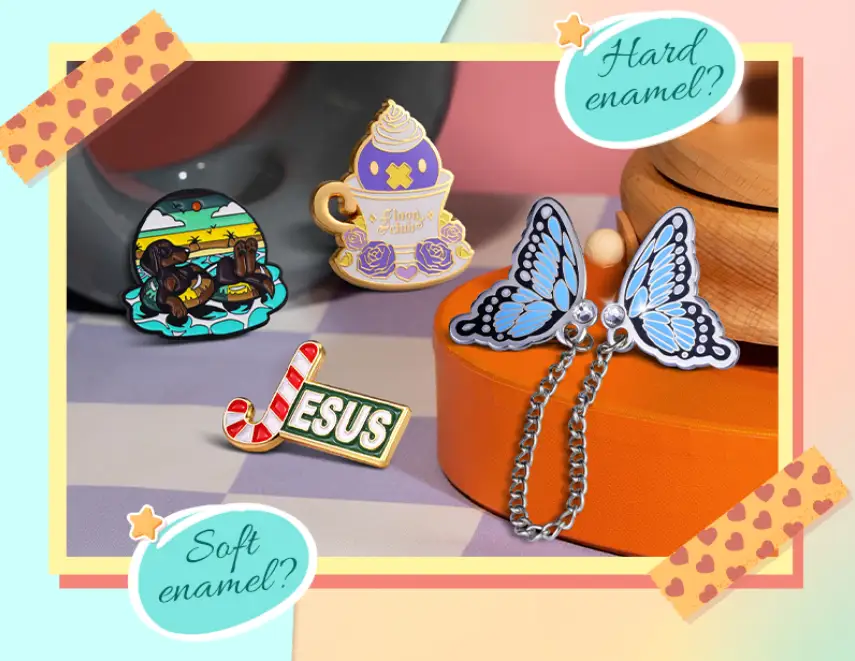
Pin manufacturers are constantly updating and iterating on different technical processes. As of now, there are no least ten types of pins, each with its own personalized characteristics.
The most classic styles are soft and hard enamel pins. The soft and hard here do not refer to the hardness of touch, but to the final effect of the pin. The following will bring you detailed knowledge about enamel pins.
I. Things you need to know about pins
1. What are enamel pins?
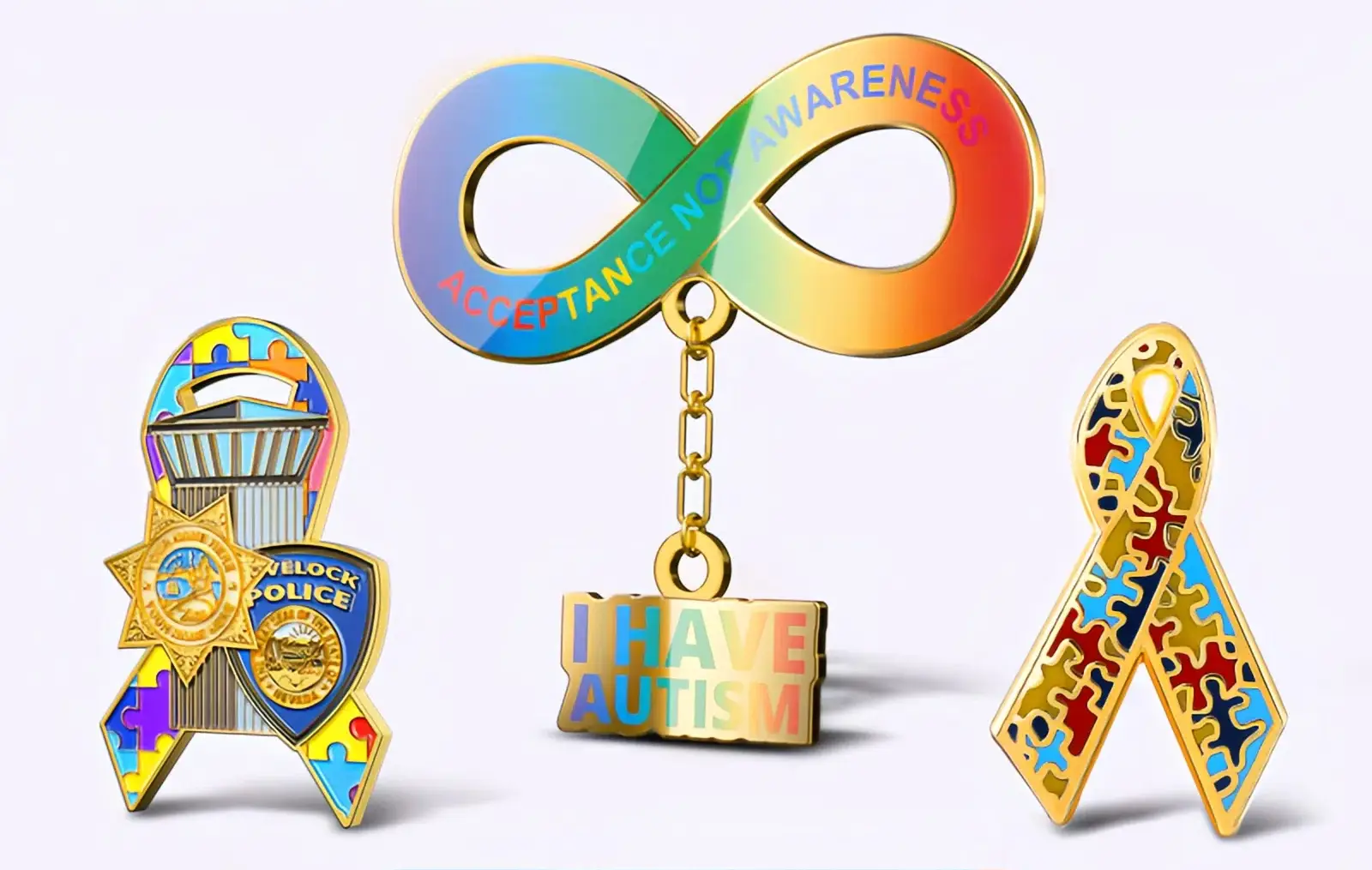
An enamel pin is a tiny, delicate, ornamented metal pin with colored enamel pigment covering it. To make one, the metal is first shaped into the shape you require, then the pigment is filled into the tiny crevices with care. When it's baked and polished, the pin stands out with good color and nice detail.
Because of their charming look, heavyweight, and the ability to be worn revealing any type of artistic pattern, enamel pins are also widely used to provide a dash of brightness to an outfit, as a friendly little collectible memento, and even a decent choice for advertising purposes, or even as a heartfelt gift.
2. How to wear enamel pins?
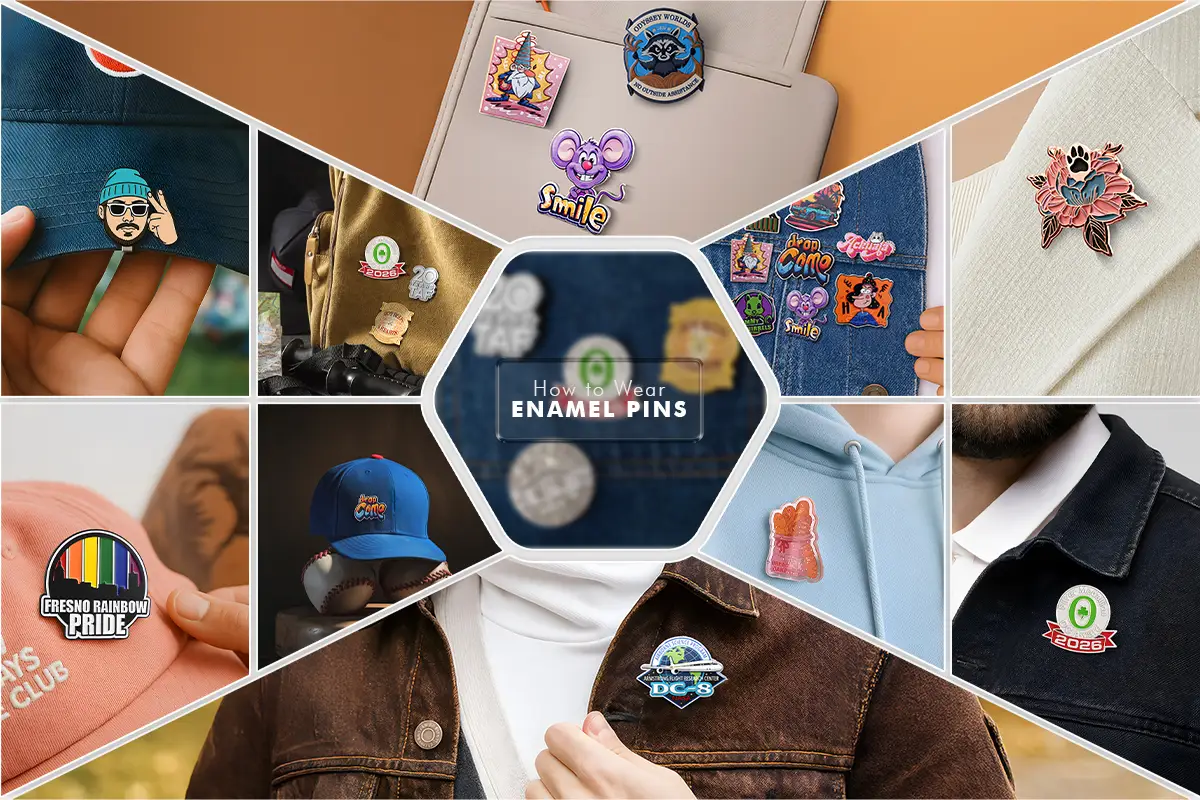
A pin typically features a backing and a clutch on the back; it's usually worn on the left chest or lapel. It's not suitable for clothing that is too soft or too stiff. Stiff clothing can be damaged, and the pin won't be able to penetrate and secure it, causing it to fall off.
The placement of pins on hats and backpacks is relatively simple and casual, allowing them to fill in relatively empty spaces with decorative elements and express a personal touch.
3. What is the history and evolution of pins?
The history of pins can even be traced back thousands of years, and the earliest materials were wood and bone; it was a functional item used to fix clothes.
With the development of the Industrial Revolution, the large-scale production of metal promoted the widespread use of enamel pins, which gradually transitioned to the military and political fields. Now, it has become a decorative item.
II. Soft vs Hard Enamel: what are the differences?
1.What are soft enamel pins?
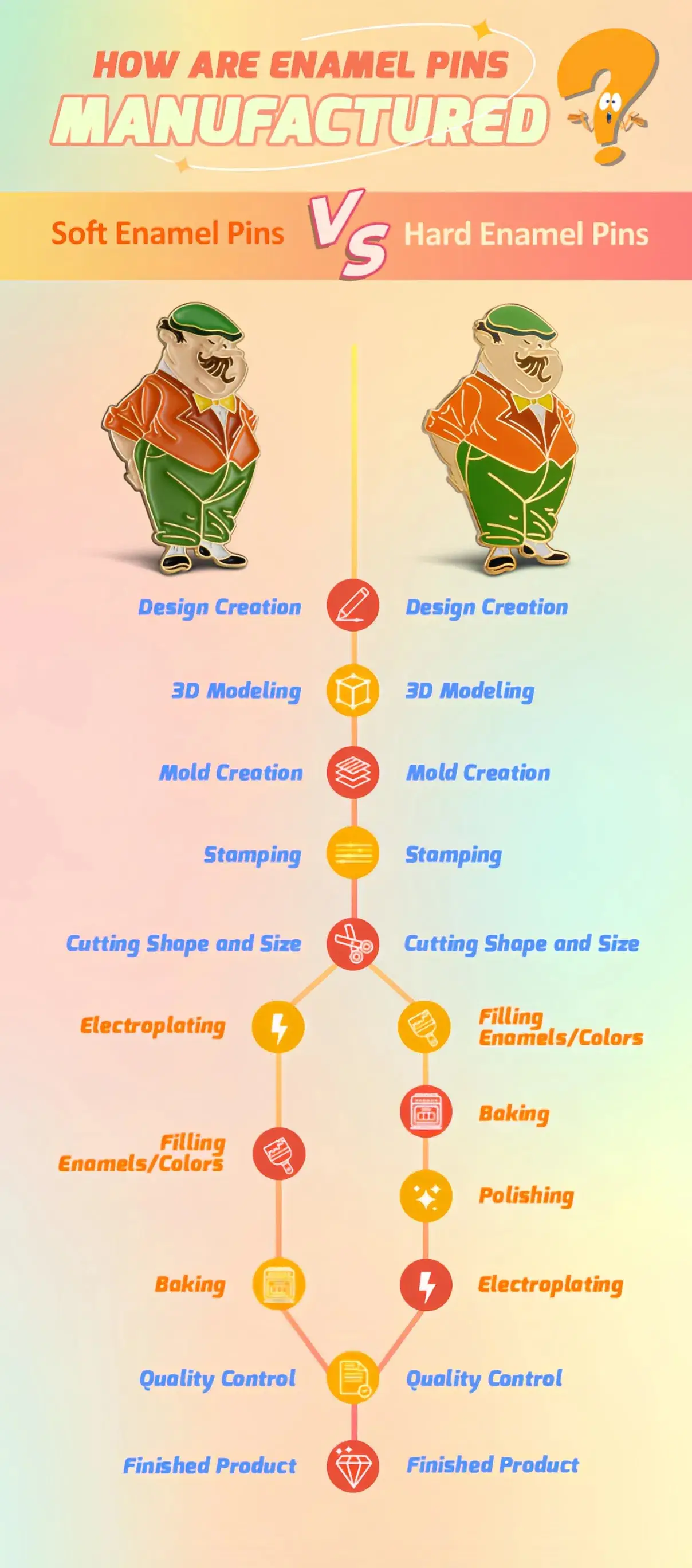
Soft enamel pins, first, a metal mold is made, and the pattern is pressed onto the metal. Liquid enamel paint of varying colors is then applied to the grooves using a syringe or machine. The enamel pigment is not at the same level as the lines, and the surface is uneven.

2.What are hard enamel pins?
Hard enamel pins start out the same way as soft enamel pins, but go through the process of adding additional layers of enamel that are then baked until they perfectly match the metal lines. When polished, the surface becomes a perfectly smooth and glossy finish with no raised or sunken spots.

3. What are the differences between soft enamel and hard enamel?
Various production processes produce different effects on pins, which can be summarized from several aspects.
| Contents | Soft Enamel Pins | Hard Enamel Pins |
| Process characteristics |
Concave and convex |
Smooth surface |
| Durability | Prone to wear and fading | Strong wear resistance |
| color |
Brighter colors |
Softer colors |
| cost |
Relatively low cost | Higher costs |
| Applicable Scenarios |
Limited budget mass production |
Pursuit of quality and texture |
| Thickness and weight | thin and lightweight |
thicker heavier texture |
| Typical uses | Event commemorative pins, promotional pins, employee pins | High-end commemorative pins, honor pins, and military pins |
| Long-term color retention | May fade or wear slightly over time if not coated with epoxy. | Excellent long-term color retention; colors remain vibrant for decades. |
III. How to choose the right pin?
1. Budget
Consider your budget, as each type of pin has a different price.
Hard enamel and special craftsmanship pins are more expensive due to the more complex production processes and production costs.
If you're planning a large order on a low budget, soft enamel pins offer the best of both worlds.
2. Application
Think about where and how the pin will be utilized, and choose accordingly for the particular use.
For fashion and everyday decoration, you can often see soft enamel pins; they are relatively low-cost and suitable for mass production and are used for corporate promotions, event giveaways, and brand promotion.
When creating pins for corporate identity, accurately matching your brand colors is crucial. Both soft and hard enamel can utilize Pantone color matching, but hard enamel provides a more premium and professional finish that elevates your brand's image.
Hard enamel pins are used on formal occasions; their craftsmanship and durability make them suitable for long-term wear and collection.
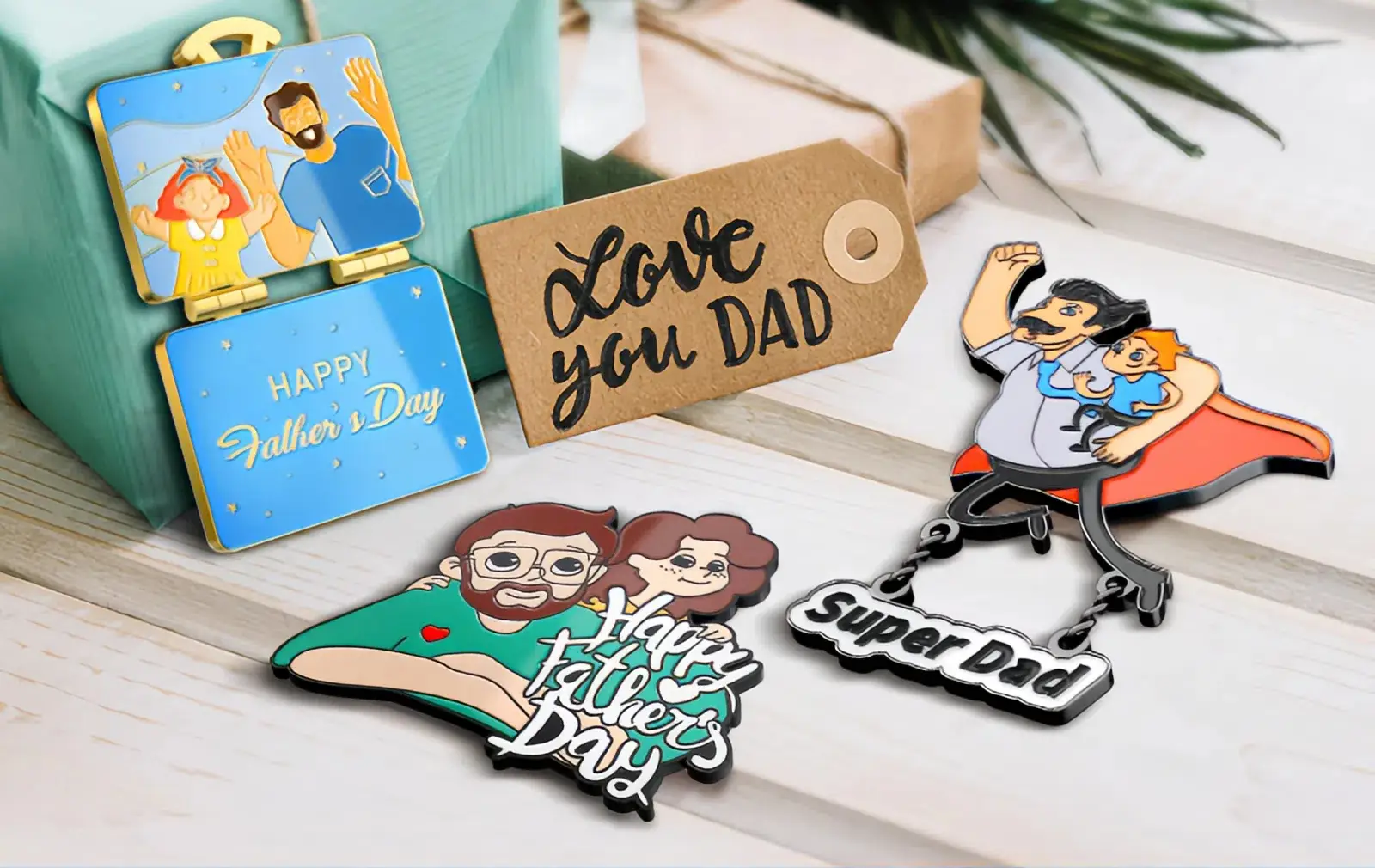
For pins with special craftsmanship, you can be more creative with them, such as Father's Day badges, using additional chain designs or designing them into flip pins, which are not only creative but also reflect your attention to the gift.
3. Pin design
You know, the complexity of your pin design is actually going to play a big role in which type you end up choosing.
If you’re going for something bold and colorful that really pops, soft enamel works great. But on the other hand, if you want a sleek, smooth finish that feels a bit more refined and polished, then hard enamel pins are definitely the way to go.
However, if your artwork contains tiny text or small details, standard enamel processes might not be able to capture them due to the thickness of the metal lines. This is where you need to consider the difference between traditional enamel and printing. For complex gradients or extremely fine details, a Screen-printed pin is the best alternative. On the other hand, if you want a classic, jewelry-like finish with unparalleled durability, traditional Cloisonné (the highest grade of hard enamel) is the top choice, though it requires simpler and bolder lines than screen printing.
IV. What are featured enamel pins?

1. Slider enamel pins: Fastened with a slide or snap, they're easy to wear and allow you to freely move the small accessories on the pin.
2. Magnetic enamel pins: Pins with accessories secured by magnets can be removed at will.
3. Spinner enamel pins: The pin head rotates, creating a whimsical or interactive design.
4. Bobble head enamel pins: The pin has a spring or a little shaft inside, and the figure wobbles when the pin is shaken lightly.
5. Color-changing enamel pins: Through heat- or light-sensitive materials, they change their color upon exposure to heat or light. Providing interactivity and fun, they are perfect for themed parties or creative presents.
6. LED enamel pins: They also have an in-built miniature LED light that emits a continuous or pulsing light, respectively, depending on the product, in shapes and colors. They are perfect for nights out, parties, events, nightlife wear, promotions, and creative collectibles.
7. Dangler enamel pins: They are standard pins with an appendage that is movable. These typically carry a chain, charm, or pendant that is free-hanging from the pin.
V. Conclusion
Soft and hard enamel pins have their own characteristics. Understanding the differences between pins can help you customize the most suitable pins. Custom pins are like a small DIY world that can give full play to your endless creativity.
In the future, the development of custom enamel pins will have various new creative ideas, and more special pin production processes are being developed.
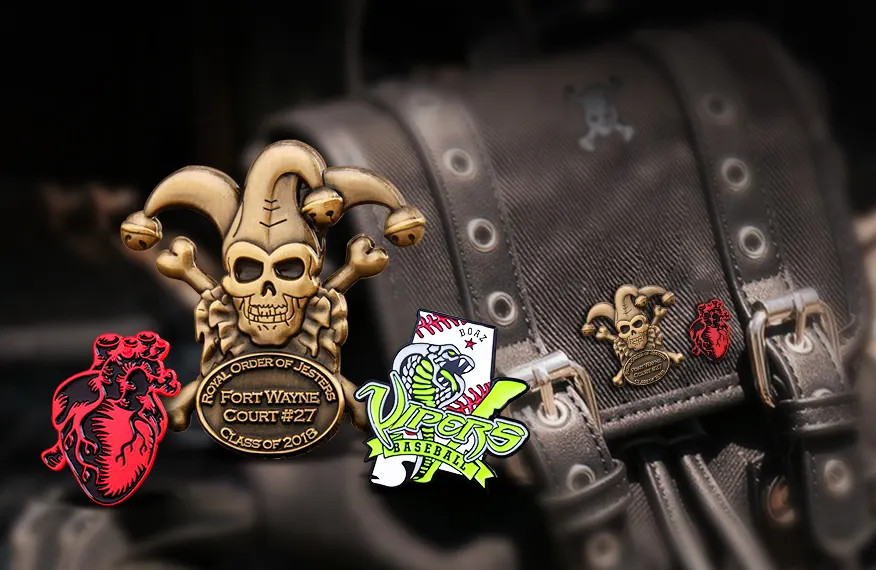
10 Best Enamel Pin Manufacturers in 2026
Enamel pins are beautiful and elegant, and have always been a beloved item. They not only enhance your wardrobe and enhance your style, but also carry brand stories and sentiments. With the growing demand for enamel pins and the increasing demand for quality, choosing the right custom enamel pin supplier is crucial.
There are many pin suppliers on the market, some with poor reputations. To facilitate your selection, we have selected the following 10 custom pin makers with an excellent reputation from many suppliers, hoping to help you make a choice.


How to Choose the Right Pin Size: A Complete Guide
Pins are also a fashion accessory, and they serve the purpose of branding, awareness, and collecting. Whether it's an enamel pin or a custom lapel pin, people use them to express personality, represent a cause, or display loyalty to an organization. But of all those elements that typically get left out of the way of thinking when designing or even purchasing a pin, pin size is the most important. Pin size plays a huge role in the look, wearability, and functionality of a pin in expressing its message.
This guide explores pin size meaning, the most common sizes, and actual tips for how to make sure that you possess the best size for your use.
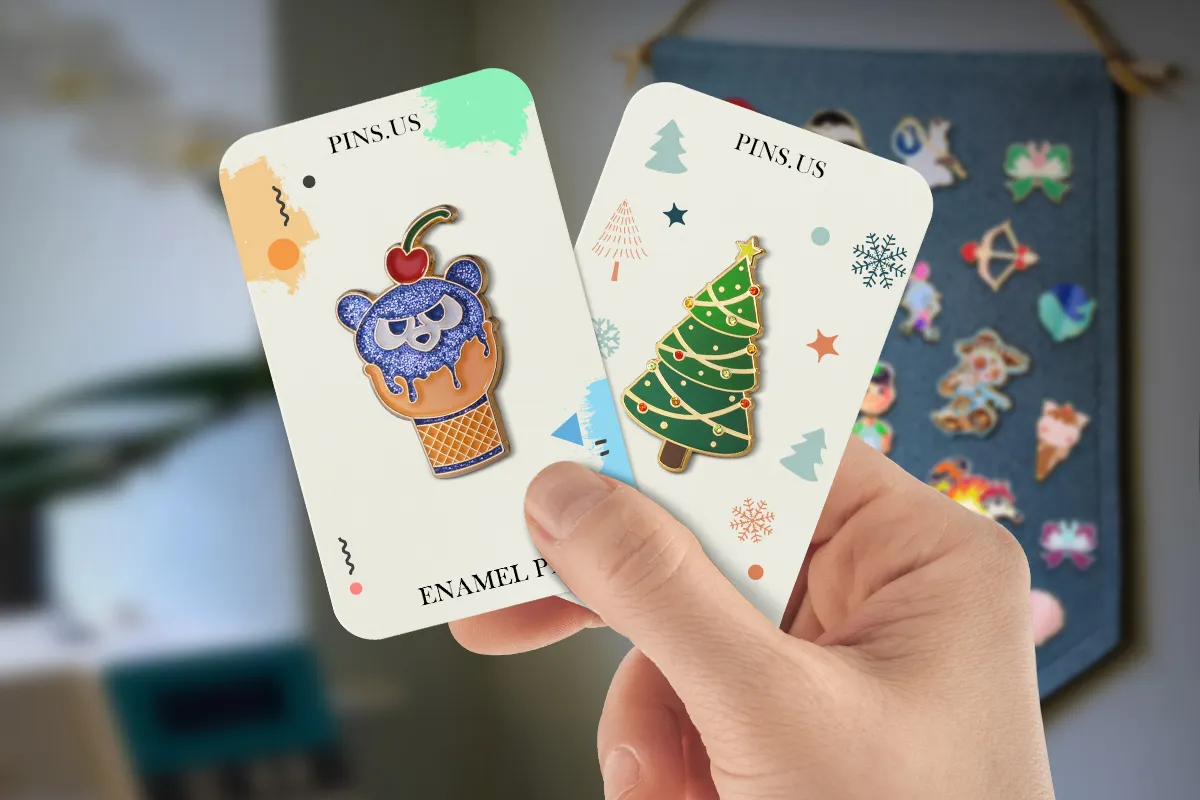
15 Creative Ways to Use Enamel Pins
What began as whimsical decorative pins has transformed into objects for self-expression, branding, and creative illustration. With their small size, variety of styles, and durability, they are utilized in fashion, marketing, and daily life in abundance.
Enamel pins are used for more than collecting - they can enhance your personal style, communicate identity, and be used as promotional pins! So here it is: 15 creative and practical uses for enamel pins to inspire you to get the most out of these small and utilitarian little things