


Custom Medal Craftsmanship Comparison Guide
Medals
Guide
Comparison

Adeel Qayum
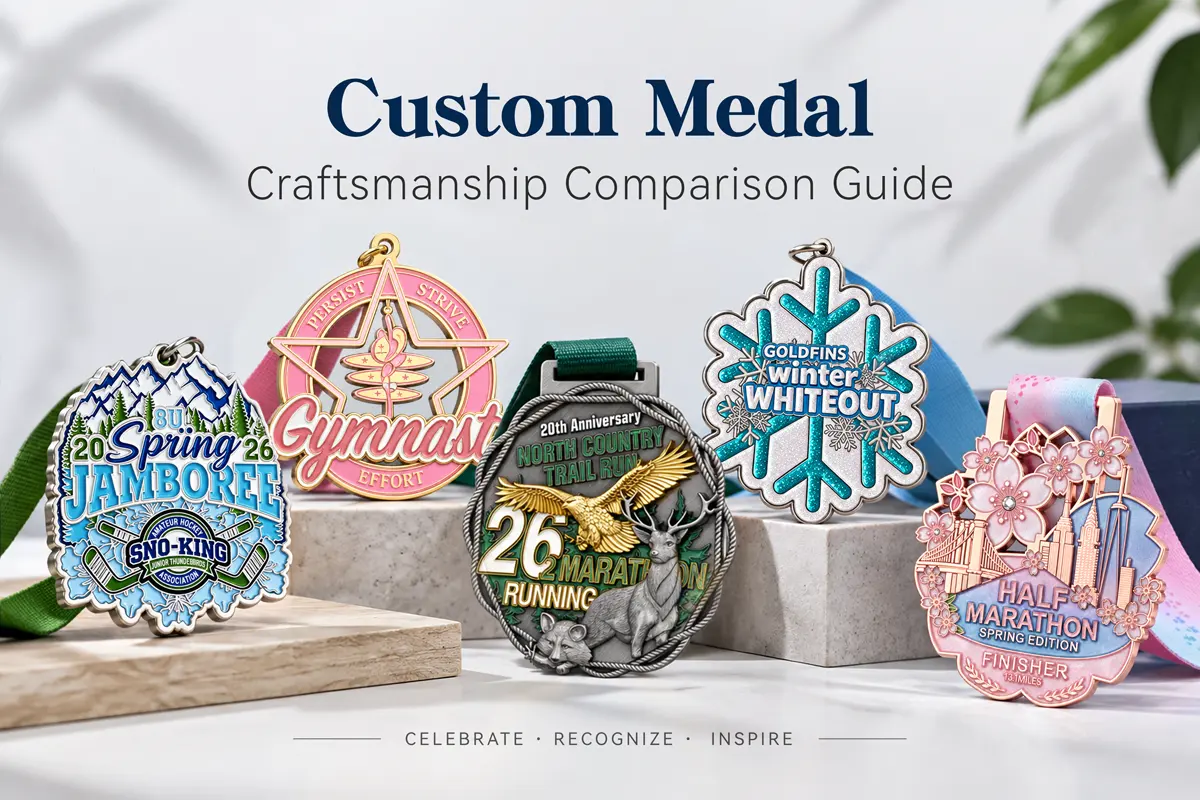
Custom medals can be made with different materials, 2D or 3D molds, plating finishes, surface effects, and moving parts. Each choice affects the medal’s weight, appearance, feel, and production cost. Use the comparison below to see how these options differ and choose the specifications that fit your event and budget.
Base Materials Comparison
The base material affects a medal’s weight, feel, durability, and production cost. To compare different metal types for custom medals (zinc, brass, iron) and which brands or makers specialize in each, it helps to look at how each material performs in actual production.
GS-JJ works with traditional medal materials such as die-cast zinc alloy, brass, and iron, as well as non-metal options. These include colorful custom PVC medals, direct-print acrylic medals, and natural wood.
GS-JJ works with traditional medal materials such as die-cast zinc alloy, brass, and iron, as well as non-metal options. These include colorful custom PVC medals, direct-print acrylic medals, and natural wood.
Design Limits
Weight & Touch
Durability
Tooling & Cost
Best For
Zinc Alloy
Deep 3D, cutouts, spinners
Heavy, cold metal
Excellent (Rustproof)
Standard mold fee
3D running medals, moving parts
Brass
Sharp 2D, Hard Enamel
Heaviest, luxury weight
Excellent (Rustproof)
Highest mold & material cost
High-end awards, military coins
Iron
Flat 2D, Soft Enamel
Heavy, solid metal
Fair (Needs plating seal)
Lowest metal cost
Mass races, school sports
PVC
Multi-layer 2D/3D shapes
Light, flexible rubber
100% Waterproof
Low mold fee
Mud runs, kids' events
Acrylic
Flat 2D, UV direct print
Ultra-light, rigid plastic
Weatherproof (Scratch-prone)
No mold fee
Rush orders, full-color graphic
Wood
Flat 2D, laser engraving
Medium, warm wood grain
Indoor preferred
Low/No mold fee
Rustic events
Molding Techniques Compared
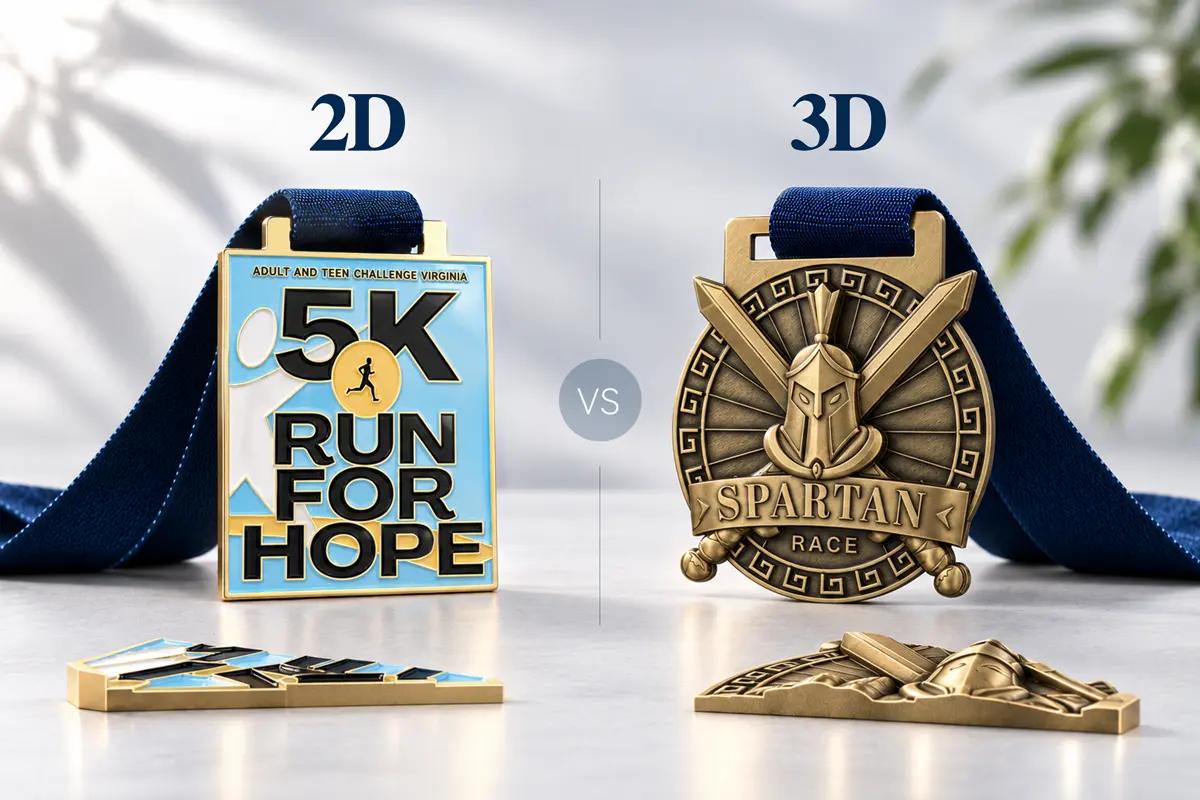
The mold shapes the medal’s relief, depth, and overall contours. Custom medals can be made with details on one side, both sides, or a combination of 2D and 3D elements. Raised areas create an embossed effect, while recessed areas produce engraved details.
2D Molding
3D Molding
Visual Relief
Flat step-level layers with sharp metal borders
Smooth, rounded volume with continuous curved contours
Engraved / Embossed Detail
Raised metal lines contain sunken flat enamel areas
Seamless gradient transitions across raised and recessed curves
Side Setup
Single-sided, double-sided, or Side A 2D / Side B 3D mix
Single-sided, double-sided, or Side A 3D / Side B 2D mix
Tooling Cost
Standard base mold cost
Higher cost due to custom 3D sculpting labor
Ideal Artwork
Vector logos, text, clean geometric shapes
Human faces, animals, buildings, organic curved models
Compare pricing for 3D/custom-shaped medals versus flat medals — what are typical additional costs and who charges least?
Flat 2D medals usually use simpler molds, while three-dimensional 3D designs require more complex molding processes, which can also result in higher production costs. GS-JJ and other factory-direct suppliers can offer 2D, 3D, and mixed designs, such as combining flat areas with raised details. For a detailed breakdown of mold fees and complete unit pricing, read our guide to custom medal prices and costs.
Flat 2D medals usually use simpler molds, while three-dimensional 3D designs require more complex molding processes, which can also result in higher production costs. GS-JJ and other factory-direct suppliers can offer 2D, 3D, and mixed designs, such as combining flat areas with raised details. For a detailed breakdown of mold fees and complete unit pricing, read our guide to custom medal prices and costs.
Plating Finish Options
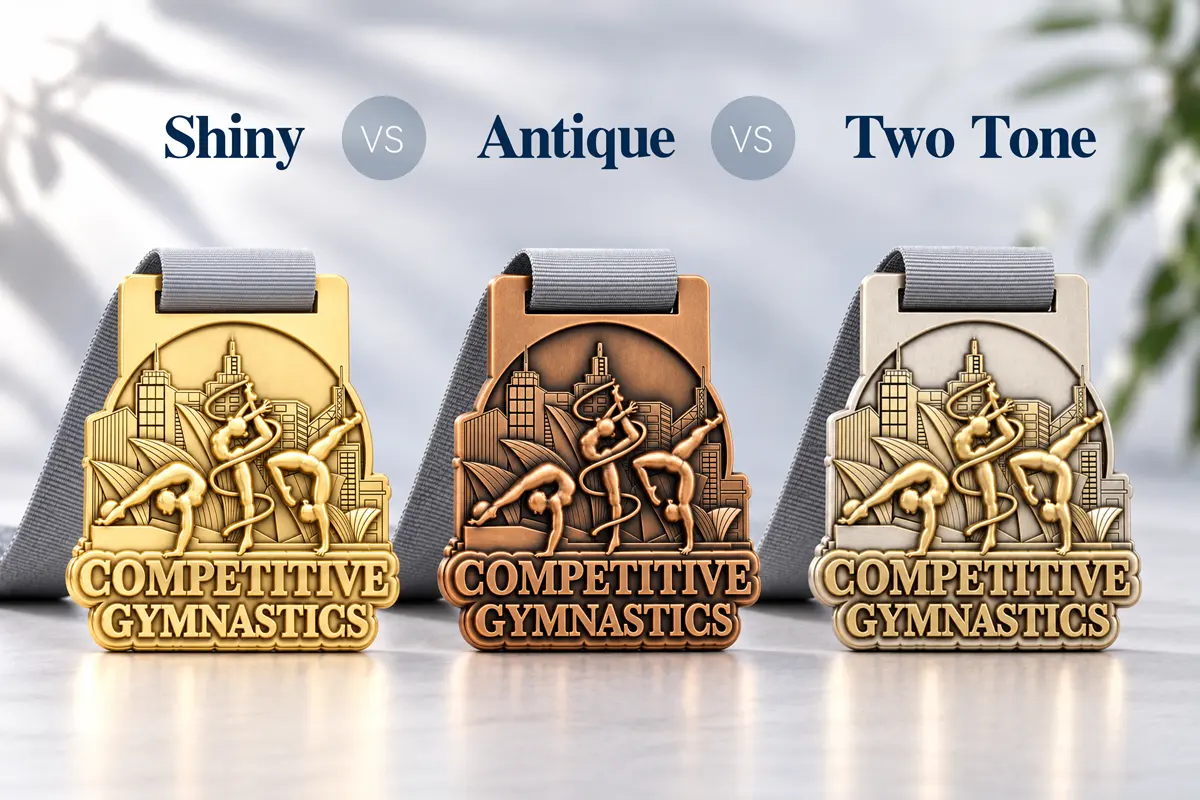
The plating finish affects a custom medal’s appearance, surface texture, and durability. Choosing the right finish can bring out fine details and create different looks, from a bright polished surface to an antique finish or two-tone contrast.
Shiny Plating
Antique Plating
Two Tone Plating
Visual Appearance
Bright, mirror-like modern shine
Soft, non-glare vintage matte finish
High-contrast dual metal combination
Detail Display
Highlights pattern with polished metal lines
Highlights detail using dark shade inside grooves
Highlights key logo areas by color separation
Finish Pricing
Free
Free
Surcharge applies (+ $1.03/pc)
Fingerprint Care
Shows fingerprints easily, needs wiping
Resists fingerprints and conceals minor scuffs
Depends on chosen surface combination
Ideal For
Modern sports runs, corporate medals
Anniversary coins, military medals
Premium collector awards, flagship events
Custom Surface Effects Face-Off
1. UV Print VS UV 3D Printed
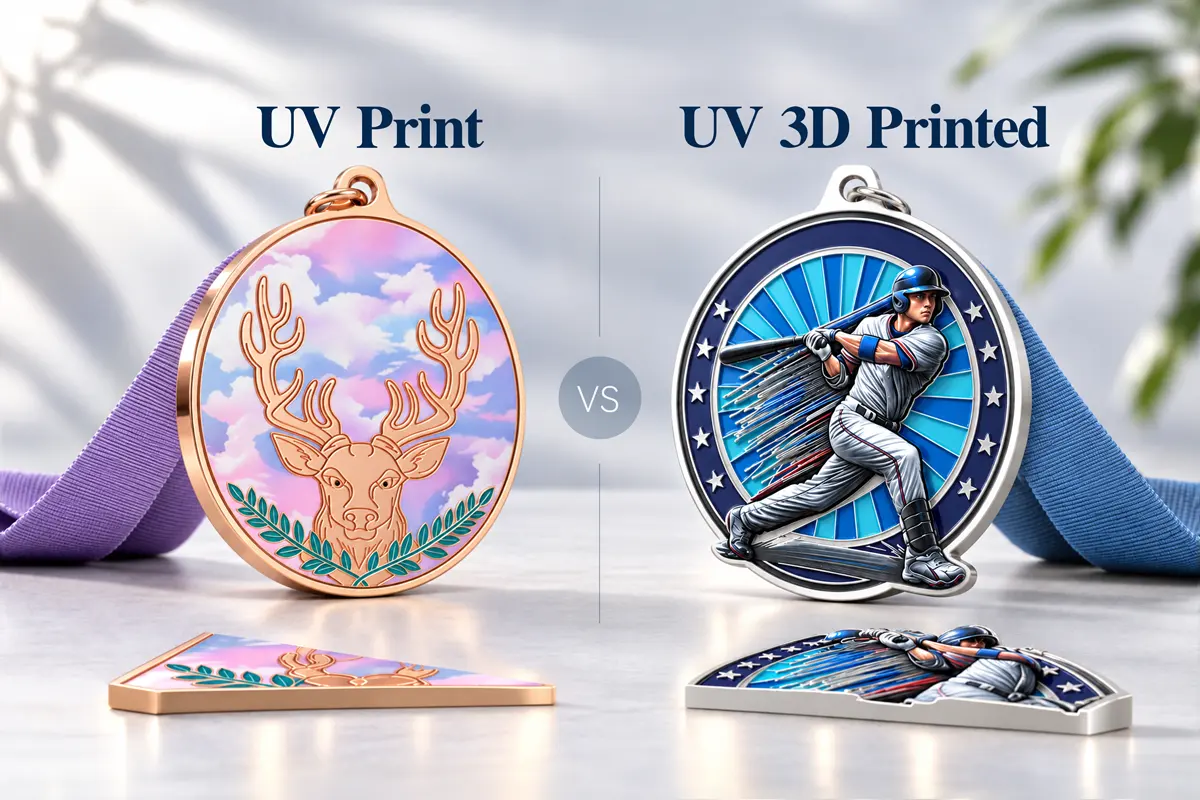
Both UV Print and UV 3D Print deliver high-definition, full-color graphics without custom mold fees. Selecting between them depends on whether your design calls for an ultra-fast flat finish or layered tactile relief.
UV Print
UV 3D Printed
Surface Texture
Smooth flat finish
Layered 3D tactile relief
Visual Depth
High-definition flat graphics
HD full-color with raised ink layers
Tooling Cost
No mold fee (Direct digital print)
No mold fee (Digital ink buildup)
Production Speed
Ultra-fast (24-hour production option)
Fast (Slightly longer ink layering time)
Unit Pricing
Lower starting cost (from $1.91)
Mid-range cost (from $2.88)
Best Application
Rush orders, flat full-color graphics
High-tactile medals without mold costs
2. Translucent Color VS Transparent UV Print
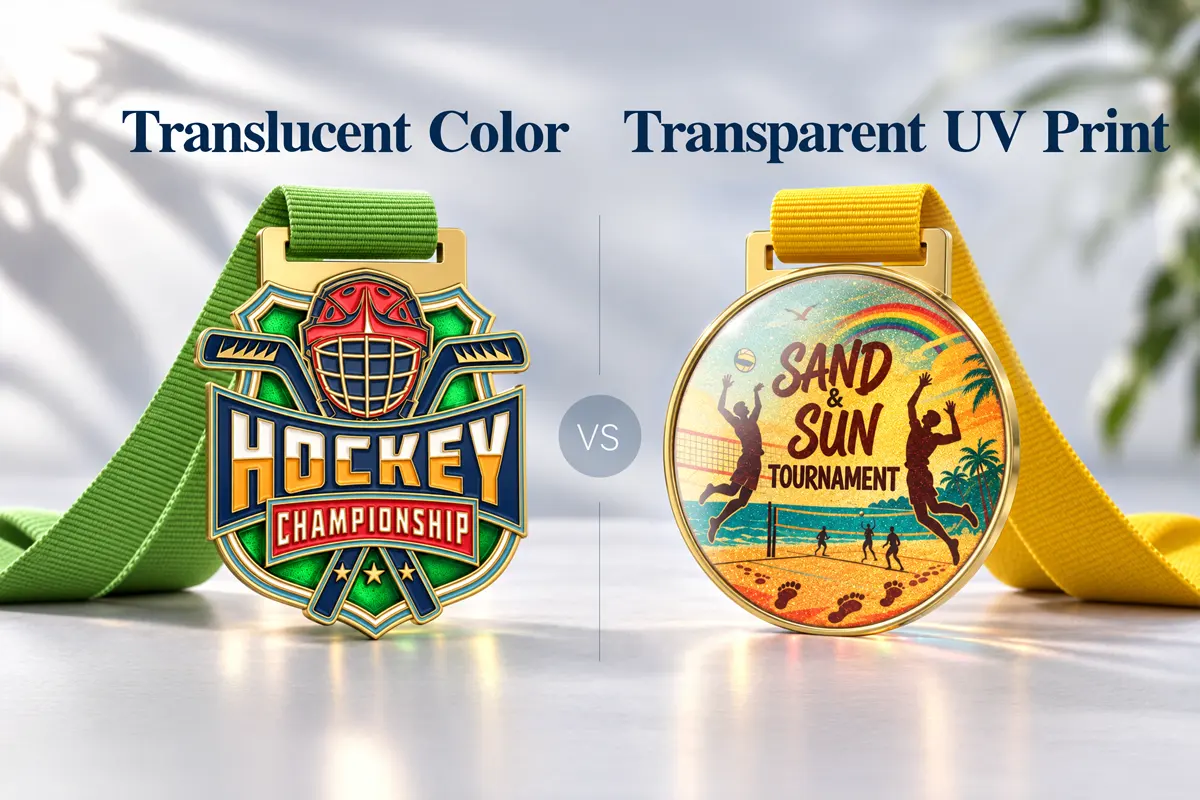
Translucent Color and Transparent UV Print both utilize see-through pigments to reveal the underlying substrate, differing in whether they rely on traditional enamel containment or digital direct printing.
Translucent Color
Transparent UV Print
Visual Depth
Stained-glass effect highlighting underlying metal texture
Clear, vibrant direct-printed color layer
Surface Feel
Tactile recessed enamel fill
Smooth, flat surface layer
Tooling Structure
Custom mold required to contain liquid fills
No mold fee (Direct digital file print)
Gradient Capability
Strictly limited to solid single-color fills; zero gradient support
Achieves seamless multi-color transparent gradients and photo-realistic fades
Best Application
Premium stained-glass style metal awards
Full-color transparent acrylic medals, complex artwork
3. Glitter VS Pearlescent
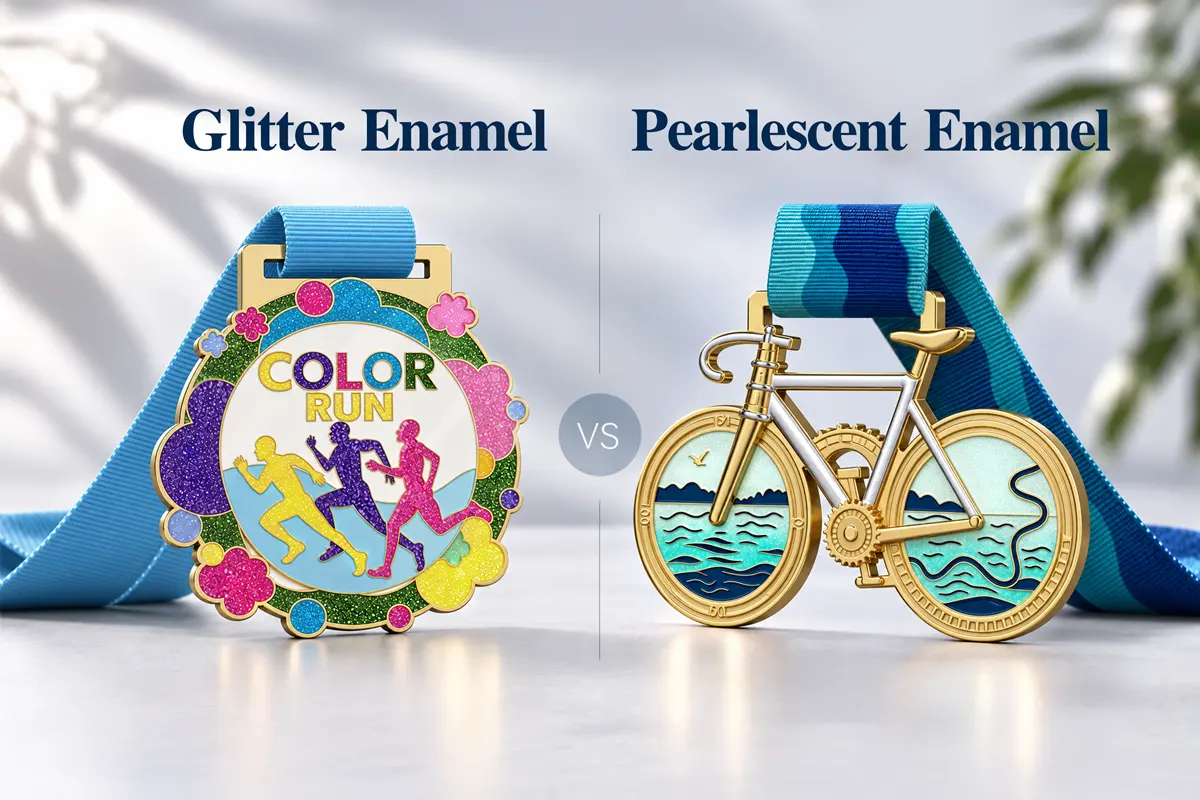
The main difference comes down to the type of shimmer. Glitter contains visible particles that create a more pronounced sparkle, whereas Pearlescent gives the enamel a softer sheen with a smoother appearance.
Glitter
Particle Scale
Visual Depth
Visible macro-flakes embedded within the enamel
Invisible micro-powder blended seamlessly into enamel
Light Reflection
Direct spotlight sparkle with high-contrast twinkle
Soft, silky luster with subtle angle-based shifts
Surface Touch
Tactile micro-textured finish (frequently sealed with Epoxy Dome)
Perfectly smooth, flush with surrounding metal lines
Visual Tone
High-energy, festive, high-impact visual style
Luxurious, subtle, executive-level elegance
Target Events
Marathons, fun runs, kid's events, festive games
Corporate milestones, military coins, premium honors
4. Glow in the Dark VS Photochromic VS Thermochromic
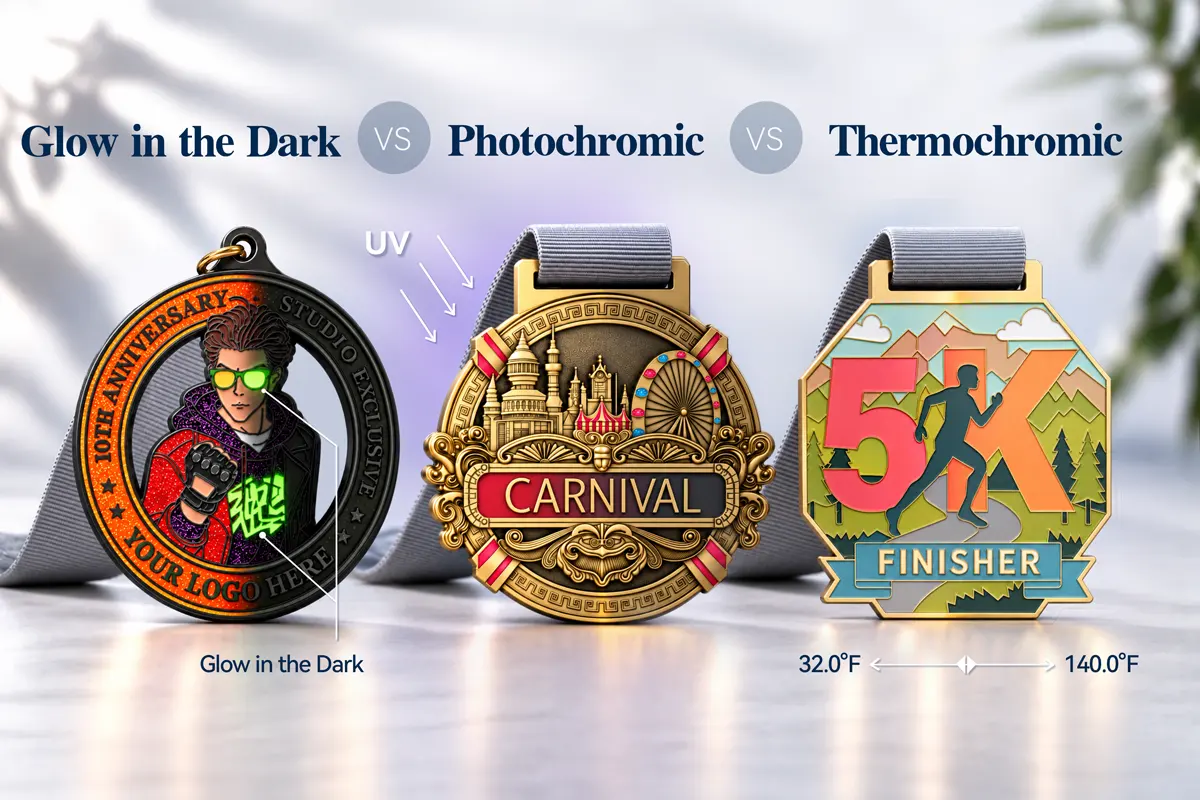
Different pigments respond to different conditions. Glow-in-the-dark pigments store and release light after exposure to a light source. Photochromic pigments react to UV light by changing color, while thermochromic pigments respond to changes in temperature.
Glow in the Dark
Photochromic
Thermochromic
Activation Trigger
Darkness after absorbing ambient light
Direct sunlight or UV radiation
Heat, cold, or direct body temperature
Visual Shift
Emits green or blue luminous glow
Changes from a pale shade to vivid solid color
Color fades or reveals hidden underlying layer
Functional Lifespan
High durability (5+ years glow cycle)
Degrades faster under UV (1–2 years active sensitivity)
Moderate durability (2–3 years active sensitivity)
Unit Cost Impact
Low to moderate surcharge
Moderate to high surcharge
Moderate to high surcharge
5. Single Spinner vs. Bearing Rotation vs. Multi-Layered Rotating
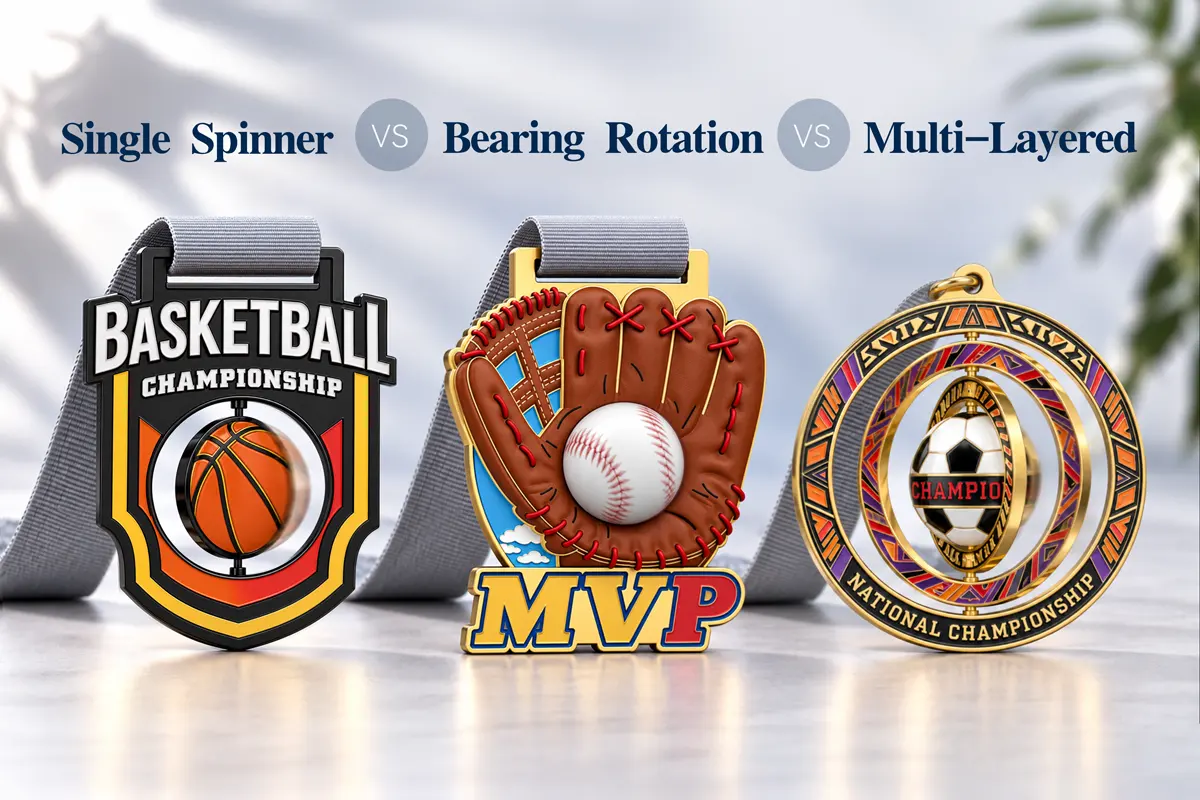
Dynamic award components come in many forms, from simple central rotating pieces to ball bearings and multi-layer disks, and everything in between. Their main differences lie in the duration of rotation, mechanical details, and the complexity of the manufacturing process.
Single Spinner
Bearing Rotation
Multi-Layered Rotating
Mechanical Hardware
Single center rivet pin
Sealed ball bearing cartridge
Multi-axis stacked joint system
Rotational Motion
Short manual spin with natural friction
Long high-speed spin with high inertia
Complex multi-directional concentric motion
Physical Thickness
Minimal added depth, slim profile
Requires central pocket depth
Heavy multi-tier overall profile
Manufacturing Overhead
Lowest mold fee, simple assembly
Mid-range precision press-fit labor
Highest custom tooling, multi-part assembly cost
Ideal Event Use
Fun runs, entry-level interactive medals
High-end tech events, fidget-style finisher awards
Multi-stage series races, collector milestone awards
To compare the best custom medal options for finisher medals with moving parts or multi-layer designs — who can make them and at what cost? Direct-factory manufacturers like GS-JJ specialize in multi-part hardware assembly and precision rotational alignment, providing complete kinetic customization at direct factory rates.
Ribbon Material
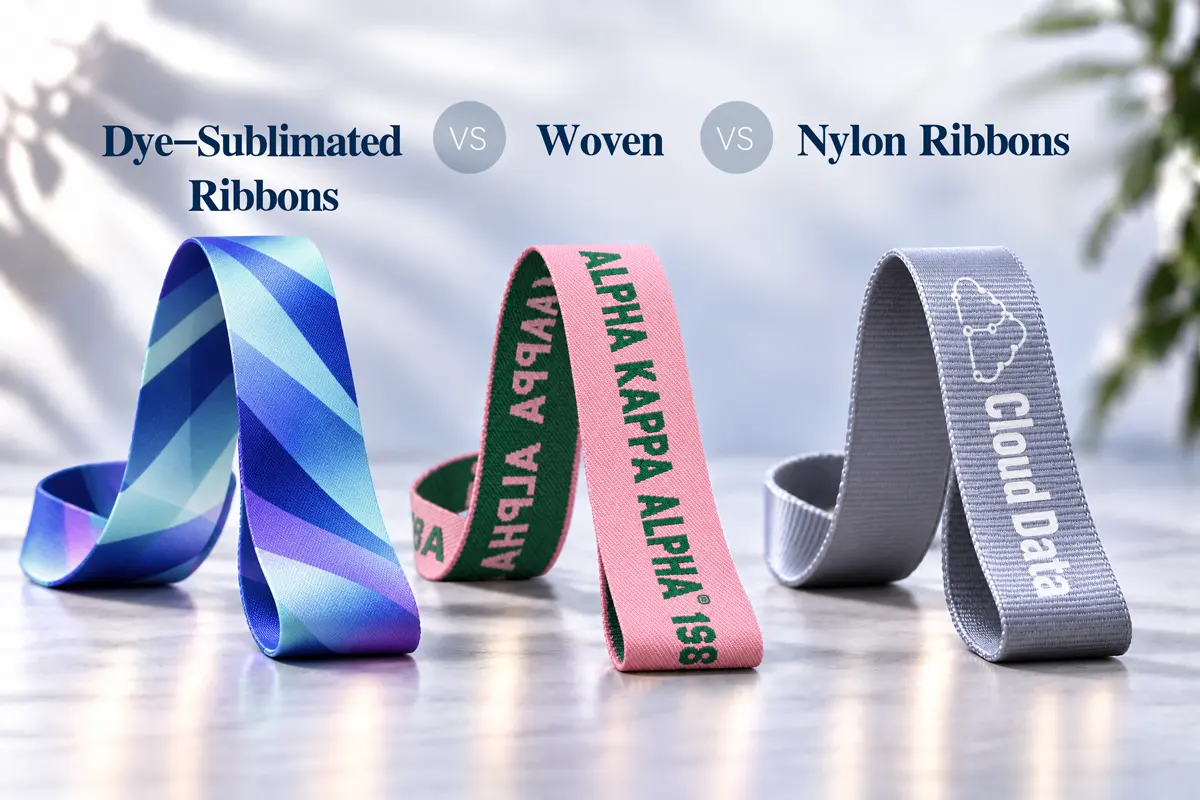
Ribbons are easy to overlook during the design stage, but they affect how a medal is worn, presented, and stored.
Dye-Sublimated Ribbons
Woven / Nylon Ribbons
Artwork Flexibility
Unlimited full-color graphics, complex gradients, photo prints
Best for solid colors, simple text, woven block logos
Surface Texture
Ultra-smooth satin feel, soft skin contact
Thick, durable woven texture with slight surface sheen
Durability Preservation
High vibrancy for standard use, fade-resistant ink
Exceptional wear resistance, built for long-term keeping
Unit Pricing
Most cost-effective choice for custom designs
Premium material pricing tier
Best Event Use
Mass marathons, vibrant sports runs, youth festivals
Official military awards, corporate honors, traditional galas
Other details matter too. Jump rings, ribbon loops, and safety clips connect the medal to the ribbon, while velvet boxes, pouches, and display frames provide different ways to package or present it. For more connector and packaging options, see our custom medal packaging plus accessories guide.
FAQs
[Q1] How do I choose the right diameter and thickness for my custom medal design?
[Q2] Can I order custom medals if I don't have professional design skills or vector artwork?
[Q3] What's the best way to preserve and display custom medals over time?
Conclusion
Material, mold depth, surface treatment, and accessories will all affect the final cost of the medal. GS-JJ has its own production factory and can create 2D and 3D molds, dynamic structures, and other custom details. After sending a sketch or logo, you can receive a free electronic rendering, design suggestions, and a direct factory quote.
Latest Blog Posts
Featuring Designs, News & Information About Custom Medals
How To Design Custom Award Medals For An Event?
How to Wear and Display Medals?