


Where to Buy Custom Patches in Bulk: Pricing, MOQ & Supplier Guide

Adeel Qayum
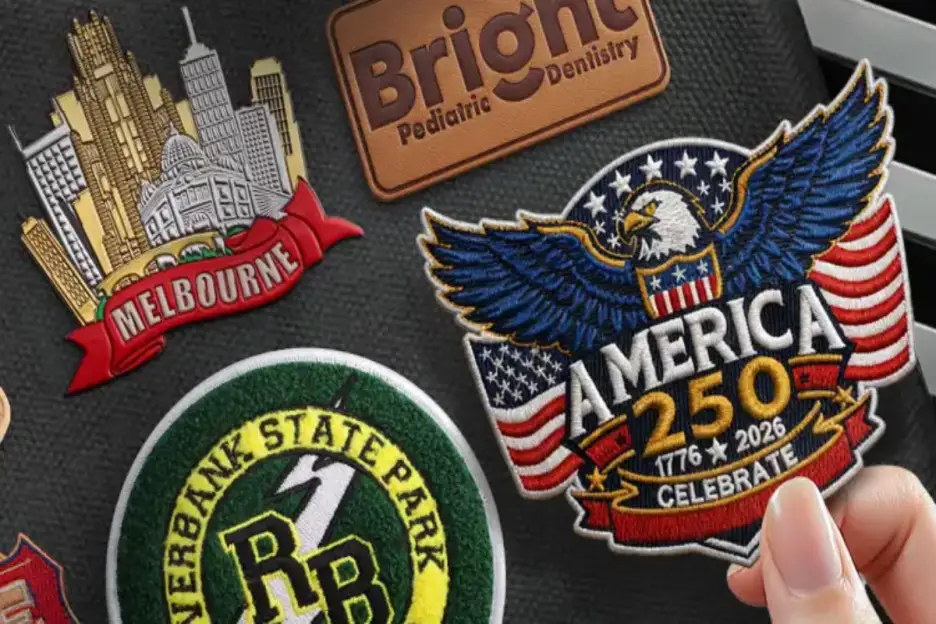
Bespoke patches are now a popular way to brand your business, club, sports team, outdoors group, or organization. From the uniform to the backpack and the jacket, even promotional merchandise like patches provide a simple means of building a brand.
For event organizers, merchandise sellers, or team swag providers, it's generally more economical to purchase custom patches wholesale rather than in small quantities. #However, selecting the appropriate vendor is a different matter and depends on cost, production, minimum order (MOQ), material, and production capability.
This guide explains where to buy custom patches in bulk, how much they typically cost, what MOQ requirements to expect, and how to choose a reliable custom patch supplier in 2026.
1. Why More Brands Are Buying Custom Patches in Bulk
Bulk custom patches are becoming increasingly popular because they combine affordability, customization, and long-term brand visibility.
Unlike many promotional products that are quickly discarded, patches are often attached to clothing, bags, or equipment and used repeatedly. A well-designed patch can continue promoting a brand long after an event or campaign ends.
Applications of custom patches can be seen in such areas as:
Company uniforms and employee apparel
Sports teams and clubs
Military-style groups
Motorcycle communities
Outdoor and adventure organizations
Event merchandise
Brand giveaways
Why bulk purchasing is popular:
Lower unit cost
The biggest advantage of bulk ordering is lower unit pricing.
When manufacturers produce larger quantities of the same design, they can reduce setup costs and improve production efficiency. These savings usually result in a lower price per patch.
Consistent branding
Bulk production can ensure color consistency across sizes and materials, as well as consistent sewing and stitch quality for each patch. This is just as important for companies that make uniforms, swag collections, or event products.
Easier inventory management
Preordering enables companies to have enough stock on hand to cover product releases, marketing efforts, and community events. This reduces the risk of delays due to fluctuating demand.
2. How Much Do Custom Patches Cost in Bulk
Average Cost of Custom Patches in Bulk
The cost of bulk custom patches depends on several factors, including patch type, size, design complexity, colors, backing options, and order quantity.
| Patch Type | Average Bulk Price | Common Uses |
| Embroidered Patches | $0.30 - $3.00/piece | Uniforms, brands, clubs |
| Woven Patches | $0.50 - $3.50/piece | Detailed logos, fashion labels |
| PVC Patches | $1.00 - $5.00/piece | Outdoor gear, tactical products |
| Chenille Patche | $1.50 - $6.00/piece | Varsity jackets, streetwear |
What Factors Affect Custom Patch Pricing
Patch Material
Different patch materials have different production costs. Embroidered patches remain the most cost-effective option, while woven and PVC patches are slightly more expensive due to the use of advanced manufacturing machinery and mold-casting processes.
Size and Shape
Big-sized patches also require more raw materials and time to produce. Simple forms – circles, rectangles, etc. – are usually simpler to make. Intricate custom shapes or artwork with a lot of detail may require additional steps in the production process, which means more money.
Number of Colors
And the number of colors affects the fees as well. With fewer colors, designs are naturally more cost-effective, and more complex artwork with several colors or fine detail might require more setup.
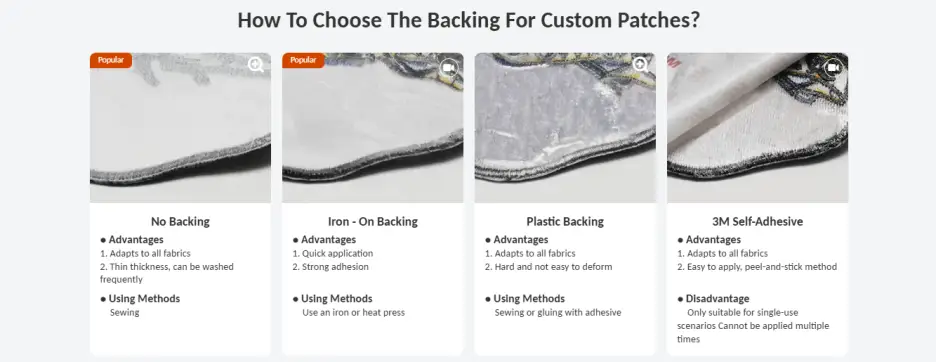
The type of backing may affect the final cost. Some common options include sew-on, iron-on, adhesive, and Velcro backing.
Sew-on patches are also generally the least expensive, while Velcro patches have become increasingly popular for tactical gear and other applications where the patch may need to be removed.
3. What Is the MOQ for Custom Patches
MOQ (Minimum Order Quantity) is the smallest number of custom patches a supplier will accept for an order. Various producers set different minimum order quantity requirements depending on the production processes.
Typical MOQ by Supplier Type
| Supplier Type | Typical MOQ |
| Large patch manufacturers | 100-500 pieces |
| Wholesale suppliers | 50-100 pieces |
| Low MOQ custom suppliers | 10-50 pieces |
Can You Order Custom Patches With No Minimum?
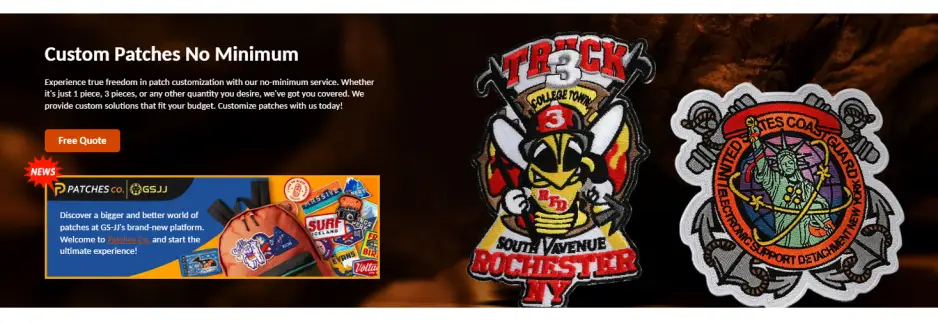 Yes, some suppliers offer low-MOQ or no-minimum options.
Suppliers like Patches4Less set a minimum order quantity of 10 units to accommodate smaller clubs, yet they lack an online pricing calculator, meaning you may have to wait for a manual quote.
GSJJ offers flexible ordering options with no minimum quantity requirements. Furthermore, GSJJ provides a fast communication workflow, with responses available within 5 minutes during working hours and initial artwork proofs typically prepared within approximately 3 hours. For companies launching new products, a smaller first order can help evaluate customer response while reducing inventory risk.
4. Where to Buy Custom Patches in Bulk
There are three common channels through which companies purchase bulk custom patches: manufacturers, wholesale platforms, and local patch suppliers.
Custom Patch Manufacturers
For large orders, buying directly from a manufacturer is often the best option.
Direct manufacturers generally offer:
More customization choices
Cheaper per-unit price for large quantities
Direct communication with production teams
More reliable quality control
GSJJ provides custom patch manufacturing services with support covering artwork review, production confirmation, quality inspection, and final delivery coordination.
Wholesale Platforms
Wholesale platforms allow buyers to compare multiple suppliers and pricing options.
They’re good for getting a sense of the various patch styles and materials available, but buyers should exercise due diligence in assessing:
Experience of the Supplier
The reviews of customers
Quality of the Product
Speed of Communication
Production Capacity
The lowest price is not always the best choice. A supplier with inconsistent quality or slow communication can create additional costs and delays.
Local Patch Shops
Local suppliers can be handy for small jobs that require quick communication or local pickup. But their price advantage for bulk orders is not very apparent compared with direct manufacturers due to limited machine capacity, and their customization options are also more limited.
5. How to Choose a Trustworthy Custom Patch Supplier
Selecting a supplier involves more than just the lowest price. A good custom badge manufacturer will offer high-quality work, transparent communication, and reliable delivery.
Check Customization Capabilities
Before placing an order, confirm whether the supplier offers:
Different patch materials
Custom shapes and sizes
Multiple backing options
Custom packaging
A supplier with strong customization capabilities can better support different brand requirements.
Compare Production Time
Production speed is especially important for events and limited-edition merchandise.
Ask suppliers about:
Design approval time
Production schedule
Shipping timeline
A clear production process helps avoid unexpected delays.
Review Quality Control Process
For large orders, consistency in quality is a must. What a trustworthy supplier will check:
Color accuracy
Stitching quality
Patch dimensions
Final appearance
Reviewing a digital proof before production can help prevent mistakes.
Look for Customer Support
Custom products often require communication during the design and production process. A good supplier should provide:
Fast responses
Design support
Order updates
After-sales service
GSJJ uses a streamlined ordering workflow that includes design assistance, artwork confirmation, production coordination, and customer communication support.
6. Bulk Custom Patch Ordering Process
Ordering custom patches usually involves five simple steps.
Step 1: Submit Your Design
Upload your logo, artwork, or design idea. Typical formats are JPG, PNG, PDF, and AI files. If you don’t have a ready design, GSJJ can provide design templates.
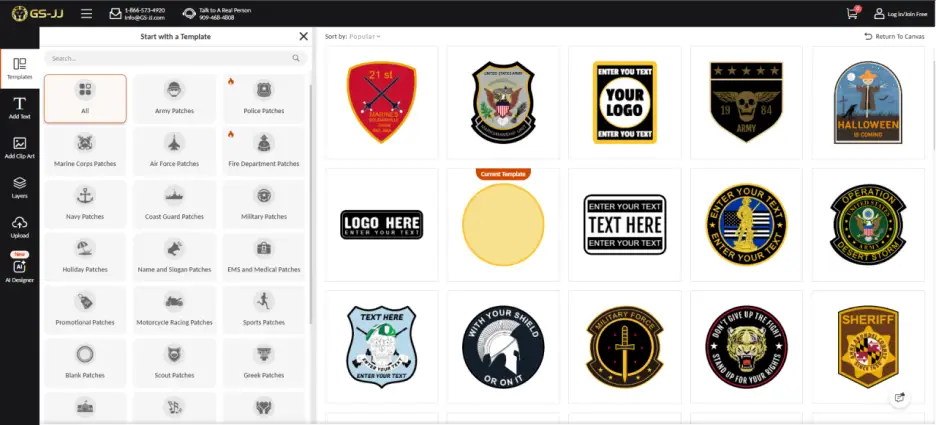
Step 2: Choose Materials & Backing
Select embroidery density, size, border, and backing method. The best combination is “Patch Use Dependent”.
Step 3: Review Digital Proof
Before production starts, review the digital sample to confirm colors, sizes, design details, and overall appearance.
Step 4: Confirm Production
Upon confirmation, the supplier starts production. Lead time varies with order quantity and the complexity of your designs.
Step 5: Quality Control & Delivery Inspection
Finished patches should be inspected before shipment. GSJJ will provide shipping updates and tracking information.
7. FAQ
Q1: What custom patch is the cheapest?
Custom embroidered patches are often the cheapest option. The ultimate cost is determined by dimensions, number of colors, quantity, design complexity, and backing type.
Q2: Which custom patch makers have the lowest setup fees compared to others for small businesses?
Some factory-direct suppliers, including GSJJ and Panda Patches, offer design assistance and flexible ordering options to help small businesses reduce initial project costs.
Q3: Can I order custom patches with my own artwork?
Yes. Most custom patch providers accept customer artwork in JPG, PNG, PDF, or AI format. Professional providers can also assist with modifying designs to work well in production.
Q4: Are PVC patches better for outdoor use?
Yes. PVC patches are a popular choice for outdoor and tactical applications because they are water-resistant, durable, easy to clean, and wear-resistant.
Q5: Can custom patches be attached to different materials?
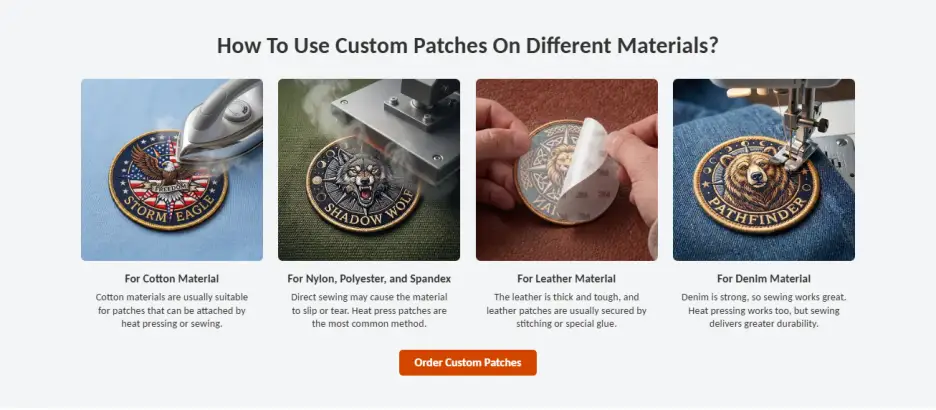
Yes, different backing options work for different applications.
Iron-on backing: clothing, cotton, denim.
Velcro backing: Tactical gear and removable patches.
Sew-on backing: Jackets, bags, uniforms